The Grace of Waiting for One Another at the Lord’s Table
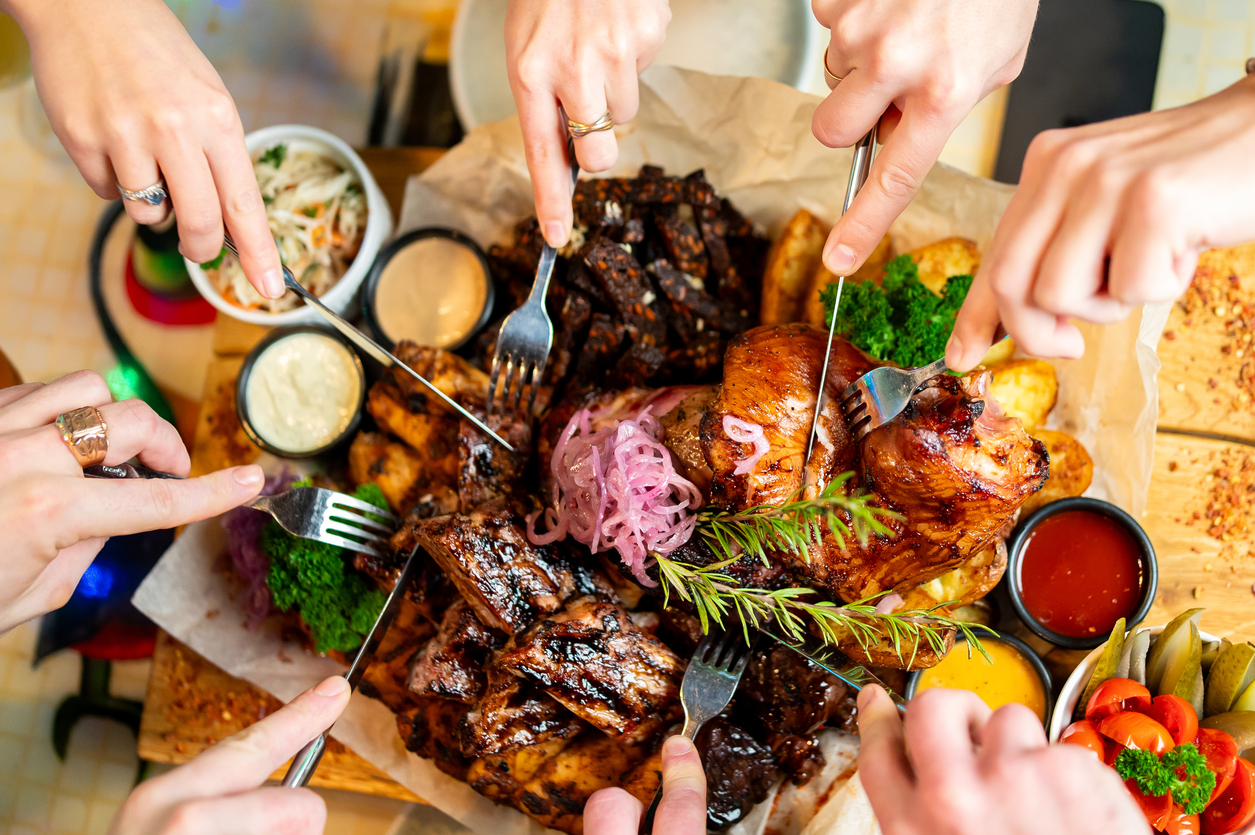
I have written elsewhere about various what I call graces of gospel-shaped community. In this post I want to consider another lesser-known one another text of the New Testament in 1 Corinthians 11:33: So then, my brothers, when you come together to eat, wait for one another.
The Biblical Setting
The Corinthian church struggled with multiple problems. Paul wrote the letter to address them one-by-one. When we come to chapter 11, he turns his attention for the next couple of chapters to abuses in their corporate worship—especially the most serious of all—their practice related to taking the Lord’s Supper. Serious doesn’t even begin to express the degree of alarm sounded here. Their abuses in this regard made God so sick, as it were, that He brought severe physical judgment upon the people (1 Cor. 11:30). The Table is not something with which to trifle!
The Historical Background
Commentator William Barclay explains:
The ancient world was in many ways much more social than ours is. It was the regular custom for groups of people to meet together for meals. There was, in particular, a certain kind of feast called an eranos to which each participant brought his own share of the food, and in which all the contributions were pooled to make a common meal. The early Church had such a custom, a feast called the Agape or Love Feast. To it all the Christians came, bringing what they could, the resources were pooled and they sat down to a common meal. It was a lovely custom; and it is our loss that the custom has vanished. It was a way of producing and nourishing real Christian fellowship.
Indeed, it is. We find biblical evidence of those kinds of love feasts among the churches in two other places: 2 Pet. 2:13—concerning false teachers plaguing the church—They are blots and blemishes, reveling in their deceptions, while they feast with you. And Jude 12: [regarding false teachers] These are hidden reefs at your love feasts, as they feast with you without fear, shepherds feeding themselves. Frequently those Christian feasts would culminate in the eating of the Lord’s Supper. They combined the Supper with their community meal—unlike the way we typically separate it on Sundays. OK, so far so good. But look what happened in Corinth with this whole deal in 11:20-21: When you come together, it is not the Lord’s supper that you eat. For in eating each one goes ahead with his own meal. One goes hungry, another gets drunk. More on this disgraceful behavior in a bit.
Understand a couple things about first century Corinth. Class distinctions abounded, rich and poor especially. The current famine (Paul speaks of it as the present distress in 1 Cor. 7:26) exacerbated the situation in that the slaves who normally went without anyway, suffered even greater want given the circumstances. In fact, the weekly common meal where the rich and poor would eat together in the church, sharing as each one had means, might amount to the only decent meal a poor person or family would get in any given week. The poor depended upon those with greater means to share from their abundance. But that was not happening in Corinth and Paul made sure here in chapter 11 that they would get nothing in the way of commendation for their astonishing behavior. He scolds them at the end of v. 22: Shall I commend you in this? No, I will not. He was ticked. He blistered them with godly reproof. For what?
Hurrying! He rebuked them for not waiting for the poor who couldn’t get to the feast as soon as they in their wealth and leisure could. No, instead they would wolf down the food, stuff themselves, and even drink to excess according to v. 21, with the result that some of them got drunk while the poor went hungry! A good bit of research into the first century as well suggests that the well-off may have taken up the prime spots in the household’s dining room leaving the poor to stand and/or congregate in ancillary rooms of the dwelling. Good grief!
Do you see the picture? Do you get the result? The calloused, selfish, insensitive, grab-game behavior in Corinth brought yet another form of division and separation into the assembly, based on the haves and the have nots, the rich and the poor! Before Paul hammered anything else in the letter, he took on the problem of factions in 1 Cor. 1:10-13:
[10] I appeal to you, brothers, by the name of our Lord Jesus Christ, that all of you agree, and that there be no divisions among you, but that you be united in the same mind and the same judgment. [11] For it has been reported to me by Chloe’s people that there is quarreling among you, my brothers. [12] What I mean is that each one of you says, “I follow Paul,” or “I follow Apollos,” or “I follow Cephas,” or “I follow Christ.” [13] Is Christ divided? Was Paul crucified for you? Or were you baptized in the name of Paul?
So, in chapter 11, Paul returns to the poison of division in the body but comes at it from a different direction—the abuses of the Lord’s Supper. That’s why in vv. 23-26 he chooses to teach them again the true nature and proper observance of the Supper as a spiritual event of the highest order—not a cause of gorging the physical appetites! Indeed not, as he rails with rapid-fire rhetorical questions in v. 22: What! Do you not have houses to eat and drink in? Or do you despise the church of God and humiliate those who have nothing? In other words, you have homes for satisfying your appetites. Your sinful behavior despises the cross of Jesus which obliterated class distinctions of every kind, made abundantly clear in 1 Cor 10:17: Because there is one bread, we who are many are one body, for we all partake of the one bread. And your behavior humiliates the poor for whom God takes up offense. Proverbs 17:5: Whoever mocks the poor insults his Maker.
Now we have a basis for understanding his loving, (note that though steamed at them, in v. 33 he calls them brothers, a term of affection) practical admonition at the conclusion of this section: when you come together to eat, wait for one another. The Greek word for wait can mean that or expect. I think the ESV gets it right given a text like Acts 17:16: Now while Paul was waiting for them in Athens and this immediate context previously reviewed. The ESV includes a marginal note with an alternate rendering of share with, I suspect, because waiting for the poor to show up implies the expectation of sharing with them and not hoarding. Do this waiting with a view to sharing, Paul says, (and if you can’t, eat at home to take the edge off) why in v. 34? So that when you come together it will not be for judgment. Judgment of the worst kind.
Now we’re finally ready for the main idea for this post: The gospel shapes community by empowering us to manifest the grace of practicing selfless, loving, and sensitive courtesy toward all, particularly with taking the Lord’s Supper in view. How do we make the jump then to our context before we partake? In some ways, the takeaways are not as closely connected, since we normally practice separation between the Lord’s Supper and our fellowship meals. I suggest three applications related to Communion.
One, acknowledge the priority of the Supper as supremely important in the worship of the church and as a means of grace for your spiritual life. We should not think too lightly of this ordinance of Christ.
Two, take extraordinary care in the way you participate in the Supper with particular attention to discerning the body (11:29). The church is one body where unity, peace, and equality should excel like nowhere else. It should matter greatly how we deal with one another and that we do nothing to separate or divide the church. Practice peacemaking when necessary.
Three, examine your heart for any exclusivist prejudices that rear their ugly heads in the form of racist feelings, sexist feelings, classist feelings, cliquish feelings, or insensitive, dismissive-of-others feelings that negate the true meaning of the Supper and despise the church of Jesus Christ where all stand equal as fellow heirs of the grace of life.
If you find such ugliness in your heart, admit it to Jesus and believe the gospel again for grace and forgiveness. Then come eat and drink at the Lord’s Table with a heart’s prayer to so thoroughly delight in the sacrifice of Christ on the cross for you that it elevates you to a still more excellent way, the way of love (1 Cor. 13), and the grace of “waiting,” no matter how different a class the object of your love.

