No Comparison, No Way, No How

better-is-one-day-story_scruberthumbnail_0

I enjoy Fridays. Unlike a lot of pastors who take Mondays off, I work that day. Keeps me out of trouble. I started taking Fridays off years ago.  I never looked back.

One of the things I look forward to that day of the week, among others, is reading the paper with more leisure than the other days afford. Something dawned on me this past Friday as I perused the Calendar section of the Orlando Sentinel. I have no sense of loss that my delight in Jesus keeps me from certain pleasures, if you want to call them that, in this world. I don’t feel that I am missing a thing in choosing not to view “Fifty Shades of Grey,” though I must admit a day when I would not have thought that way. Thank you, Lord, for delivering me from bondage to lust. I don’t feel cheated that the club scene doesn’t make its way on to our weekend calendar, especially on Saturday nights.

Why is that? Because I want to be able to get up and go to church the next day. And that’s not just because church is what I do for a living. I have spent more Sundays that I would like to admit without a pulpit charge and I still went to church on those days. I agree wholeheartedly with the Psalmist in Psalm 84:10.

For a day in your courts is better than a thousand elsewhere. I would rather be a doorkeeper in the house of my God than dwell in the tents of wickedness.

Talk about a comparison! The poet of Israel wouldn’t trade one day in God’s courts for a thousand some place else. I can think of a lot of places and things I thoroughly enjoy, but nothing, no way, no how trumps the pleasure I have in Sunday worship.  I can think of several reasons why that is true even over sleeping in, watching TV, going to the beach, eating brunch out, or whatever.

First, and the best of all reasons, God shows up at church. At least He does for me. Psalm 63:2 happens for me all the time.

Second, I hear the word of God preached. Well, in my case, I get to do the preaching. Double bonus. I get built up in my most holy faith as a result (Acts 20:32).

Third, I get to hang out with saints. That’s what the Bible calls every believer. And they are the excellent ones in whom is all my delight (Psalm 16:3). I even get to eat with them tomorrow evening when we gather for family night!

I could go on. I wonder sometimes if we take for granted just how much the Lord has done for us in redeeming us from tents of wickedness and transporting us to His very own courts, even if we are only keepers at the door?

No comparison. No way. No how.

How Do You Spell “Family Night?”

family-night

God help me, I know of no other way.

F = Fun. That’s right. We’re going to have fun. Yay!

acrosticA = Adventure. Un huh. Working on it. Pray for my favor with a certain band of recruits I’m wearing down with pastoral guilt to coerce their participation.

M = Ministry. Hear about what God is doing in gospel work inside and outside the church.

I = Inspiration. We’ll do some singing and look into God’s Word for a bit.

L = Love. That’s what fellowship is all about – connecting and loving on one another.

Y = Yelling. Doesn’t every church member/business meeting have some of this? Just kidding. Couldn’t think of anything for the letter “Y”.


N = News. Updates on all kinds of things of interest to OGC peeps who want to be in the know. 

sam_chileI = Indigestion. Well, we are eating chili, aren’t we? Don’t forget the Beano. Can’t believe I wrote that.

G = Guidance.  Direction for where we hope to take these quarterly member meetings in the future for increasing ownership. You didn’t think I would leave that word out of this post, did you? No way.

H = Hospitality. Newcomers are WELCOME! We want you to get an up close and personal look at our church’s character and DNA.

T = Tales. Some of our covenant members will share true stories about the way God is working in their lives and using their gifts. Others of us will pray for them.


There you have it. That’s how I spell “Family Night.” This Sunday evening, February 22, 5 PM. Chili Cook Off in the fellowship hall followed by one of the coolest annual meetings you will ever experience. Childcare for all ages will be provided for the meeting portion of the evening.

Who cares about the Great American Race? That’s why God made DVRs. Just sayin.

Don’t miss FAMILY NIGHT at OGC!

Surviving Sorrow

I Married Up

How’s Nancy?

How are you?

I get these two questions a lot these days. I’m grateful. Caring by others adds greatly to comfort in trial and the soul sorrow it can bring.

As for question one . . .

My wife amazes me. Her devotion to a natural cancer-beating protocol nearly defies description. She has embraced this season’s demanded vocation – getting well – with whatever-it-takes zeal. By way of update, she continues to recover nicely from surgery. Last week the surgeon gave her a good report. Just a couple more weeks to go and she will be back to lifting those boxes of supplements all by herself again. Good thing. My back hurts.

Another blood test revealed slightly elevated CA-125 markers. The doc said “No surprise. Common after surgery.” Now we have a baseline for measuring effectiveness of the treatment regimen. We expect her to check these about monthly from this point on. That way we will have some idea of whether we are gaining, losing, or holding ground in the war against, as I prefer to call it, “this stupid disease.” As always, we would ask for prayer for God’s healing power to rid her body of every renegade cell.

As for question two . . .

How much time do you have? I fight daily on a number of fronts. Among them, sadness. Though January, gratefully, came and went, the sting of Josh’s death lingers. I don’t expect it ever to go away, though the burden does lessen with time. But fear of greater loss can compound my weight of sorrow. I feel it every day.

And yet, every day, it seems the Lord brings something to help me fight better to outlast my sorrow. This morning was no exception, as my daily Bible reading brought me to Matthew 26:36-46 (ESV).

Then Jesus went with them to a place called Gethsemane, and he said to his disciples, “Sit here, while I go over there and pray.” And taking with him Peter and the two sons of Zebedee, he began to be sorrowful
and troubled. Then he said to them, “My soul is very sorrowful, even to death; remain here, and watch with me.” And going a little farther he fell on his face and prayed, saying, “My Father, if it be possible, let this Gethsemanecup pass from me; nevertheless, not as I will, but as you will.” And he came to the disciples and found them sleeping. And he said to Peter, “So, could you not watch with me one hour? Watch and pray that you may not enter into temptation. The spirit indeed is willing, but the flesh is weak.” Again, for the second time, he went away and prayed, “My Father, if this cannot pass unless I drink it, your will be done.” And again he came and found them sleeping, for their eyes were heavy. So, leaving them again, he went away and prayed for the third time, saying the same words again. Then he came to the disciples and said to them, “Sleep and take your rest later on. See, the hour is at hand, and the Son of Man is betrayed into the hands of sinners. Rise, let us be going; see, my betrayer is at hand.”

Not just “sorrowful” but “troubled.” “Even to death.” The cross loomed on the horizon. The tempter lurked in a different garden hunting the Last Adam as he did the first (Genesis 3:1-7). More than ample reason for extreme distress.

How then does Jesus fight? What cues can we take from Him for surviving sorrow, whatever form it takes in our gardens of suffering? Four things: surrounding, seeking, serving, submitting.

One, surrounding ourselves with support. Jesus did not head for that garden alone. He took the disciples with him. The closest of the close he staged a stone’s throw away. He needed them. “Watch WITH me,” was His plea.

Two, seeking God’s help. Falling on His face He prayed. Let those words sink in. Some things only God can fix. Some hurts only the Lord can manage. Some pains only the Father can ease. Some challenges only I AM can handle. The two most important words out of our mouths when struggling to survive sorrow are “My Father,” because they mean we’ve turned heavenward, the only hope of avoiding collapse. And we must persist in this pattern. Three times Jesus went before the Father to voice His prayer. As long as the sorrow hangs around, take it to the Lord in prayer.

Three, serving others in love. The disciples favored a strategy often turned to in sorrow. Sleep. Jesus does not berate them. Even though subject to the temptation of temptations Himself, His best friends no comforters at all, He does not lash out. Rather He teaches and warns. Watch and pray that you may not enter into temptation. The spirit indeed is willing, but the flesh is weak. First the example, next the instruction. You’ve got to watch and pray to survive your sorrows. I’m grateful for the stewardship of pastoral ministry. The call to serve others helps pull me out of sorrow’s tractor beam grip that so often leads to self-pity and despair.

Fourth, submitting to God’s will. If the two most important words out of the gate in sorrow are “My Father,” then the four most strategic words at the finish line are “Your will be done.” Who prays this way? Only those who believe Psalm 115:3. Our God is in the heavens; he does all that he pleases. The Son of God treasured the Father’s sovereignty in all things. He submitted Himself perfectly to His will. He delighted to do that will, even to the point of death, death on a cross (Phil. 2:6-8).

So when I don’t fare so well on any given day in my fight to survive my sorrow, or perhaps my comforters fall asleep on me, I try to remember the One who fought His sorrows and won for me what I cannot do for myself. I commend the same strategy to you as you go through your valley of the shadow whenever and wherever it may come.


Divine Mathematics

math

I hated math. I remember getting a “D” in Mr. Donnelly’s seventh grade class when the “New Math” came out – whatever that was. My overachiever, get-all-A’s world crumbled then and there. It never recovered. In college I did everything I could to stay away from anything mathematics related. Wasn’t I surprised when I signed up for Astronomy 101 that it was a math class in disguise. I just wanted to know about the stars. Took every extra-help Saturday class to survive that one.

Now, divine mathematics is an altogether different thing. That’s what D. A. Carson calls the equation formulated by the Apostle Paul in 1 Corinthians 13: 1-3.

If I speak in the tongues of men and of angels, but have not love, I am a noisy gong or a clanging cymbal. And if I have prophetic powers, and understand all mysteries and all knowledge, and if I have all faith, so as to remove mountains, but have not love, I am nothing. If I give away all I have, and if I deliver up my body to be burned, but have not love, I gain nothing (ESV).

The equation? Five minus one equals zero. Or to put it George Sweeting’s way “gifts, minus love, equals zero.” Paul goes to great lengths in the first part of the Bible’s famous love chapter to describe supernatural gifts, extraordinary faith, and even heroic gestures like martyrdom, only to obliterate their significance before God if they lack love. Even the big five taken all together in this text, minus love, amount to absolutely nothing. Auth0r Jerry Bridges brings home the importance of God’s way of doing math:

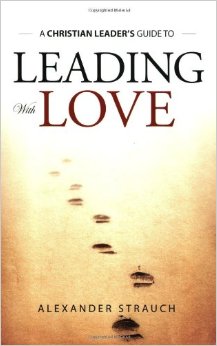
leading with loveWrite down, either in your imagination or on a sheet of paper, a row of zeros. Keep adding zeros until you have filled the whole line on the page. What do they add up to? Exactly nothing! Even if you were to write a thousand of them, they would still be nothing. But put a positive number in front of them and immediately they have value. This is the way it is with our gifts and faith and zeal. They are the zeros on the page. Without love, they count for nothing. But put love in front of them and immediately they have value. And just as the number two gives more value to a row of zeros than the number one does, so more and more love can add exponentially greater value to our gifts (quoted in Leading with Love, Alexander Strauch, p. 15-16).

I can live with a “D” from 7th grade, but I want to excel far better in spiritual mathematics. No Christian leader should aspire to anything less. For that matter, nor should any follower of Jesus.

Birthday Burnings and Pleas for Mercy

Josh and Me (2)

Josh,

You would have turned 37 today. Mom and I may not have necessarily enjoyed the pleasure of your company this very day. You would likely have pulled a double at the restaurant. But we would have caught up with you on your day off, maybe even watched the Super Bowl this Sunday, played perhaps with properly inflated balls.

I would grill you a ribeye, medium rare, just as you liked it. Mom would have baked you one of those killer “Black Magic” cakes – a Heff birthday tradition. We would have sipped a Zin brought by you purchased inevitably above my pastoral price point. And the preacher in Ecclesiastes 2:24-25 would have smiled upon us: “There is nothing better for a person than he should eat and drink and find enjoyment in his toil. This also, I saw, is from the hand of God, for apart from him who can eat or who can have enjoyment?”

But you are gone. I miss you.

Love,

Dad

Those horrible words sink in yet another heart-stabbingly relentless time. Just when I thought I survived January 18, the 28th brings another of grief”s battering waves.

Once again, where does a grieving father turn? He goes to His father above. And He never disappoints.

There this miserable-memory morning I read these words from another familiar-with-suffering servant:

Job gives utterance to a mood which is not foreign to us when he says, “Am I a sea, or a whale, that You set a guard over me?” In certain moods of anguish the human heart says to God, “I wish You would leave me alone; why should I be used for things which have no appeal to me?” In the Christian life we are not being used for our own designs at all, but for the fulfillment of the prayer of Jesus Christ. He has prayed that we baffled-to-fight-bettermight be “one with Him as He is one with the Father”; consequently God is concerned only about that one thing, and He never says “By your leave.” Whether we like it or not, God will burn us in His fire until we are as pure as He is, and it is during the process that we cry, as Job did, “I wish You would leave me alone.” God is the only Being who can afford to be misunderstood; we cannot, Job could not, but God can. If we are misunderstood we “get about” the man as soon as we can. St. Augustine prayed, “O Lord, deliver me from this lust of always vindicating myself.” God never vindicates Himself, He deliberately stands aside and lets all sorts of slanders heap on Him, yet He is not in any hurry. We have the idea that prosperity, or happiness, or morality, is the end of a man’s existence; according to the Bible it is something else, “to glorify God and enjoy Him for ever.” When a man is right with God, God puts His honor in that man’s keeping. Job was one of those in whom God staked His honor, and it was during the process of His inexplicable ways that Job makes his appeal for mercy, and yet all through there comes out his implicit confidence in God. “And blessed is he, who is not offended because of Me,” said Our Lord (Oswald Chambers, Baffled to Fight Better: Job and the Problem of Suffering, Discovery House, 1990, p. 41-42, emphasis added).

I’m not a 21st century Job. Not even close. But I do need mercy. Thus I appeal.

Sovereign God, if I belong to that privileged company “Guardians of Your Honor,” and I believe I do, only by grace, then burn away as You please. But have mercy on me for I am but a sinful, grieving man dealing with this birthday’s burnings. I admit it. I sometimes wish you would leave me alone. But not so much that I entertain offense at my Savior and abandon my implicit confidence in You.

The God of Encouragement in the Fight for Life

sohl_2014-2015_banner

I admitted up front in last Sunday’s sermon, “What To Do About Things Like Abortion and Racism,” that every year I struggle more with this particular message than any other. The challenge of speaking from the Bible to complicated subjects like abortion and racism for Sanctity of Human Life Sunday surpasses any other preaching assignment I know of in terms of degree of difficulty. I never feel adequate for the task, but press ahead nonetheless given the stakes.

However, my heart soared after the service when approached by a newcomer to OGC. She wanted to thank me for the message. She told me she had driven by the building often and considered visiting but felt especially drawn to our service yesterday. The story she told me made the “why” plain.

A single mom, she shared with me with tears in her eyes that just six years ago she visited the abortion clinic up the street where we and folks from other churches engage in sidewalk counseling to offer people like her alternatives to abortion at crisis pregnancy centers. She intended to abort her child. The counselors on sight called out to her and she responded. She turned around that day, spared her baby’s life, and has been raising her child ever since.

I say to every one of us with a burden for the unborn and the dear people so conflicted and bound by idols of the heart that they can somehow justify child-killing that every effort made to intercede and intervene counts. Do not give up. Persevere. Your efforts matter. You never know what God will do. Fight the good fight. Even just one precious life rescued is worth the price.

Overcoming Resentment and the Urge to Get Even

geteven

Everyone deals with this. No one avoids hurt which results from bad treatment. The human condition inevitably struggles with lingering resentment over wrongs done. Who hasn’t relished the prospect of payback which matches the harm inflicted by someone’s evil?

Joseph certainly must have. He had every reason to after his brothers sold him into Egyptian slavery (Genesis 37). Fearing the worst after their father died, those brothers definitely worried so:

When Joseph’s brothers saw that their father was dead, they said, “It may be that Joseph will hate us and pay us back for all the evil that we did to him.” So they sent a message to Joseph, saying, “Your father gave this command before he died: ‘Say to Joseph, “Please forgive the transgression of your brothers and their sin, because they did evil to you.”’ And now, please forgive the transgression of the servants of the God of your father.” Joseph wept when they spoke to him. His brothers also came and fell down before him and said, “Behold, we are your servants.” (Genesis 50:15-18 ESV)

They pitched Pharaoh’s number two, their little brother, on accepting an offer of servitude in exchange for their lives and the lives of their families. Joseph’s response stands forever as a marvel of grace and a model for peacemaking reconciliation  even in the face of the worst kind of treatment:

But Joseph said to them, “Do not fear, for am I in the place of God? As for you, you meant evil against me, but God meant it for good, to bring it about that many people should be kept alive, as they are today. So do not fear; I will provide for you and your little ones.” Thus he comforted them and spoke kindly to them. (Genesis 50:19-21 ESV)

My, talk about letting your speech always be gracious (Colossians 4:6) and love covering a multitude of sins (Proverbs 10:12)!

How did Joseph do it? What did he know that caused him to release arguably reasonable and deserved resentment for his brothers and bless them with fear-easing comfort?

Three things.

  1. He knew his place – not being God. Am I in the place of God? His was not to judge. That job’s taken. He heard Paul’s words before he ever wrote them:

    Beloved, never avenge yourselves, but leave it to the wrath of God, for it is written, “Vengeance is mine, I will repay, says the Lord.” To the contrary, “if your enemy is hungry, feed him; if he is thirsty, give him something to drink; for by so doing you will heap burning coals on his head.” Do not be overcome by evil, but overcome evil with good. (Romans 12:19-21 ESV)

  2. He knew his God – working for good.  As for you, you meant evil against me, but God meant it for good, to bring it about that many people should be kept alive, as they are today. Once again we read foreshadowing of the apostle finding grace to heal hurts anchored in God’s sovereignty.   And we know that for those who love God all things work together for good, for those who are called according to his purpose. (Romans 8:28 ESV)
  3. He knew his role – caring for others.  I will provide for you and your little ones. Paul, Paul everywhere.

    Do nothing from selfish ambition or conceit, but in humility count others more significant than yourselves. Let each of you look not only to his own interests, but also to the interests of others. (Philippians 2:3-4 ESV)

Of course Joseph ultimately points to his greater Son, Jesus, who not only modeled such love and grace (Luke 23:34) but also empowers us to do the same through the power of the gospel (Philippians 2:5-11).

Are you shackled by the chains of unforgiveness that harbor resentment and plot revenge? Seek your freedom in the love-covering-a-multitude of your sins and the sins of others by virtue of the cross and resurrection.

Gracious Uncertainty

Gracious-Uncertainty

As I pass the one year anniversary of loss, I return today to the duties that lie nearest. Study, sermon writing, board meeting prep, pastoral care, etc.

Before me lies the uncertainty of Nancy, my bride’s, health and what the rest of 2015 will bring on that front, not to say numerous others.

This good word from Oswald Chambers expresses my desires in moving forward:

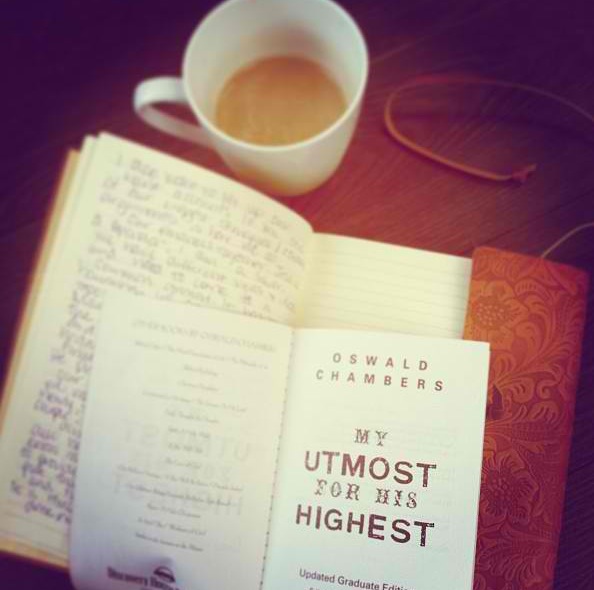
Certainty is the mark of the common-sense life: gracious uncertainty is the mark of the spiritual life. To be certain of God means that we are uncertain in all our ways, we do not know what a day may bring forth. utmostforhighestThis is generally said with a sigh of sadness, it should be rather an expression of breathless expectation. We are uncertain of the next step, but we are certain of God. Immediately we abandon to God, and do the duty that lies nearest, He packs our life with surprises all the time. When we become advocates of a creed, something dies; we do not believe God, we only believe our belief about Him. Jesus said, “Except ye become as little children.” Spiritual life is the life of a child. We are not uncertain of God, but uncertain of what He is going to do next. If we are only certain in our beliefs, we get dignified and severe and have the ban of finality about our views; but when we are rightly related to God, life is full of spontaneous, joyful uncertainty and expectancy. “Believe also in Me,” said Jesus, not – “Believe certain things about Me.” Leave the whole thing to Him, it is gloriously uncertain how He will come in, but He will come. Remain loyal to Him.

To quote Forrest Gump and perhaps balance things a bit, “I think it’s both.” The virtue of gracious uncertainty which embraces God in the future includes shouts of joy AND sighs of sadness.

Grateful that Ecclesiastes 7:13-14 is in the Book.

SPURGEON’S SORROWS, MINE AND YOURS

Josh thinker

Grief casts a long shadow. At least 365 day’s worth. One year ago today we lost our firstborn son, Josh, or, as he liked others to call him, “Thee Heff.”

Life-threatening cancer proved my effective tutor in 2005. Gut-wrenching loss brought its mastery instruction in 2014. I’m learning, reluctant or not, much in the school of sadness, perhaps most importantly this: some pains in life visit and determine to stay. I don’t expect grief ever to release its hold for the rest of my life. The words, “Josh is dead.” altered my experience forever. I’ve heard other loss-sufferers say such things. I thought I understood. Now I really do.

I find solace this tortuous anniversary weekend in the reading of a book. (Read books. They change lives.) Zack Eswine, thank you for writing Spurgeon’s Sorrows: Realistic Hope for those who Suffer from Depression. In its provision, providence smiled on this sad heart as I read through its 144 pages the last two days.

Any Baptist preacher of the Reformed tradition (others as well) treasures Charles Haddon Spurgeon. Few preached with greater anointing. No one wrote more sermons. Calvinistic, gospel zeal pulsed through his veins in degrees of which I can only dream. With reading Pastor Zach’s book I added a new dimension of appreciation for this giant of the faith – how his near lifelong battle with depression helps me cope with my sadness and in turn comfort others in theirs.

I have long known about Spurgeon’s trouble with melancholy. I did not realize, however, its root for the man in one horrific event early on in his preaching ministry (see p. 19). It brought catastrophic grief, grief, believe it or not, I honestly imagine greater than my own. It prompted this comment from the author, borrowing from a Spurgeon sermon entitled “Weak Hands and Feeble Knees”:

For some of us, we’ve been unable to live in any other scene but the one that crushed us. We were brought so low that we never held up our heads again. It’s like we will go from that time forth mourning to our graves. Circumstance haunted us and went on. Depression came but never left. It haunts us still (p. 29).

Pastor Zack joins our hands with “Charles,” as he fondly calls him, and walks us through his journey. He invites us to view it as “the spurgeons sorrowshandwritten note of one who wishes you well” (p. 23). And well we should. The author has served the reader admirably with numerous citations from Spurgeon’s work on this challenging subject. He has thoroughly mined the precious ore of insight to be gained from one who suffered so greatly and dared talk so freely about it from his influential pulpit. Pastor Zach also shows us from Scripture the reality of sorrow. Additionally he borrows from numerous other works on the subject. He accomplishes a lot in so short a resource. Though I wish I could ask him humbly and gently, “How could you leave out Lloyd-Jones’ classic Spiritual Depression?”

Who should read this book? Easy. Any sufferer of depression and its close relatives, sorrow, sadness, and grief. Here you will find compassion, understanding, hope, and help. Pastor Zach inserts along the way distilled lessons from Spurgeon’s experience that ease the burden of “heaviness of spirit” (p. 46). While not all will agree with or like some of his prescriptions (e. g., medication as necessary), there is plenty of spot on assistance to glean especially from part three (Learning Helps to Daily Cope with Depression).

Caregivers, pastors, and otherwise “one another” gospel-shaped Christians who want to do 1 Thessalonians 5:11 well will also want to read this book. Pastor Zach takes particular aim against “God-talkers” and insensitive Job-like comforters. He pleads for more of us in the helping trade to adopt compassion and understanding in dealing with the bruised reeds and smoldering wicks in this broken world. May the tribe increase.

Gratefully, Pastor Zack leads us from the lesser story of Charles Spurgeon, as instructive, yet incomplete as it is (there are some cautions to hear along this path) to the greater story of Jesus – the Chief Mourner (p. 86) – the Man of Sorrows acquainted with grief (Isaiah 53:3). He even shows tenderness to the skeptic on looker who’s own loss may venture her to wade into these pages though not sure at first what to make of this pastor’s God-talk. You can give this to a seeker and not worry so much.

Thanks to our good friends at Westminster Books, I scarfed up a bunch of these for a mere $5 a piece. Lord willing, you can find them in the OGC resource center next Sunday.

I’m not sure I’ve arrived at the place Spurgeon did, especially after my most recent post, Never Again. But I affirm the truth of it in ending my anniversary reflections on loss:

I am sure that I have run more swiftly with a lame leg than I ever did with a sound one. I am certain that I have seen more in the dark than ever I saw in the light— more stars, most certainly—more things in Heaven if fewer things on earth! The anvil, the fire and the hammer are the making of us—we do not get fashioned much by anything else. That heavy hammer falling on us helps to shape us! Therefore let affliction and trouble and trial come.

They most certainly will. And His grace, as always, will most certainly be sufficient (2 Corinthians 12:9).