Why Observe Reformation Sunday?

reformationday

Fresh from two weeks in the wilds of Idaho, it feels good to get back in the blog posting saddle again. The church calendar constrains me. October 27 is Reformation Sunday. Every last Sunday of the month of October we at Orlando Grace, along with most churches in the Reformed tradition, mark the anniversary of the official start of the Protestant Reformation. On October 31, 1517, Martin Luther nailed his church-shaking Ninety-Five Theses on the the door of the Wittenburg church, catalyzing a tectonic shift in Western Christianity.

I’m not sure I can improve on last year’s post to this end by a fellow officer of mine. However, I do feel certain things need to be said, if only by repetition. The question to observe or not to observe Reformation Sunday for this pastor is a no brainer. Yes, a thousand times yes. Although I must admit for years as a pastor, I failed to do so. I credit a former associate of mine, now turned jeweler, for opening my eyes on that score. Thank you, young squire. I miss you.

Orthodox Christians of the 21st century stand on the shoulders of giants who have gone before us. None matter more than the Reformers in one respect for what they recovered for the church laboring under the legalism and apostasy of Roman Christianity. As captured in the first of the solas, sola Scriptura, the Reformation saw a return to the ultimate source of authority over the church – the inspired, inerrant word of God (2 Tim. 3:16). Thanks to Luther, Calvin, Zwingly and the rest, no longer do we look to creeds, confessions or tradition for the source of truth guiding God’s people. Scripture sets the standard. Creeds and confession have enormous value, even as OGC subscribes to the 1689 London Baptist Confession of Faith, but only as they accurately reflects the Word of God.

As captured in the additional solas – sola gracia, sola fide, sola Christus, and sola deo gloria, the reformation accomplished a recovery of the gospel that is rightly grasped and proclaimed only as salvation by grace alone through faith alone in Christ alone to the glory of God alone. Hence my sermon text for this Sunday – Ephesians 2:7-10 and title – Eternity’s Glorious Display. God will forever put on display the wonders of His grace precisely because the nature of the redeemed’s salvation is by grace alone, not a result of works, lest anyone should boast.

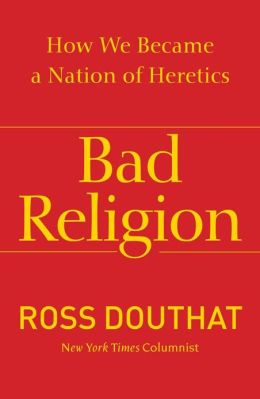
One final thought why we ought to observe Reformation Sunday. Because we need a modern day Reformation. I first became convinced of this by reading David Wells provocative book No Place for Truth: Whatever Happened to Evangelical Theology. Lately I have been reinforced in my determination that the same need exists more than ever by reading Ross Douthat’s 9781439178331_p0_v3_s260x420helpful assessment of the American religious landscape Bad Religion: How We Became a Nation of Heretics. Douthat chronicles the demise of orthodox Christianity over several decades into a panoply of false teachings and heresies that make one’s hair stand on end. In his concluding thoughts, he notes historical evidence including within America’s journey when it looked like all was lost for true religion when the opposite actually occurred. He offers this hope with the help of G. K. Chesterton:
In each of these cases , an age of crisis was swiftly followed by an era of renewal, in which forces threatening the faith either receded or were discredited and Christianity itself revived. Time and again, Chesterton noted, “the faith has to all appearance gone to the dogs.” But each time, “it was the dog that died.”

Yes, we should observe Reformation Sunday. May we celebrate what the Reformers recovered and hope the heterodox dogs of the day die once again.


How Not to Disgrace Your Folks

makefathermotherglad

I chose to hunker down in the book of Proverbs for 2013. The wisdom promised as a result motivates me. Anything considered more valuable than jewels and incomparable to anything else I may desire (Prov. 8:11), that I want to acquire in greater quantities.

Recently I progressed in my reading to Proverbs 10, the second table of Solomon’s writings. The wise king’s starting place intrigued me. In one respect, it did not surprise. By and large this book of the Bible exists for young people and their benefit. Just read the first table in chapters one through nine to see quickly what I mean.

In the second table, where the writer moves on to a wide variety of proverbial sayings, he focuses on wisdom as it applies to a son or daughter from a unique perspective. He considers the prospect of a youth’s choices in terms of their impact for good or for ill on the parents. Here’s the text:

A wise son makes a glad father, but a foolish son is a sorrow to his mother. 2 Treasures gained by wickedness do not profit, but righteousness delivers from death. 3 The Lord does not let the righteous go hungry, but he thwarts the craving of the wicked. 4 A slack hand causes poverty, but the hand of the diligent makes rich. 5 He who gathers in summer is a prudent son, but he who sleeps in harvest is a son who brings shame.

Now take it from a father who knows. Parents can do all kinds of things to bring shame on their kids. That’s a different post. This article deals with the other side of the equation. And make no mistake about it, Mr. Middle or High School student, your choices can have enormous ramifications on the Ma and Pa’s psyche. You should care about that. Check out the fifth commandment if you think otherwise. If you turn out wise, you make them glad. If you go the way of a  shipwrecked fool, you bring sorrow and shame. Which do you want? Settle the matter early. Choices you make today impact the kind of person you become tomorrow.

Please note the acid test Solomon immediately goes to in terms of measuring a youth’s wisdom or folly quotient – his or her approach to wealth. No surprise here. Jesus said you can’t serve God and money (Matt. 6:24). As my sidekick in ministry likes to say: time and money tell all. What you do with your time and your money reflects the idols of your heart. The heart always worships what it desires most. Never, never, never, dear teenager, doubt the significance of your disposition toward the almighty dollar.

wealthhighachievers

Solomon cites two virtues related to wealth and its accumulation  that, embraced by the child of a parent (presumably wise as well), will ensure a glad-hearted  response on the part of that parent – integrity and industry. Kids, you can fall off the horse in at least two directions in this money thing. First, you can resort to evil in the name of making a profit. Good luck with that. Deception, fraud, embezzlement, or any other wicked means to line your pocket with Benjamins will not help you on the day you die – only righteousness will. God is not mocked. You sow what you reap (Gal. 6:6-10). Think I heard that preached somewhere recently.

homer_sleeping_on_sofa_wallpaper_-_1280x8001

Second, you can care less about acquiring wealth by perfecting the art of laziness. The writer talks about summer and harvest and the like because that connected with the way folks made their living those days in an agricultural society. You can make the jump on your own to our industrial/service age. The issues don’t differ. Diligence is a virtue. As a rule, it makes one wealthy (Prov. 13:4). The Hebrew word for “diligent” is used in Isaiah 41:15 of a threshing instrument that winnows grain well because of its sharpness. Sloth makes you dull. It will lead to poverty. Industry, hard work, showing up on time at your place of employment, laboring hard throughout the day, giving 110% effort – these things, because of your prudence, will see you well taken care of AND make your folks proud rather than ashamed.

So, what’s it going to be? Integrity or shadiness? Industry or sloth? Death or life? It’s not the most important aspect of these questions by a long shot, but it still matters. The difference in your choices will make for deliriously happy parents or dreadfully sad ones. Determine by God’s grace and the power of the gospel of Jesus to do all you can for the former.

Love Problems Are God Problems

love_is_all_you_need_

Given my role as a pastor, I see a lot of these. Love problems. They crop up all over the place, especially in marriages.

Recently I scoured the web for potential resources to use in a marital support group to help some couples deal with their recurring issues. Finally I landed on a book and accompanying study guide that looked very promising. Winston Smith’s Marriage Matters: Extraordinary Change through Ordinary Moments (New Growth Press, 2010, 285 pages) stood out among the myriad of offerings. This Christian Counseling and Education product doesn’t seek so much to contribute to the numerous biblical theologies of marriage on the market, many of them good as they are. This tool helps couples work through how the gospel can bring lasting change to troubled relationships in the ordinary, often challenging, moments of everyday life.

Smith’s premise goes like this: marriages change when we recognize God’s agenda for so-called ordinary moments. He launches his argument from a familiar passage of Scripture and then unpacks the core idea.

“Dear friends, let us love one another, for love comes from God. Everyone who loves has been born of God and knows God. Whoever does not love does not know God, because God is love” (1 John 4:7-8, italics mine).

Marriage_Matters“God is love.” We all want more love in our marriages. Who doesn’t love love? For the most part, we marry because of love–or at least because we hope for love. But in the most difficult moments we don’t feel loved, and we find it hard to love. God may not seem to make much difference in these moments; however, his involvement is crucial because God is love. When we find it hard to love, we need him all the more. A lack of love should prompt us to not just look more closely at our marriage but at our relationship with God.

The bad news: your love problems are bigger than you think because love problems are God problems. The good news: the solution is bigger than you think because God cares and is involved. Having more love in your marriage means having more of God in your marriage. Having trouble loving is evidence either that you don’t know God or that something is interfering in your relationship with God (p. 9).

Duh. Why didn’t I think of that? When that revolutionary concept sunk into my think head and prone-to-be-hard heart, I decided I needed to take the love problems in my marriage more seriously. Yes, tough as it is to believe, Nancy and I have these too, from time to time. Most, by the way,  are due to my idols doing their destructive thing in our relationship.

I knew without a doubt the first step I needed to take – memorize and mediate regularly on 1 Corinthians 13, sometimes referred to as the love chapter in the Bible.

If I speak in the tongues of men and of angels, but have not love, I am a noisy gong or a clanging cymbal. 2 And if I have prophetic powers, and understand all mysteries and all knowledge, and if I have all faith, so as to remove mountains, but have not love, I am nothing. 3 If I give away all I have, and if I deliver up my body to be burned, but have not love, I gain nothing.

4 Love is patient and kind; love does not envy or boast; it is not arrogant 5 or rude. It does not insist on its own way; it is not irritable or resentful; 6 it does not rejoice at wrongdoing, but rejoices with the truth.7 Love bears all things, believes all things, hopes all things, endures all things.

8 Love never ends. As for prophecies, they will pass away; as for tongues, they will cease; as for knowledge, it will pass away. 9 For we know in part and we prophesy in part, 10 but when the perfect comes, the partial will pass away. 11 When I was a child, I spoke like a child, I thought like a child, I reasoned like a child. When I became a man, I gave up childish ways. 12 For now we see in a mirror dimly, but then face to face. Now I know in part; then I shall know fully, even as I have been fully known.

13 So now faith, hope, and love abide, these three; but the greatest of these is love.

Part of mediation involves inserting my own name into v. 4-6 and praying the content back to God. Curt is patient and kind; Curt does not envy or boast. Lord, make these things true of me. You get the idea.

Do you have love problems? We all do. Bad news: the problem is bigger than you think. Good news: the solution is bigger than you think. Why not ask the Lord to help you bring your love problems with your spouse or whomever to the Lord so as to tap into His unlimited reservoirs of love? He alone can enable us to love better our neighbor as ourselves. And to ensure that the nature of your love matches His own, take up my challenge to memorize the love chapter and prayerfully meditate upon it. It will surprise you just how much that spiritual discipline shapes the ordinary moments you share with those whom you love.

From now on I think I will make memorizing 1 Corinthians 13 mandatory in my premarital counseling ministry. Better late than never.

Who Should Read “Crazy Busy?”

Deyoung Busyness

Now that I’ve read Kevin DeYoung’s new book Crazy Busy: A (Mercifully) Short Book about a (Really) Big Problem (Crossway, 2013, 124 pages), I’ve formed an opinion on this question. Probably most of us.

By the way. It delivers on the promise of brevity. I got through it in one sitting reclining on the couch while watching UCF lose to South Carolina. I thought I was perfecting my well-honed art of multitasking. Turns out I wasn’t even “switch-tasking.” See page 60 for more on that myth.

You have to love a guy – husband, father, pastor, author, conference speaker, among other things – who starts his latest book this way: “I am the worst possible person to write this book. And maybe the best (p. 11).” This kind of authorial polarization stems from the man’s aim in writing. He explains:

Some books are written because the author knows something people need to know. Others because the author has seen something people should see. I’m writing this book to figure out things I don’t know and to work on change I have not yet seen. More than any other book I’ve worked on, this one is for me.

That kind of humility draws me. I can take my cue from a guy like this. Crazy Busy is insanely good. I commend it to anyone who “feels frazzled and overwhelmed most of the time” (p. 16).

The book follows a simple and straightforward 3, 7, and 1 outline – three dangers to avoid, seven diagnoses to consider, and one thing you must do. It consists of ten chapters, 118 pages, not counting indexes.

  1. Hello, My Name is Busy
  2. Here, There, and Gone: Three Dangers to Avoid
  3. Crazy BusyThe Killer P’s—Diagnosis #1: You Are Beset with Many Manifestations of Pride
  4. The Terror of Total Obligation—Diagnosis #2: You Are Trying to Do What God Does Not Expect You to Do
  5. Mission Creep—Diagnosis #3: You Can’t Serve Others without Setting Priorities
  6. A Cruel Kindergarchy—Diagnosis #4: You Need to Stop Freaking Out about Your Kids
  7. Deep Calls to Deep—Diagnosis #5: You Are Letting the Screen Strangle Your Soul
  8. Rhythm and Blues—Diagnosis #6: You’d Better Rest Yourself before You Wreck Yourself
  9. Embracing the Burdens of Busyness—Diagnosis #7: You Suffer More because You Don’t Expect to Suffer at All
  10. The One Thing You Must Do

Buyer beware. If you desire a self-help resource with a checklist for increased efficiency and quantum productivity, leave this paperback off your Christmas list. DeYoung goes hard after the heart. Chapter three on pride threw me under the bus, where I belong, I might add. Were I still raising kids, chapter six would have leveled me. Though it’s not my issue (I have plenty of others, Lord knows), the chapter on social media and its dangers is worth the price of reading admission in its unpacking of the 21st century malaise of acedia. I confess. I never heard of that word until now. Read the book for yourself to learn about it, especially if you spend endless hours on the Internet. This self-confessed busyaholic (my term) takes no prisoners on the road to recovery. Prepare to have your categories challenged, your behaviors examined, and your motives unveiled – as well as your prescription for health detailed.

The book is biblical and practical. You would expect nothing less from a Gospel Coalition spokesman. Some chapters may suffer from the minimalist treatment, but he did promise to keep things brief. For those who desire more, DeYoung offers annotation with multiple resources and even cites them at the bottom of the page for the convenience of the reader. I love this guy! If I ever write a book, I promise, I won’t make readers (assuming anybody wants to read what I write, of course) turn to the back of the thing to check the references. I hate that. I am too busy for that inconvenience.

I found chapter nine particularly encouraging. It represents the best of the best in this little jewel in terms of its balance. DeYoung doesn’t pretend to have all the answers. He takes the path of the fellow traveler on the road of finding a middle ground between being crazy busy and redemptively busy. He doesn’t take us off the hook about busyness. Laziness isn’t the answer anymore than frantic over scheduling is. Even the Apostle Paul experienced the challenge of daily concern (anxiety) for all the churches (2 Cor. 11:28). I shepherd only one church. Its concerns I find more than overwhelming. I should not expect to be exempt from the good suffering that is being rightly busy. I just want to learn better how to steward these pressures along the way. Thank you, Kevin DeYoung, for contributing to my shalom as one who desires to be less crazy busy and more redemptively busy.

FYI, I am incredibly pleased to report that copies of this book arrived at OGC this week. They will be available tomorrow morning in the resource center for the crazy low price of $5 for those not too busy to secure a copy.

Fearful or Faithful?

faith fear

If I can help it, I rarely miss corporate worship on Sunday mornings. And not just because I pastor for a living. I’ve experienced more times than I can recount the reality of Psalm 63:2 – So I have looked upon you in the sanctuary, beholding your power and glory. God shows up stunningly more than not in the gatherings of His people for praise and community in ways He does not show up in private.

We experienced that this past Sunday at OGC. I preached a message called “The Tale of Two Trials” from John 18:12-27. You can listen to the audio here. John shows the flawless faithfulness of Jesus in the face of malice and betrayal. He remains faithful where the high priest proves malicious and Peter proves faithless. Rightly understood, the contrast in the text can take the breath away.

I led off with an illustration of a young Marine injured in the base bombing in October of 1983 in Beirut, Lebanon. It included reciting the corps’ motto – semper fi – always faithful.

bombing

Following the message, our lead worshipper, one of them more faithful men I’ve had the privilege of knowing, shared spontaneously prior to taking us into the final song. One of his sons is a Marine. Before long our country will deploy that young man to Afghanistan for a second time. Steve shared how he often gets asked how he deals with the anxiety related to his son’s service in harm’s way. He always says the same thing. “I believe God is sovereign. I could choose to be fearful. But because God is faithful, I choose to be faithful as well.”

You could feel the weight of the Spirit fall on our people. We beheld Him in His power and glory.

What’s the difference between living fearfully or faithfully? Steve got it right. It comes down to confidence in the sovereignty of God over all things and that He is never anything less than faithful. One of the best biblical examples I can cite for this comes from Acts 18:1-11.

After this Paul left Athens and went to Corinth. 2 And he found a Jew named Aquila, a native of Pontus, recently come from Italy with his wife Priscilla, because Claudius had commanded all the Jews to leave Rome. And he went to see them, 3 and because he was of the same trade he stayed with them and worked, for they were tentmakers by do-not-be-afraidtrade. 4 And he reasoned in the synagogue every Sabbath, and tried to persuade Jews and Greeks. 5 When Silas and Timothy arrived from Macedonia, Paul was occupied with the word, testifying to the Jews that the Christ was Jesus.6 And when they opposed and reviled him, he shook out his garments and said to them, “Your blood be on your own heads! I am innocent. From now on I will go to the Gentiles.” 7 And he left there and went to the house of a man named Titius Justus, a worshiper of God. His house was next door to the synagogue. 8 Crispus, the ruler of the synagogue, believed in the Lord, together with his entire household. And many of the Corinthians hearing Paul believed and were baptized. 9 And the Lord said to Paul one night in a vision, “Do not be afraid, but go on speaking and do not be silent, 10 for I am with you, and no one will attack you to harm you, for I have many in this city who are my people.” 11 And he stayed a year and six months, teaching the word of God among them.

I love v. 9. “Do not be afraid,” the Lord tells Paul. I rarely think of the apostle Paul as experiencing fear issues, but apparently the circumstances in Corinth unnerved him. The Lord needed to administer a booster shot of courage. How did He do that? He assured Paul that in His sovereign plan He had yet many more elect who would come to Christ and nothing would prevent that from happening. That confidence put eighteen more months of fuel for service in Paul’s missionary tank.

What challenges do you face on the family front, the ministry front, the vocational front, on whatever front? You can choose to live fearful in the face of those things or you can choose to live faithful. It comes down to whom you think controls all things and whether or not you can trust the Lord’s great faithfulness. You bet your life you can. He is always faithful.

Fearful or Faithful?

faith fear

If I can help it, I rarely miss corporate worship on Sunday mornings. And not just because I pastor for a living. I’ve experienced more times than I can recount the reality of Psalm 63:2 – So I have looked upon you in the sanctuary, beholding your power and glory. God shows up stunningly more than not in the gatherings of His people for praise and community in ways He does not show up in private.

We experienced that this past Sunday at OGC. I preached a message called “The Tale of Two Trials” from John 18:12-27. You can listen to the audio here. John shows the flawless faithfulness of Jesus in the face of malice and betrayal. He remains faithful where the high priest proves malicious and Peter proves faithless. Rightly understood, the contrast in the text can take the breath away.

I led off with an illustration of a young Marine injured in the base bombing in October of 1983 in Beirut, Lebanon. It included reciting the corps’ motto – semper fi – always faithful.

bombing

Following the message, our lead worshipper, one of them more faithful men I’ve had the privilege of knowing, shared spontaneously prior to taking us into the final song. One of his sons is a Marine. Before long our country will deploy that young man to Afghanistan for a second time. Steve shared how he often gets asked how he deals with the anxiety related to his son’s service in harm’s way. He always says the same thing. “I believe God is sovereign. I could choose to be fearful. But because God is faithful, I choose to be faithful as well.”

You could feel the weight of the Spirit fall on our people. We beheld Him in His power and glory.

What’s the difference between living fearfully or faithfully? Steve got it right. It comes down to confidence in the sovereignty of God over all things and that He is never anything less than faithful. One of the best biblical examples I can cite for this comes from Acts 18:1-11.

After this Paul left Athens and went to Corinth. 2 And he found a Jew named Aquila, a native of Pontus, recently come from Italy with his wife Priscilla, because Claudius had commanded all the Jews to leave Rome. And he went to see them, 3 and because he was of the same trade he stayed with them and worked, for they were tentmakers by do-not-be-afraidtrade. 4 And he reasoned in the synagogue every Sabbath, and tried to persuade Jews and Greeks. 5 When Silas and Timothy arrived from Macedonia, Paul was occupied with the word, testifying to the Jews that the Christ was Jesus.6 And when they opposed and reviled him, he shook out his garments and said to them, “Your blood be on your own heads! I am innocent. From now on I will go to the Gentiles.” 7 And he left there and went to the house of a man named Titius Justus, a worshiper of God. His house was next door to the synagogue. 8 Crispus, the ruler of the synagogue, believed in the Lord, together with his entire household. And many of the Corinthians hearing Paul believed and were baptized. 9 And the Lord said to Paul one night in a vision, “Do not be afraid, but go on speaking and do not be silent, 10 for I am with you, and no one will attack you to harm you, for I have many in this city who are my people.” 11 And he stayed a year and six months, teaching the word of God among them.

I love v. 9. “Do not be afraid,” the Lord tells Paul. I rarely think of the apostle Paul as experiencing fear issues, but apparently the circumstances in Corinth unnerved him. The Lord needed to administer a booster shot of courage. How did He do that? He assured Paul that in His sovereign plan He had yet many more elect who would come to Christ and nothing would prevent that from happening. That confidence put eighteen more months of fuel for service in Paul’s missionary tank.

What challenges do you face on the family front, the ministry front, the vocational front, on whatever front? You can choose to live fearful in the face of those things or you can choose to live faithful. It comes down to whom you think controls all things and whether or not you can trust the Lord’s great faithfulness. You bet your life you can. He is always faithful.

Just Heeding the Exhortation . . . Again

shakespeareblog

I resisted blogging for a long time. Too much to do. Not worth the effort. Why bother? Then a deacon at OGC, long since relocated to another part of the country, did a Luke 18:1-8 number on me. He wore me down over time. I relented. I started a blog called “Late Bloomer Reformed.” Long story behind the title. I never regretted listening to John’s voice on this. After 500 plus posts I have seen the Lord work through blogging especially among the precious people I have the privilege to help shepherd.

Orlando Grace eventually upgraded its website. The blog made up an important feature of the homepage. I abandoned by blogspot personal blog and went “all in” on our church website. There I have camped out for years.

Now I’ve got a new provocateur in my life. He loves me and has a wonderful plan for my life. Last Thursday on our way back from our monthly gospel cohort meeting he asked me if I have a desire to write. “Absolutely,” I said.

He then proceeded to tell me in the concise and persuasive method I am coming very much to appreciate what I needed to do.

Get my own domain name. Check – curtheffelfinger.com.

Start blogging regularly on my own site and cross post to the church’s site and Facebook. This begins now.

Build up several years of writing reflectively about the things that matter to me in gospel living and ministry. How long might that be? Lord only knows.

Write and publish, Lord willing, in the future. I’d love to write a book entitled “The Peacemaking Church” someday, all things considered.

Very ambitious. Not sure about all of this. But I do now that God uses writing. More than one book has changed my life along the way for the better. I would like to make some contribution of a written kind before I check out of this world and go home to the next. Writing an article for Tabletalk Magazine got me hooked. I desire to do more, again, only if it pleases Him.

The first exhortation about blogging bore fruit. I wonder what will come from the latest. Let the journey continue. Thanks, Mike. This post I dedicate to you, my friend.

Sappy and Green

I am fond of several sayings. One of them is this: “Getting old is overrated.” I quoted it again just before writing this post. I talked with my mom after an outpatient surgery she underwent the other day. We both agreed. Getting old is overrated.

At least it is physically. I didn’t have surgery this week, but I feel the effects of aging after turning sixty-one the other day. I won’t bore you with the anatomical details. I take solace in the fact that getting old spiritually is definitely NOT overrated. I say that because of two passages of Scripture, one New Testament and the other Old Testament.

Consider 2 Cor. 4:16 – So we do not lose heart. Though our outer self is wasting away, our inner self is being renewed day by day. Wasting away. Couldn’t have said it better about the physical body. But this text is decidedly good news for someone who, by God’s grace, has walked with Jesus for nearly forty-one years now. My inner self, the immaterial side of my being, is being renewed day by day. That means I have come a long way, baby.  I am not the man I was and I am not the man I will be. Thanks be to God. Let the transformation continue.

But the news gets better. Consider Psalm 92:12-15.

12 The righteous flourish like the palm tree and grow like a cedar in Lebanon. 13 They are planted in the house of the Lord; they flourish in the courts of our God. 14 They still bear fruit in old age; they are ever full of sap and green, 15 to declare that the Lord is upright; he is my rock, and there is no unrighteousness in him.

Living in Florida, I get the imagery. Palm trees endure through absolutely everything. They shoot relentlessly to the sky sprouting their luxurious fronds. Cedars of Lebanon I am not so familiar with. Wish I were. Had to do some research:

These giant, beautiful, evergreen trees grow in mountainous regions, at altitudes of 3,300-6,500 feet (1,000-2,000 m). They can be found in Lebanon, south-central Turkey, and Cyprus. They produce cones which grow on top of the branch. The trees can attain a height of 100 feet (30 m) and the trunk may reach 6 feet (2 m) in diameter. Compared with the trees of Israel, the cedar is indeed a mighty tree, and it is highly praised in Scripture.

When I think about the reality of becoming an increasingly older man, righteous in God’s sight by grace alone through faith alone in Christ alone to the glory of God alone, I am thrilled to consider this not as something overrated but highly desirable. The promise of God for those planted in the house of the Lord, at home in the courts of the living God, is that such will flourish, grow, and still bear fruit even in old age. The last thing I want to be is some grumpy old codger making everyone miserable in a self-centered, morose, miserable endgame. Full of sap and green. That’s for me. Let me live out my days doing exactly what v. 15 says, declaring that the Lord is upright; he is my rock, and there is no unrighteousness in him.

Sappy and green. Sappier than ever, brighter green every day. Let the aging continue. Definitely not overrated.

Matthew Henry said it well:

In God’s trees the strength of grace does not fail with the strength of nature. The last days of the saints are sometimes their best days, and their last work their best work.
Lord, may my last days be my best days, my last work my best work.
I promise. I’ll give you all the glory.

Peacemaker's Pledge

This Sunday is Conciliation Anniversary Sunday at Orlando Grace. We will mark the 11th anniversary of a reconciliation service hosted by our leadership in the aftermath of the last major conflict endured by our church. As always, I will preach on biblical conflict resolution. The title of the message is What Peacemaking People Do. If you wish to preview the text for prayerful preparation, see 1 Thessalonians 5:9-15.

This time of year also makes for a fitting review of the helpful Peacemaker’s Pledge brought to us from the excellent folks at Peacemaker Ministries. I include it here for our edification. Please consider giving it another or perhaps first-time careful and prayerful reading as we head into this weekend of remembering at OGC.

As people reconciled to God by the death and resurrection of Jesus Christ, we believe that we are called to respond to conflict in a way that is remarkably different from the way the world deals with conflict. We also believe that conflict provides opportunities to glorify God, serve other people, and grow to be like Christ. Therefore, in response to God’s love and in reliance on his grace, we commit ourselves to respond to conflict according to the following principles:

Glorify God — Instead of focusing on our own desires or dwelling on what others may do, we will rejoice in the Lord and bring him praise by depending on his forgiveness, wisdom, power, and love, as we seek to faithfully obey his commands and maintain a loving, merciful, and forgiving attitude.

Get the Log out of Your Eye — Instead of blaming others for a conflict or resisting correction, we will trust in God’s mercy and take responsibility for our own contribution to conflicts—confessing our sins to those we have wronged, asking God to help us change any attitudes and habits that lead to conflict, and seeking to repair any harm we have caused.

Gently Restore — Instead of pretending that conflict doesn’t exist or talking about others behind their backs, we will overlook minor offenses or we will talk personally and graciously with those whose offenses seem too serious to overlook, seeking to restore them rather than condemn them. When a conflict with a Christian brother or sister cannot be resolved in private, we will ask others in the body of Christ to help us settle the matter in a biblical manner.

Go and be reconciled — Instead of accepting premature compromise or allowing relationships to wither, we will actively pursue genuine peace and reconciliation—forgiving others as God, for Christ’s sake, has forgiven us, and seeking just and mutually beneficial solutions to our differences.

By God’s grace, we will apply these principles as a matter of stewardship, realizing that conflict is an assignment, not an accident. We will remember that success in God’s eyes is not a matter of specific results, but of faithful, dependent obedience. And we will pray that our service as peacemakers will bring praise to our Lord and lead others to know His infinite love.

As we mark another year of relative conflict-free peace within our assembly, may we recommit ourselves to this pledge and continue to cultivate a culture of peace for the glory of God and our great joy.