The God of Encouragement in the Fight for Life

sohl_2014-2015_banner

I admitted up front in last Sunday’s sermon, “What To Do About Things Like Abortion and Racism,” that every year I struggle more with this particular message than any other. The challenge of speaking from the Bible to complicated subjects like abortion and racism for Sanctity of Human Life Sunday surpasses any other preaching assignment I know of in terms of degree of difficulty. I never feel adequate for the task, but press ahead nonetheless given the stakes.

However, my heart soared after the service when approached by a newcomer to OGC. She wanted to thank me for the message. She told me she had driven by the building often and considered visiting but felt especially drawn to our service yesterday. The story she told me made the “why” plain.

A single mom, she shared with me with tears in her eyes that just six years ago she visited the abortion clinic up the street where we and folks from other churches engage in sidewalk counseling to offer people like her alternatives to abortion at crisis pregnancy centers. She intended to abort her child. The counselors on sight called out to her and she responded. She turned around that day, spared her baby’s life, and has been raising her child ever since.

I say to every one of us with a burden for the unborn and the dear people so conflicted and bound by idols of the heart that they can somehow justify child-killing that every effort made to intercede and intervene counts. Do not give up. Persevere. Your efforts matter. You never know what God will do. Fight the good fight. Even just one precious life rescued is worth the price.

Overcoming Resentment and the Urge to Get Even

geteven

Everyone deals with this. No one avoids hurt which results from bad treatment. The human condition inevitably struggles with lingering resentment over wrongs done. Who hasn’t relished the prospect of payback which matches the harm inflicted by someone’s evil?

Joseph certainly must have. He had every reason to after his brothers sold him into Egyptian slavery (Genesis 37). Fearing the worst after their father died, those brothers definitely worried so:

When Joseph’s brothers saw that their father was dead, they said, “It may be that Joseph will hate us and pay us back for all the evil that we did to him.” So they sent a message to Joseph, saying, “Your father gave this command before he died: ‘Say to Joseph, “Please forgive the transgression of your brothers and their sin, because they did evil to you.”’ And now, please forgive the transgression of the servants of the God of your father.” Joseph wept when they spoke to him. His brothers also came and fell down before him and said, “Behold, we are your servants.” (Genesis 50:15-18 ESV)

They pitched Pharaoh’s number two, their little brother, on accepting an offer of servitude in exchange for their lives and the lives of their families. Joseph’s response stands forever as a marvel of grace and a model for peacemaking reconciliation  even in the face of the worst kind of treatment:

But Joseph said to them, “Do not fear, for am I in the place of God? As for you, you meant evil against me, but God meant it for good, to bring it about that many people should be kept alive, as they are today. So do not fear; I will provide for you and your little ones.” Thus he comforted them and spoke kindly to them. (Genesis 50:19-21 ESV)

My, talk about letting your speech always be gracious (Colossians 4:6) and love covering a multitude of sins (Proverbs 10:12)!

How did Joseph do it? What did he know that caused him to release arguably reasonable and deserved resentment for his brothers and bless them with fear-easing comfort?

Three things.

  1. He knew his place – not being God. Am I in the place of God? His was not to judge. That job’s taken. He heard Paul’s words before he ever wrote them:

    Beloved, never avenge yourselves, but leave it to the wrath of God, for it is written, “Vengeance is mine, I will repay, says the Lord.” To the contrary, “if your enemy is hungry, feed him; if he is thirsty, give him something to drink; for by so doing you will heap burning coals on his head.” Do not be overcome by evil, but overcome evil with good. (Romans 12:19-21 ESV)

  2. He knew his God – working for good.  As for you, you meant evil against me, but God meant it for good, to bring it about that many people should be kept alive, as they are today. Once again we read foreshadowing of the apostle finding grace to heal hurts anchored in God’s sovereignty.   And we know that for those who love God all things work together for good, for those who are called according to his purpose. (Romans 8:28 ESV)
  3. He knew his role – caring for others.  I will provide for you and your little ones. Paul, Paul everywhere.

    Do nothing from selfish ambition or conceit, but in humility count others more significant than yourselves. Let each of you look not only to his own interests, but also to the interests of others. (Philippians 2:3-4 ESV)

Of course Joseph ultimately points to his greater Son, Jesus, who not only modeled such love and grace (Luke 23:34) but also empowers us to do the same through the power of the gospel (Philippians 2:5-11).

Are you shackled by the chains of unforgiveness that harbor resentment and plot revenge? Seek your freedom in the love-covering-a-multitude of your sins and the sins of others by virtue of the cross and resurrection.

Gracious Uncertainty

Gracious-Uncertainty

As I pass the one year anniversary of loss, I return today to the duties that lie nearest. Study, sermon writing, board meeting prep, pastoral care, etc.

Before me lies the uncertainty of Nancy, my bride’s, health and what the rest of 2015 will bring on that front, not to say numerous others.

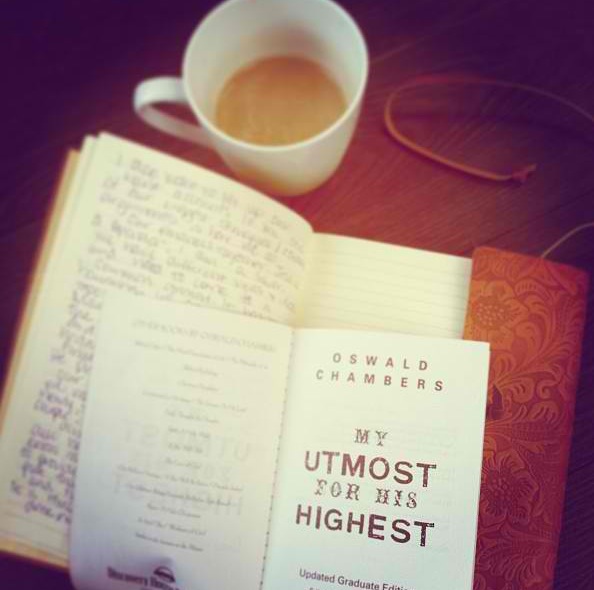
This good word from Oswald Chambers expresses my desires in moving forward:

Certainty is the mark of the common-sense life: gracious uncertainty is the mark of the spiritual life. To be certain of God means that we are uncertain in all our ways, we do not know what a day may bring forth. utmostforhighestThis is generally said with a sigh of sadness, it should be rather an expression of breathless expectation. We are uncertain of the next step, but we are certain of God. Immediately we abandon to God, and do the duty that lies nearest, He packs our life with surprises all the time. When we become advocates of a creed, something dies; we do not believe God, we only believe our belief about Him. Jesus said, “Except ye become as little children.” Spiritual life is the life of a child. We are not uncertain of God, but uncertain of what He is going to do next. If we are only certain in our beliefs, we get dignified and severe and have the ban of finality about our views; but when we are rightly related to God, life is full of spontaneous, joyful uncertainty and expectancy. “Believe also in Me,” said Jesus, not – “Believe certain things about Me.” Leave the whole thing to Him, it is gloriously uncertain how He will come in, but He will come. Remain loyal to Him.

To quote Forrest Gump and perhaps balance things a bit, “I think it’s both.” The virtue of gracious uncertainty which embraces God in the future includes shouts of joy AND sighs of sadness.

Grateful that Ecclesiastes 7:13-14 is in the Book.

SPURGEON’S SORROWS, MINE AND YOURS

Josh thinker

Grief casts a long shadow. At least 365 day’s worth. One year ago today we lost our firstborn son, Josh, or, as he liked others to call him, “Thee Heff.”

Life-threatening cancer proved my effective tutor in 2005. Gut-wrenching loss brought its mastery instruction in 2014. I’m learning, reluctant or not, much in the school of sadness, perhaps most importantly this: some pains in life visit and determine to stay. I don’t expect grief ever to release its hold for the rest of my life. The words, “Josh is dead.” altered my experience forever. I’ve heard other loss-sufferers say such things. I thought I understood. Now I really do.

I find solace this tortuous anniversary weekend in the reading of a book. (Read books. They change lives.) Zack Eswine, thank you for writing Spurgeon’s Sorrows: Realistic Hope for those who Suffer from Depression. In its provision, providence smiled on this sad heart as I read through its 144 pages the last two days.

Any Baptist preacher of the Reformed tradition (others as well) treasures Charles Haddon Spurgeon. Few preached with greater anointing. No one wrote more sermons. Calvinistic, gospel zeal pulsed through his veins in degrees of which I can only dream. With reading Pastor Zach’s book I added a new dimension of appreciation for this giant of the faith – how his near lifelong battle with depression helps me cope with my sadness and in turn comfort others in theirs.

I have long known about Spurgeon’s trouble with melancholy. I did not realize, however, its root for the man in one horrific event early on in his preaching ministry (see p. 19). It brought catastrophic grief, grief, believe it or not, I honestly imagine greater than my own. It prompted this comment from the author, borrowing from a Spurgeon sermon entitled “Weak Hands and Feeble Knees”:

For some of us, we’ve been unable to live in any other scene but the one that crushed us. We were brought so low that we never held up our heads again. It’s like we will go from that time forth mourning to our graves. Circumstance haunted us and went on. Depression came but never left. It haunts us still (p. 29).

Pastor Zack joins our hands with “Charles,” as he fondly calls him, and walks us through his journey. He invites us to view it as “the spurgeons sorrowshandwritten note of one who wishes you well” (p. 23). And well we should. The author has served the reader admirably with numerous citations from Spurgeon’s work on this challenging subject. He has thoroughly mined the precious ore of insight to be gained from one who suffered so greatly and dared talk so freely about it from his influential pulpit. Pastor Zach also shows us from Scripture the reality of sorrow. Additionally he borrows from numerous other works on the subject. He accomplishes a lot in so short a resource. Though I wish I could ask him humbly and gently, “How could you leave out Lloyd-Jones’ classic Spiritual Depression?”

Who should read this book? Easy. Any sufferer of depression and its close relatives, sorrow, sadness, and grief. Here you will find compassion, understanding, hope, and help. Pastor Zach inserts along the way distilled lessons from Spurgeon’s experience that ease the burden of “heaviness of spirit” (p. 46). While not all will agree with or like some of his prescriptions (e. g., medication as necessary), there is plenty of spot on assistance to glean especially from part three (Learning Helps to Daily Cope with Depression).

Caregivers, pastors, and otherwise “one another” gospel-shaped Christians who want to do 1 Thessalonians 5:11 well will also want to read this book. Pastor Zach takes particular aim against “God-talkers” and insensitive Job-like comforters. He pleads for more of us in the helping trade to adopt compassion and understanding in dealing with the bruised reeds and smoldering wicks in this broken world. May the tribe increase.

Gratefully, Pastor Zack leads us from the lesser story of Charles Spurgeon, as instructive, yet incomplete as it is (there are some cautions to hear along this path) to the greater story of Jesus – the Chief Mourner (p. 86) – the Man of Sorrows acquainted with grief (Isaiah 53:3). He even shows tenderness to the skeptic on looker who’s own loss may venture her to wade into these pages though not sure at first what to make of this pastor’s God-talk. You can give this to a seeker and not worry so much.

Thanks to our good friends at Westminster Books, I scarfed up a bunch of these for a mere $5 a piece. Lord willing, you can find them in the OGC resource center next Sunday.

I’m not sure I’ve arrived at the place Spurgeon did, especially after my most recent post, Never Again. But I affirm the truth of it in ending my anniversary reflections on loss:

I am sure that I have run more swiftly with a lame leg than I ever did with a sound one. I am certain that I have seen more in the dark than ever I saw in the light— more stars, most certainly—more things in Heaven if fewer things on earth! The anvil, the fire and the hammer are the making of us—we do not get fashioned much by anything else. That heavy hammer falling on us helps to shape us! Therefore let affliction and trouble and trial come.

They most certainly will. And His grace, as always, will most certainly be sufficient (2 Corinthians 12:9).


Something I’ll Never Say Again

never-again

Never say never. We all know the proverb. I, for one, hereby defy conventional wisdom. I will never say something again as long as I live.

“I can’t imagine anything harder.”

Why? Because every time I do something new comes down the pike that redefines hardness for me.

I said it when I broke free from the authority-cult like church I belonged to as a young follower of Jesus.

Then I had to quit my first church pastoral assignment due to chronic fatigue. That was harder. Couldn’t imagine anything more difficult. Wrong.

For reasons far too complicated to unpack, I resigned from the only church plant I ever founded back in 1998. We left Central Florida for Idaho. No way anything would be tougher than that. Guess again.

Head and neck cancer in 2005. Surgery, radiation, chemo. May I quote my medical oncologist? “We sent you to hell and back to save your life.” Indeed they did. What a miserable year. Hard, harder, hardest. Uh, not so fast.

“Josh is dead.” Six days from now will mark the one year anniversary of our great loss. Every day lately I find myself thinking something like this: one year ago today my son had a week left to live, ___________ days. It’s excruciating counting down the days to remembering the worst possible news. Or was it?

My bride with ovarian cancer. You’re kidding? It’s not possible. I don’t believe is. Oh, yes it it. You’d better believe it.

I give in. This is easily the hardest yet. Hardness to the nth degree. Uncle. I give in. I’ll never say it again. I don’t even want to imagine something harder than this baffling turn of events.

Alright, now that I’ve vented my lament, what is this man, husband, father, pastor, follower of Jesus to do? I have only one answer. It has always been the answer and it will forever remain the answer by God’s grace.

“God is our refuge and strength, a very present help in trouble” (Psalm 46:1).

How grateful I am today to have come across this Puritan prayer entitled simply “Refuge.” It corrals my runaway thoughts and emotions to send them heavenward:

O Lord, Whose power is infinite and wisdom infallible, order things that they may neither hinder, nor discourage me, nor prove obstacles to the progress of Your cause. Stand between me and all strife, that no evil befall, no sin corrupt my gifts, zeal, attainments. May I follow duty and not any foolish devicegod-is-my-refuge of my own. Permit me not to labour at work which You will not bless, that I may serve You without disgrace or debt. Let me dwell in Your most secret place under Your shadow, where is safe impenetrable protection from the arrow that flies by day, the pestilence that walks in darkness, the strife of tongues, the malice of ill-will, the hurt of unkind talk, the snares of company, the perils of youth, the temptations of middle life, the mournings of old age, the fear of death. I am entirely dependent upon You for support, counsel, consolation. Uphold me by Your free Spirit, and may I not think it enough to be preserved from falling, but may I always go forward, always abounding in the work You give me to do. Strengthen me by Your Spirit in my inner self for every purpose of my Christian life. All my jewels I give to the shadow of the safety that is in You—my name anew in Christ, my body, soul, talents, character, my success, wife, children, friends, work, my present, my future, my end. Take them, they are Yours, and I am Yours, now and for ever.

Lord, I believe. Help my unbelief.

The ABCs of REC

ABC

So no doubt you get the idea behind the ABCs. The basics. The starting place. The fundamentals. To quote Coach Lombardi of Green Bay Packer’s fame on opening day of summer camp: “Gentleman, this is a football.”

What in the world is REC? Resolving Everyday Conflict.

RECLast Sunday we began a journey at OGC of working through this study by Peacemaker Ministries. It aims to help us navigate the troubled waters of inevitable conflict in relationships in a redemptive way. If you missed session one, you are more than welcome to join us this Sunday at 9:30 AM for part two.

In session one I did my peacemaking version of “this is a football.” I covered the ABCs of REC. Ready?

A – awareness of one’s heart. Two key texts anchored our study. James 4:1-3 gives us this building block of the ABCs.

What causes quarrels and what causes fights among you? Is it not this, that your passions are at war within you? You desire and do not have, so you murder. You covet and cannot obtain, so you fight and quarrel. You do not have, because you do not ask. You ask and do not receive, because you ask wrongly, to spend it on your passions.

To deal with the symptom you have to know the cause. James makes it plain. Passions, cravings, idols of the hearts, often good things that become god things and end up bad things more than not turn disagreements into relational war. So stand guard over your heart from the get go. Be suspicious of your own desires-turned-demands that throw gasoline on the disagreement fire.

B – burdened for others’ interests. Philippians 2:3-4 shape this fundamental.

Do nothing from selfish ambition or conceit, but in humility count others more significant than yourselves. Let each of you look not only to his own interests, but also to the interests of others.

Paul assumes we will do the self-interest part of the equation. What he pleads is that we will give the same level of concern to what drives others in our conflicts. It’s not an either/or proposition; it’s a both/and one.

C – consumed with Jesus’ mindset. Paul tells the rest of the story in Philippians 2:5-11.

Have this mind among yourselves, which is yours in Christ Jesus, who, though he was in the form of God, did not count equality with God a thing to be grasped, but emptied himself, by taking the form of a servant, being born in the likeness of men. And being found in human form, he humbled himself by becoming obedient to the point of death, even death on a cross. Therefore God has highly exalted him and bestowed on him the name that is above every name, so that at the name of Jesus every knee should bow, in heaven and on earth and under the earth, and every tongue confess that Jesus Christ is Lord, to the glory of God the Father.

Imagine that. He points us to the gospel – Jesus sacrificially humbled on the cross, then gloriously exalted in the heavens. Jesus sets the pace for us. He puts the bar high by His own example. But that alone will never get us to a place of concerned deferral to others even sacrificially. Please note. A mind like this, one that looks out for interests of others to such a sacrificial degree, is yours in Christ Jesus. That’s what he wrote. It’s our very own possession. Because we are in Christ we have the supernatural strength to elude the grip of selfishness and travel the way of others-interests. That’s terribly good news.

These are the ABCs of REC. How’s your grade lately in the school of conflict resolution? Maybe you could use some remedial tutoring? Hope to see you Sunday.

Ownership

ownership

That’s my word for 2015, at least in terms of my pastoral role.

I hope to pray about ownership.

I hope to model ownership (the cancer battle notwithstanding).

I hope to preach on ownership.

I hope to exhort about ownership.

I hope to counsel about ownership.

I hope to rebuke (in love, of course) when I encounter lack of ownership.

I hope to disciple in ownership.

I hope to teach about ownership.

In short, I hope to eat, drink, and sleep ownership as a covenant member of a local church  AND challenge others do the same.

Why wave the banner of OWNERSHIP over Orlando Grace in the New Year? Does a text like Acts 2:42-47 suggest we should do anything less?

42 And they devoted themselves to the apostles’ teaching and the fellowship, to the breaking of bread and the prayers. 43 And awe came upon every soul, and many wonders and signs were being done through the apostles. 44 And all who believed were together and had all things in common. 45 And they were selling their possessions and belongings and distributing the proceeds to all, as any had need. 46 And day by day, attending the temple together and breaking bread in their homes, they received their food with glad and generous hearts,47 praising God and having favor with all the people. And the Lord added to their number day by day those who were being saved.

I doubt the church of Jesus Christ has seen since any greater demonstration of ownership to her mission than it did in those early New Testament days. Notice the word “devoted.” Literally it means “to be strong toward.” These folks had a passion for certain things that drew them together. Teaching, fellowship, worship, hospitality, generosity. They constantly flexed their spiritual muscles in these virtues of community. The impact in the city of Jerusalem was so profound  that God did the adding of souls to His church through their what? Ownership.

Tomorrow begins another year of ministry at Orlando Grace Church. Will we as covenant members “own” our community like never before? I pray we will. We can start by those who are able joining the prayer team at 8:30 AM in the conference room. We can continue by jamming the three new equipping hour electives (spiritual disciplines, resolving everyday conflict, and systematic theology I) at 9:30 AM. And we can peak with spirit and truth worship and praise at 10:45. We can overflow by taking lunch together, including invitations to new people God brings our way.

Let 2015 be a year of ownership like never before for our joy and His glory.

BONHOEFFERS MORNING PRAYER

Dietrich BonhoefferNew Year’s Day, 2015. Time to reflect back in hopes of moving forward.
2014 started miserably with death in January. Grief took up an unwelcome residence in our household. Lesson learned? The Lord gave, and the Lord has taken away; blessed be the name of the Lord (Job 1:21).
The year peaked sweetly with blessing in July. Twin grand kids. It doesn’t get much better. Lesson learned? There is a time for everything, and a season for every activity under the heavens: a time to be born and a time to die (Ecclesiastes 3:1-2). 
We crash dived hard with sickness in December. Cancer again. But this time attacking the queen. Lesson learned? Being learned? Let perseverance finish its work so that you may be mature and complete, not lacking anything (James 1:4).
Why must it be so hard? How does one press on into another year when the first Friday will bring another doctor’s visit and the prospect of more bad news?
Turn everlastingly Godward.
Dietrich Bonhoeffer did. Imprisoned in Nazi Germany for opposing Hitler’s Third Reich, he wrote his famous treatise, Letters from PrisonIt proved a great comfort to me time and again when I read it during my cancer journey in 2005. A friend of mine recently sent me a copy of Bonhoeffer’s Morning Prayer (see below). The German pastor read it to his fellow prisoners that Christmas morning in 1943. My friend wrote a note with it expressing his hope it would strengthen me and Nancy in, as he put it, “this latest chapter in your life.”
It did. It does. Thanks, Mike.
May it do the same for you, dear reader, whatever 2015 brings to your household.
MORNING PRAYER
Christmas, 1943
God, to you I call early in the morning.
Help me pray
And gather my thoughts to yourself
I cannot do it alone.
In me it is dark,
But with you is the light;
I am lonely, but you forsake me not;
I am faint-hearted, but with you is help;
I am restless, but with you is peace;
In me is bitterness, but with you is patience;
I do not understand my way, but
You know the way for me.
Father in Heaven,
Praise and thanks
Be yours for the night’s rest.
Praise and thanks be your for the new day.
Praise and thanks be yours for all your kindness
And faithfulness in my past life.
You have shown me much good,
Let me now receive from your hand
What is hard (emphasis mine).
You will not lay upon me
More than I can bear.
For your children you let all things
Serve for the best.
Lord Jesus Christ,
You were poor
And miserable, captive and forsaken as I am.
You know every need of humans,
You remain with me
When no man stands by me,
You forget me not and seek me,
You will that I recognize you
And turn to you.
Lord, I hear your call and follow,
Help me!
Holy Spirit,
Give me the faith that rescues me from
Despair, addictions, and vice,
Give me the love for God and humans,
That destroys all hate and bitterness,
Give me the hope that frees me from
Fear and despondency.
Holy, merciful God,
My Creator and my Savior,
My Judge and my Deliverer,
You know me and everything I do.
You hate and punish evil in this world
And in the next with no respect of persons;
You forgive sins for the one
Who asks sincerely;
You love good and reward it on this
Earth with a good conscience
And in the world to come
With the crown of righteousness.
Before you I think of all my loved ones,
And of my fellow prisoners, and of all those
Who do their hard service in this house.
Lord, have mercy!
Grant me freedom again,
And let me so live in the present
That I can live responsibly
Before humans.
Lord, whatever else this day brings—
May your name be praised!
Amen.


A New Year’s Prayer

new year prayer

Here is the Puritan prayer from the Valley of Vision which I quoted at the top of the message this morning:

O Lord,
I launch my bark on the unknown waters of this year,
with Thee, O Father as my harbour,
Thee, O Son, at my helm,
Thee O Holy Spirit, filling my sails.

Guide me to heaven with my loins girt,
my lamp burning,
my ear open to Thy calls,
my heart full of love,
my soul free.

 Give me Thy grace to sanctify me,
Thy comforts to cheer,
Thy wisdom to teach,
Thy right hand to guide,
Thy counsel to instruct,
Thy law to judge,
Thy presence to stabilize.

May Thy fear be my awe,
Thy triumphs my joy.

Length of days does not profit me except the days are passed in Thy presence,
in Thy service,
to Thy glory.

Give me a grace that precedes, follows, guides, sustains, sanctifies, aids every hour,
that I may not be one moment apart from Thee,
but may rely on Thy Spirit
to supply every thought,
speak in every word,
direct every step,
prosper every work,
build up every mote of faith,
and give me a desire to show forth Thy praise;
testify Thy love,
and advance Thy kingdom.