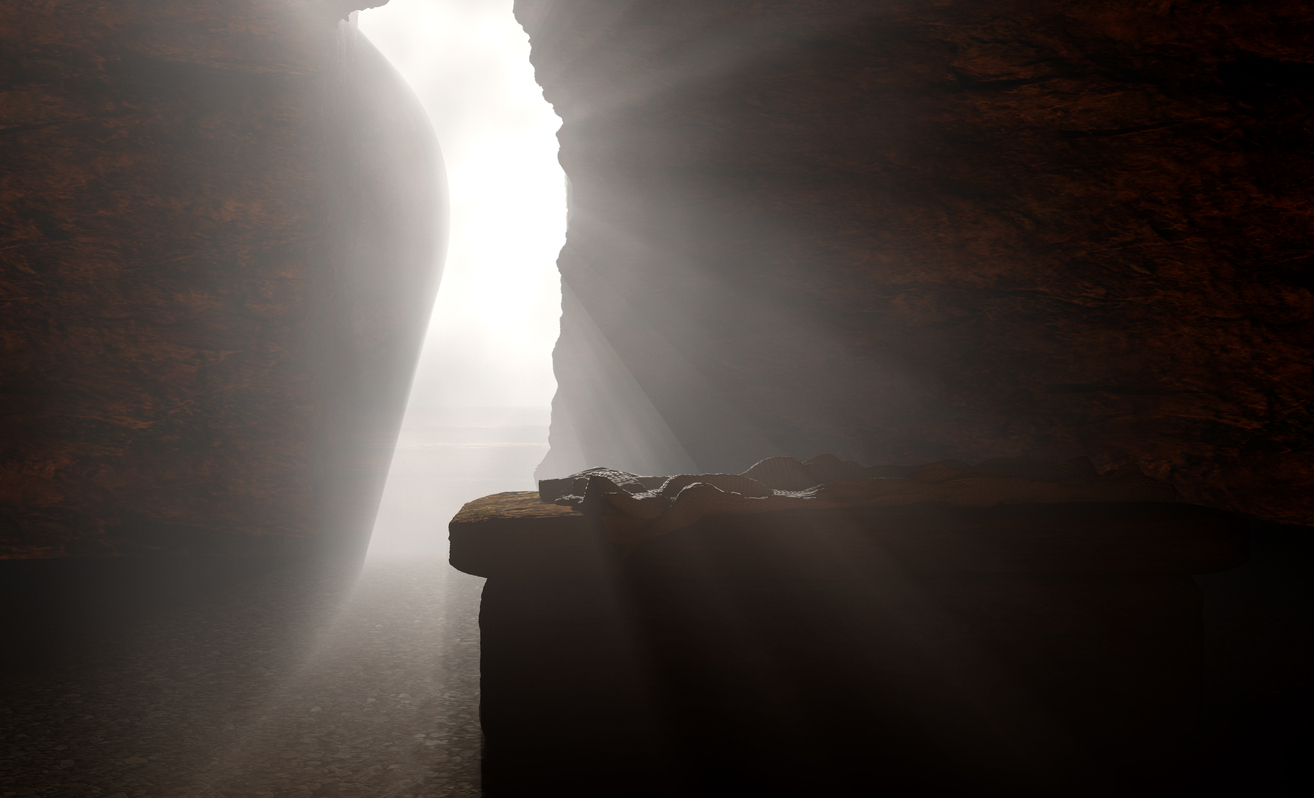
On this Easter Eve, please notice something about the opening resurrection narrative (John 20:1-10). It doesn’t depict the Lord rising from the dead as it actually happened. Everything in the record follows that miraculous event. The main character by design is not a person but a place—the empty tomb. In keeping with John’s purpose of his gospel (20:30-31), here’s what we must ponder from the first ten verses:
The eyewitness evidence of Jesus’s empty tomb points to His identity as Messiah that we might believe in Him.
That Jesus’s tomb was empty that first Easter morning few dispute. What became of His body is a different matter. Explanations abound attempting to refute the very thing Jesus predicted repeatedly in His earthly ministry: that He would rise again from the dead. John makes his case for the truth of the resurrection starting here: the reality of the empty tomb.
Space in this post does not allow for unpacking significant details in the text to make this a tomb like none other. When it happened—the first day of the week. Whom it involved—a woman, a failure, a beloved. How it transpired—a whole lot of running, and more importantly, different kinds of seeing taking place. Let me close with four reasons the empty tomb matters as evidence of Jesus’s resurrection.
One, there is no lack of evidence of the resurrection. John makes us grapple with the reality of the empty tomb and asks the all-important question: do you see? If you do, believe today. If not yet, keep on “seeing” until you do.
Two, the resurrection of Jesus fulfills Old Testament prophecy. Speaking about the experience of Peter and John in the tomb, the writer adds this: “for as yet they did not understand the Scripture, that he must rise from the dead” (v. 9). That had to wait until the Lord opens their eyes in His appearances to them and gave them the Holy Spirit. We know from Acts that the apostles eventually got this point and preached it from the Old Testament. Read Acts 2:22ff and you will see Peter quote from Psalm 16:8-11 just to cite only one reference.
Three, Jesus was raised bodily, the same but different. It was not just Jesus’s influence or spirit that prevailed after His death. His body was not there. And it never was produced—one of the most stubborn and striking facts that His enemies never have been able to explain. But it was a resurrected body. Incorruptible as the first fruits (1 Corinthians 15:23). That ties in closely to the last reason this matters.
Four, all Christians will rise bodily from the dead as well. Death is not the end of the story for your body and mine. At the last trump we shall all be raised. Our bodies, now like the Lord’s, incorruptible, imperishable, honorable, will be reunited with our spirits which have been with the Lord, and we shall bear the image of the man of heaven (1 Corinthians 15:49). You and I, like Jesus, will be raised, the same body, but gloriously different. Hallelujah!
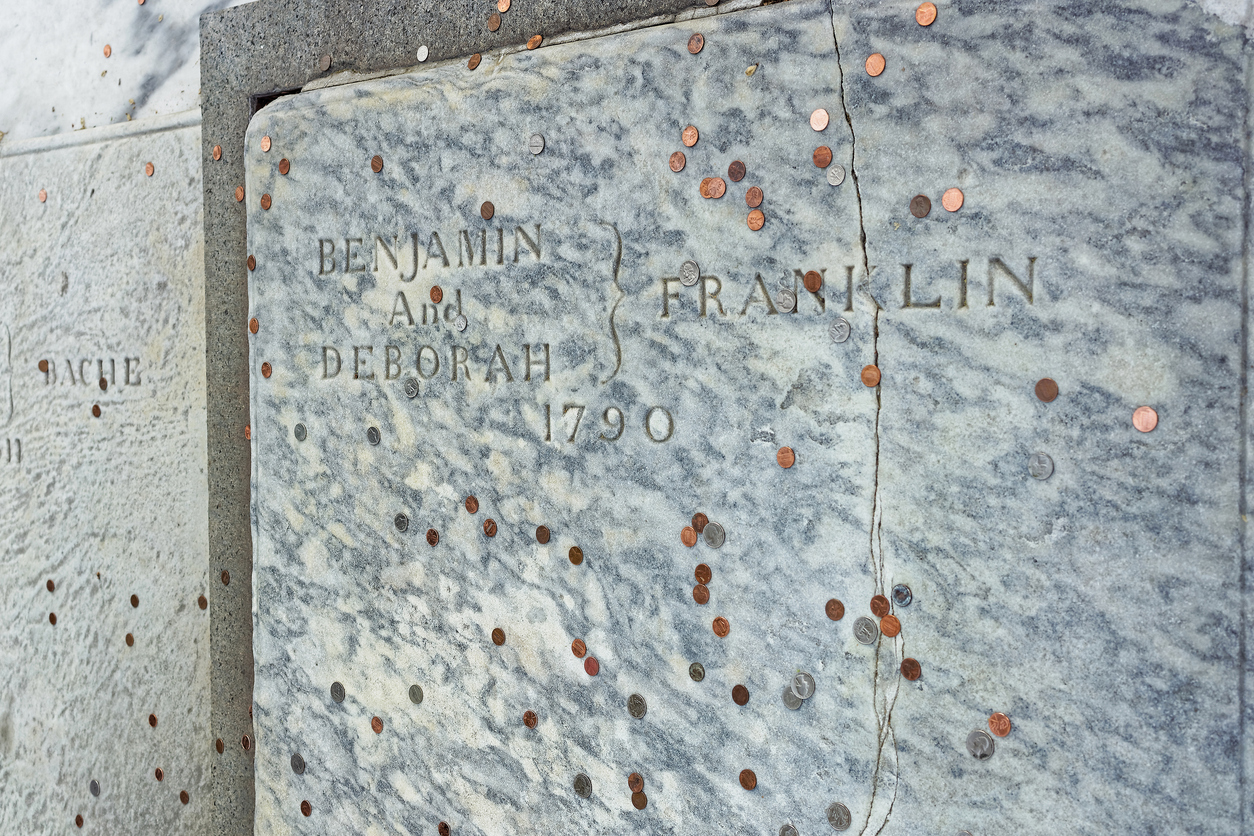
In one of his lighter moments, Benjamin Franklin penned his own epitaph. He didn’t profess to be a born-again Christian, but it seems he must have been influenced by Paul’s teaching of the resurrection of the body. Here’s what he wrote:
“The Body of B. Franklin, Printer Like the Cover of an old Book Its contents torn out, And stript of its Lettering and Guilding, Lies here, Food for Worms, But the Work shall not be wholly lost: For it will, as he believ’d, Appear once more In a new & more perfect Edition, Corrected and amended by the Author.”
As you worship this Easter Sunday, remember the empty tomb, believe, and look forward to your new and more perfect edition yet to come!


 PEACE PRIZERS