The Highest Charity

I opted to preach from Hebrews 13:4 for my wedding sermon last Friday night.

Let marriage be held in honor among all.

The context at the end of chapter 12 urges the reader to offer to God acceptable worship, with reverence and awe, since He is a consuming fire. Presumably the bullet points at the top of chapter 13 spell out what that looks like in all kinds of ways, like esteeming marriage as an honorable estate.

But for this post, my attention turns to the first thing on the writer’s list in Hebrews 13:1 – Let brotherly love continue.

Now I can think of a host of specifics which flesh that out in the everyday covenant commitments among followers of Jesus, but none perhaps more virtuous than that of intercessory prayer.

J. C. Ryle, in a tract entitled A Call to Prayer, comments:

This is the highest charity. He loves me best who loves me in his prayers. This is for our soul’s health. It enlarges our sympathies and expands our hearts. This is for the benefit of the church. The wheels of all machinery for extending the gospel are moved by prayer. They do as much for the Lord’s cause who intercede like Moses on the mount, as they do who fight like Joshua in the thick of the battle. This is to be like Christ. He bears the names of his people, as their High Priest, before the Father. Oh, the privilege of being like Jesus! This is to , be a true helper to ministers. If I must choose a congregation, give me a people that pray.

This morning in our weekly prayer/staff meeting six of us prayed through the Tuesday group on the OGC prayer/directory call list. Am I ever glad we did.

Is it time to dust off your copy of that sheet with all those names and phone numbers? Why not lay a little charity of the highest form tomorrow on the J through Ms?

And then just keep on rolling through the rest of the week and beyond so that love of the brethren might continue in our precious flock.
What God Truly Requires of His Covenant People

Today’s message is now online. You can listen to the audio here.

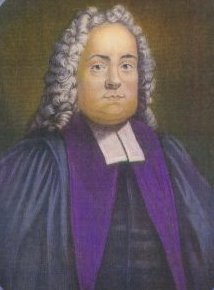
Matthew Henry writes this about what God requires of His covenant people in Micah 6:8:

The good which God requires of us is not the paying of a price for the pardon of sin and acceptance with God, but doing the duty which is the condition of our interest in the pardon purchased. (1.) We must do justly, must render to all their due, according as our relation and obligation to them are; we must do wrong to none, but do right to all, in their bodies, goods, and good name. (2.) We must love mercy; we must delight in it, as our God does, must be glad of an opportunity to do good, and do it cheerfully. Justice is put before mercy, for we must not give that in alms which is wrongfully got, or with which our debts should be paid. God hates robbery for a burnt-offering. (3.) We must walk humbly with our God. This includes all the duties of the first table, as the two former include all the duties of the second table. We must take the Lord for our God in covenant, must attend on him and adhere to him as ours, and must make it our constant care and business to please him. Enoch’s walking with God is interpreted (Heb. 11:5) his pleasing God. We must, in the whole course of our conversation, conform ourselves to the will of God, keep up our communion with God, and study to approve ourselves to him in our integrity; and this we must do humbly (submitting our understandings to the truths of God and our will to his precepts and providences); we must humble ourselves to walk with God (so the margin reads it); every thought within us must be brought down, to be brought into obedience to God, if we would walk comfortably with him. This is that which God requires, and without which the most costly services are vain oblations; this is more than all burnt-offerings and sacrifices.

May we heed Evan’s exhortation to live each day with eyes to see the opportunities He puts before us to live well with both bottom-line trajectories, horizontal and vertical, in mind.

With Whom Are You Fighting?

The apostle Paul calls the Christian life a fight in places like 1 Tim. 6:12.

J. C. Ryle devotes chapter four of his book Holiness to this notion.  You can read an online version of the book here.

HolinessEarly on he asks a crucial question that reminds us of the paramount importance of practicing biblical peacemaking in the local church.

With whom is the Christian soldier meant to fight? Not with other Christians. Wretched indeed is that man’s idea of religion who fancies that it consists in perpetual controversy! He who is never satisfied unless he is engaged in some strife between church and church, chapel and chapel, sect and sect, faction and faction, party and party, knows nothing yet as he ought to know. No doubt it may be absolutely needful sometimes to appeal to law courts in order to ascertain the right interpretation of a church’s articles and rubrics and formularies. But, as a general rule, the cause of sin is never so much helped as when Christians waste their strength in quarreling with one another and spend their time in petty squabbles.

Let us fight the good fight with our mortal enemies the world, the flesh, and the devil (1 John 2:15-16; Eph. 6:11) but let us eschew any strife among one another in the family of God.