A Review of Dr. Tim Cooper’s Book (Crossway, 2024)

Subtitled “Lessons from the Fractured Relationship of John Owen and Richard Baxter,” this helpful peacemaking resource opens with a spoiler alert: “There is no happy ending.” In these 167 pages, readers face a reality check.
Relationships rupture even among the best of believers. With this summary tale from seventeenth century English Christianity, we force down a bitter pill: two of church history’s giant leaders bickered over decades only to bog down “into a fixed and mutual dislike.”
They went to glory unreconciled. No happy ending indeed. Before reading further or after, you may wish to view here for a biblical account with a happier conclusion:
Or perhaps not entirely sad, if we learn the lessons that a four-hundred-year-past dispute offers. Cooper wrote this book with just that aim in mind. He performs a thorough Owen/Baxter relational postmortem. He records insightful observations and practical conclusions for negotiating our own context of conflict.
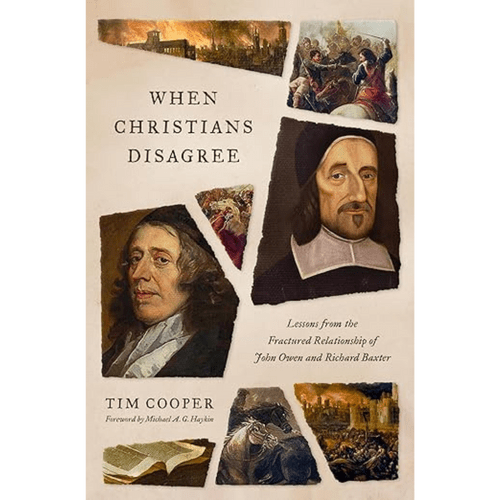
You need not fear the theological and historical sections interspersed throughout the book. They provide the necessary contexts for gleaning the peacemaking takeaways to be had. The rewards warrant any effort required by those who feel challenged by such content.
Cooper writes charitably. While leaning hard into Owen and Baxter’s faults for the purposes of this study, he doesn’t fail to remind us of the many virtues and gospel good works on display in their stories—both literarily and pastorally. They were indeed two good men, but like all of us, a mixed bag.
What follows this balanced disclaimer is a dissection of multiple forces—outside their control—which profoundly shaped the men over time. The author argues persuasively for how these things contributed to their relational demise.
He details their experience of a civil war, their geographical settings, their contrasting personalities, their theological debates (argued in print), their initial contact, their eventual in-person collision (ironically in a project designed to foster unity and mend division), and, last but not least, their lingering memory of past hurts that left them both bitter and resentful. Good grief! What a mess. Sound familiar? If so, you need to read this book.
You will find particularly helpful, as did I, the book’s conclusion. Cooper muses over five possibilities which may have resulted in a happy ending, not a sad one. What if there had been a mediator to assist them? What if they had focused more on what held them together and less on what drove them apart? What if they had paid more attention to the many Bible verses which summon us to unity and concord? What if they had manifested greater humility and less pride in their dealings with one another? Ouch! What if they could see what we can see with the advantage of distance and hindsight?
Do we see? If so, Dr. Cooper will have achieved his aim: “In understanding their story, perhaps we can better understand our own narratives. If we can see what they missed, perhaps we will have a much clearer idea of what we may be missing.”
Amen to that.
 PEACE PRIZERS