GRIEVING SIN

Mending Fences When You Break Peace with Others

Recently I found myself back in the house of mourning. Gratefully it had nothing to do with death of a loved one. But the intensity of grief I felt seemed eerily reminiscent of the past three years.

Farmer binding the wire in pasture

What happened? I wounded a friend. A joke I played backfired–miserably. I sensed it minutes after I did it. I tried to reverse course. Too late. Damage already done. The brother I harmed, a committed peacemaker, spoke plainly in truth and love just how deep the hurt went.

I hate my sin–especially when it affects others. The Lord immediately impressed upon me the weight of my guilt.

Any follower of Jesus, eager to preserve the unity of the Spirit in the bond of peace (Eph. 4:3) with others, identifies with the sense of loss which accompanies breaking fellowship this way. What to do?

Three steps at least are warranted.

One, repent quickly.

The apostle Paul commended one church this way: For see what earnestness this godly grief has produced in you, but also what eagerness to clear yourselves, what indignation, what fear, what longing, what zeal, what punishment (2 Cor. 7:11).

Repentance involves a changing of one’s mind which turns away from wrong in favor of aligning with God’s will on a matter. It is always better to do that sooner rather than later to avoid hardness of heart.

Two, confess robustly.

Beware the temptation to apologize inadequately just to get out of the doghouse with someone as quickly as possible. Use Peacemaker Ministries 7 A’s of Confession as a helpful template for full-orbed confession. These will keep you from birthing what a friend of mine calls an “abortive confession.”

  1. Address everyone involved (All those whom you affected)
  2. Avoid if, but, and maybe (Do not try to excuse your wrongs)
  3. Admit specifically (Both attitudes and actions)
  4. Acknowledge the hurt (Express sorrow for hurting someone)
  5. Accept the consequences (Such as making restitution)
  6. Alter your behavior (Change your attitudes and actions)
  7. Ask for forgiveness

Each of these matters in robust confession but numbers three and four make a world of difference in communicating godly grief over sin which breaks relationships. With my friend I said something like this: I violated the law of love in 1 Cor. 13:4-7. I was unkind and I was rude.

I quickly gathered how much hurt I had caused by joking around. I had to own insensitivity that touched a terribly important aspect of his personal peace.

Third, believe boldly.

Believe what? The gospel of grace and its promise of forgiveness through the finished work of Jesus on the cross. Don’t do what I tend to do–wallow in a form of grief which amounts to self-imposed shame. In other words avoid the temptation to beat yourself up.

Cling tightly to the words of Heb. 4:16. Let us then with confidence draw near to the throne of grace, that we may receive mercy and find grace to help in time of need.

And get back to loving your friend the way you used to and even better.

GOD OF THE NEW THING

The Best News I’ve Had in a Long Time

A dear friend recently encouraged me with these words from the sacred text:

Behold, I am doing a new thing; now it springs forth, do you not perceive it? I will make a way in the wilderness and rivers in the desert (Isa. 43:19).

The purpose of this post is to report a new thing, a good thing, I perceive the Lord doing in my life.

Development business concept

Recently I’ve begun to get to know personally a godly woman in my church.

Jan Spence has been a covenant member at Orlando Grace for a couple of years now. I approached her a month ago with the notion of entertaining something more than a shepherd/sheep relationship between us. Would she even consider praying about it?, I asked–half expecting to get shot down in a ball of flames.

Though my initiative shocked her somewhat, she chose not to run for her life. She prayed. Then she hit me with some forthright, understandably necessary questions. I answered each honestly before the Lord. And then she said, “Yes, I’m willing.”

Well, what in the world to do now? Needless to say, I’ve not swum in these for waters for decades. And Jan has been quite content in her singleness for the last twelve years. We decided to talk on the phone initially keeping things between the two of us.

The more questions we asked of each other and responses we shared, the more our mutual attraction began growing. We quickly discerned the wisdom of confiding in the elders of our church for their protection and counsel. Much guidance has come through them. We welcome their ongoing accountability.

Our biggest puzzle has been how to go public with the news. Both of us want to love our church and friends well. My role as a pastor requires extra care here in guarding the welfare of my church to the degree that I can. Jan wants that very much as well. We have no peace about people learning this piecemeal through here-and-there conversations.

So, the more we prayed and counseled, the more we settled on my doing what I always do. Blog. I’ve sought to cultivate my author’s voice through this medium for years now. It has served me well both in keeping folks up to speed with my health issues and my family losses.

We simply cannot think of a better way to inform as many folks at the same time as possible. Furthermore this creates a written account of things so that those who hear secondhand have a resource to access for the firsthand version.

Jan wisely asked me about my grief process in mourning Nancy. I don’t know that the sense of loss attached to losing someone so special in your life ever completely ends. Honestly, I have wondered myself at times about the place of contentment I found on the other side of my bereavement leave.

I attribute that to God’s grace, enormous support, confidence of Nan’s eternal destiny, focusing on the great marriage we had—almost 42 years I never deserved—and, finally, the anticipatory grief I experienced for fifteen months, which I spoke about in my last post.

But there comes a time for moving on when spiritual, emotional, and mental health permit. Those who know me best validate that God has done a work in helping me in this regard.

The affirmation Jan and I have received from our spiritual leadership, closest confidants, and our extended families has given us great encouragement to continue down the road of exploring what God has for us.

With all the heartache and suffering of late, I welcome this providence as God’s gift and could not be happier for it. Perhaps Psalm 30:11-12 best summarizes my sentiments:

11 You have turned for me my mourning into dancing;
you have loosed my sackcloth
and clothed me with gladness,
12 that my glory may sing your praise and not be silent.
O Lord my God, I will give thanks to you forever!

In case anyone at OGC is wondering . . . I have asked Jan if she will sit with me on Sundays at church. Though the challenge of assuming a seat once occupied by Nancy is not lost on her, she has agreed to that as well.

Please pray for us to abide in the will of God at every turn as we wait on Him and continue to get to know one another. Thank you.

ON GRIEVING

Personal Reflections About the Journey Through Loss

Though off topic in terms of my usual subject matter, this day demands it. The wife of my youth, Nancy, would have turned 67 today had the Lord granted her length of days.

Dried rose on old vintage wood plates

Anniversaries present their own peculiar challenges to the grief process. Her birthday marks the second of these for me. My birthday last month was the first. The next? What would have been our 42nd wedding anniversary this December 21. One at a time.

The content for this post actually crystallized for me on a prayer walk beside Lake Michigan during my bereavement leave. While I don’t consider myself an expert on this subject by any means, losing a son and a bride within the span of three years time tutors one in a way like little else can do.

Perhaps this post may help others navigating what C. S. Lewis likened to the amputation of a limb. I would prefer “limbs.”

My penchant for acrostics carried the day for these five reflections. What can I say? I love this format for remembering content.

Gguard your heart from resentment. Prov. 4:23 warns, “Keep your heart with all vigilance, for from it flow the springs of life.” That’s hard enough to do on the mountain top let alone walking through the valley of the shadow. “The heart knows its own bitterness” (Prov. 14:10).

Few things poison one’s inner being worse than resentment lodged in the heart. I’ve prayed often on the battleground of suffering, “Lord, please protect me from resentment’s assault.”

Rrelish the memories of the past. This has helped guard my heart. I’ve determined to focus on the gift of nearly 42 years with a rock-star woman rather than what years we won’t ever enjoy together. I didn’t deserve one day of those we shared anyway.

Normally Nan and I would have spent her birthday on the deck of our Idaho home overlooking the Clearwater Valley. Few things gave me more pleasure than hearing her voice, talking together, wiling away the chill of the night with the fire pit aflame before us.

Psalm 77:11 has sweetly charted my way through these five months–“I will remember the deeds of the Lord . . .  your wonders of old.”

Iinvite your friends into the process. This has been huge! How grateful I am for brothers and sisters who have wept with me in my weeping (Prov. 12:15).

Withdrawal from others in lament has its place. I’ve needed alone time to process. But isolation presents a slippery slope potentially robbing one of wisely chosen community with those skilled in drawing out the heart (Prov. 20:5).

Eengage your emotions in the present. What a roller coaster! Though honestly grief proved more challenging with Josh’s lost than with Nan’s. Our son passed with no warning; Nancy traveled the valley for months and it happened right before my very eyes. Hospice calls it anticipatory grief.

Still, one never knows when sadness will hijack the feelings. I took a personal day today just so I would have some latitude for dealing with this prospect without the demands of my everyday ministry responsibilities. And how grateful I am for the elders at OGC and her people for granting me twelve weeks bereavement leave for doing the same last summer.

F–faith your way into the future. By God’s grace, I’ve never dropped my shield of faith in my fight with this formidable foe, grief (Eph. 6:16). Perhaps no promise ever means more for leaving the past behind and pressing on into what God has for me in the days ahead than Rom. 8:32. “He who did not spare his own Son but gave him up for us all, how will he not also with him graciously give us all things?”

God has already done the harder thing. Jesus died for me making me His own. How can I conceivably entertain the prospect that He won’t graciously give me absolutely everything I need for the future, even though in His wise and always good providence it no longer includes the once delight of my eyes?

“SULLY” SENSATIONAL

Four Things Peacemaking Leaders Do Well To Imitate from Captain Sullenberger

Rarely do I want to see motion pictures in a theater these days. The dearth of redemptive films released lately disappoints a guy like me who relishes quality cinema.

alg-plane-jpg

No problem on that score with “Sully”–director Clint Eastwood’s riveting telling of the drama surrounding the US Air pilot who successfully landed Flight 1549 in the Hudson River on January 15, 2009 after a crippling bird strike shortly upon takeoff.

This film moved me to tears at points. As I left the theater I asked the Lord why that was so. His answer seemed so clear to me. The main character, played masterfully by Tom Hanks, represents so much of the kind of man I desire to be as a peacemaking pastor.

These four virtues stood out along the 96 minute run time, which frankly felt more like half as many minutes to me.

One, humility. Though highly regarded by an admiring populace throughout NYC, Sully eschews the role of hero. “Just doing my job.” Effective peacemaking leadership which eagerly preserves the unity of the Spirit in the bond of peace starts with this all-important virtue (Eph. 4:1-3).

Two, patience. Much of the film’s tension in storytelling surrounds the aftermath of the crash as the NTSB investigates the details of the event. The search for error on both pilots’ part resulting in the water landing rather than returning to La Guardia airport leads to insinuation of fault at best and outright accusation of blame at worst.

Not once does Sully lose his cool. He even intercepts the rising irritation on his co-pilot’s part before emotions can escalate unhelpfully during their public hearing. Peacemaking pastors must model a patiently-enduring-evil-self-control or risk losing the reconciliation effort due to their own sinfulness (2 Tim. 2:24).

Three, love. One of my favorite moments in the film comes near the end. A reporter asks how Sully did the feat never done before. He immediately responded, “I didn’t. We did it, all of us.” Then he proceeded to rattle off the litany of names of the crew, the first responders on the scene, citizens of the New York City, etc., praising the efforts of others in partnership that remarkable day. Peacemaking leaders affirm others and deflect attention from themselves for the greater good (Phil. 2:3-4).

Four, perseverance. The man never caved under pressure. He pursued the truth in love at every turn. Perhaps the most compelling scene for this pastor came on the downed plane apparently empty of all 155 souls on board. The intensity with which the captain searched the fast-flooding plane to make as certain as possible all were accounted for before he abandoned the aircraft inspired me. I immediately thought of Heb. 13:17. Peacemaking pastors who will give account to God for the souls on board their churches must exercise a similar resolve to do all they can for their welfare.

Check out the trailer below for a sneak peek.

I intend to see it again with my co-pilot, Pastor Mike, to compare notes about how we can become become better peacemaking leaders from this powerful example.

CHURCH PEACE: A WARFARE MATTER (2)

Four Spiritual Warfare Strategies for Preserving Peace in the Church

In my first post on this important aspect of preserving unity in the church, I argued for the need to fight for peace in the invisible realm.

Roman Soldier Armor

Paul lands his letter to the Ephesians on the strategic topic of spiritual warfare. He presents four battle tactics for successfully defeating the enemy of our souls in every kind of conflict.

  1. Trust your God.
  2. Know your enemy.
  3. Wear your armor.
  4. Say your prayers.

I can’t say everything I would like to about these tactics. I have to save something for the men’s retreat I get to lead this weekend. But here’s what I can offer on the third strategy.

Three, wear your armor for its protection. The Lord equips us with six crucial pieces of battle weaponry for both offensive and defensive purposes in dealing with the enemy.

  1. The belt of truth. The belt held everything else together for the Roman soldier. Since Satan’s principle scheme to defeat us involves deception, it is absolutely imperative that we arm ourselves with the truth of God’s word to counterattack.
  2. The breastplate of righteousness. This piece covered a soldier front and back. It protected all his major organs. The more we live out Christ’s righteousness gifted to us by faith, the less ground we give Satan to trip us up. For example, if we harbor resentment toward someone rather than forgive, that presence of unrighteousness in our lives opens the door for enemy infiltration (2 Cor. 2:10-11).
  3. The gospel footwear. As shoes for your feet, having put on the readiness given by the gospel of peace. Shoes for the soldier meant two things: mobility and stability. Believers are to be ever on the move for the gospel in brokering peace between a rebel race and a holy God. And they must stand firm in that gospel of forgiveness when the accuser comes to indict for various offenses (Rev. 12:10).
  4. The shield of faith. This we cannot do without. The Roman warrior used a huge, fireproof shield behind which he could position his entire body. We must do everything we can to sustain our faith or Satan’s flaming darts will surely get through to do their damage.
  5. The helmet of salvation. This piece protects the mind. It orients our thinking toward all three phases of Christ’s saving work: past, present, and future. Given the similar usage of the word “helmet” in 1 Thess. 5:8, it seems Paul wants us thinking extra hard about the future and what God has in store for us in the New Heavens and New Earth.
  6. The sword of the Spirit. This, Paul explains, is the word of God. This is a mighty weapon! It serves both offensive and defensive purposes. Offensively we wield it in evangelism. Defensively we make use of it in, among other things, fighting temptation, just as our Lord did (Matt. 4:1-11).

Please don’t miss the emphasis in the text of putting on and taking up this provision of God which is our armor.  We must do this.

How the last strategy, prayer, plays into that weaponry will have to wait for part three.


MEDITATION MADE DOABLE

Eight Steps for Setting Your Mind on the Things Above

holy_bible_book

Recently I preached a vision casting message for our church.

I called it ACUTE–A Vision for the Future.

The “A” in the acrostic stands for Awakening–Seeking Our Spiritual Transformation. My text was Col. 3:1-4. You can listen to the audio here.

As promised, this post includes a link to an article I wrote for Tabletalk magazine sometime ago called On Your Heart. It outlines a process for effective meditating on Scripture–perhaps the most strategic way to set your mind on the things above.

Won’t you join the Awakening Challenge? Memorize one verse per week and meditate upon it regularly.

Imagine the rise in spiritual temperature in your congregation God might give as a result!

FROM PEACEBREAKING TO PEACEMAKING

Eight Ways to Reshape a Church’s DNA

Fourteen years ago our church melted down in our last great church fight. When the dust settled, both vocational pastors had resigned, all the lay elders did the same, and half the deacons withdrew from office as well. It was ugly.

Make a change is your life,career,relationship concept

Since then we’ve worked hard to cultivate a culture of peace at OGC. If we can help it, we don’t ever want to go again to such a devastating place of disunity. We’ve worked hard over the years to cultivate a culture of peace eager to preserve the unity of the Spirit in the bond of peace (Eph. 4:3).

We don’t do everything perfectly, but we have made strides in this department. Here are eight things a church can do in an ongoing campaign to make peacemaking a priority.

One, stress peacemaking as one of the core values. Different churches emphasize different biblical facets in their ecclesiology. Don’t leave peacemaking on the cutting room floor.

Two, pray often and eagerly for the peace and purity of the church. Don’t take unity for granted. Ask God to protect the shalom of the assembly and keep it from strife.

Three, write peacemaking into the church documents. Include it in the bylaws, membership covenant, and new member class training. Kick things up an extra notch by adopting a relational commitments philosophy.

Four, stock peacemaking books in the resource center and/or church library. Ken Sande’s The Peacemaker, among others, is an absolute must for reading that equips people for peacemaking.

Five, train people with relational gifts and skills in the arts of conflict coaching and mediation. Peacemaker Ministries offers excellent seminars in both. Build a reconciling relationship team so the burden of assisted peacemaking falls on more servants than just the pastors.

Six, recite The Peacemaker Pledge whenever new members enter the church. Hammer away at the Four Gs whenever possible. Drill them into engaged couples as part of pre-marital counseling so they learn to resolve conflict in a God-honoring way.

Seven, feature Resolving Everyday Conflict seminar offerings in the Christian Ed and/or small group ministries. We offer this at least every three years as part of our Sunday AM equipping class curriculum. Easy to do and highly effective in saturating folks with key biblical content in this crucial area.

Eight, cast vision for peacemaking excellence from the pulpit. I do this every year on the anniversary of our last church fight. I divert from the ongoing sermon series for that one Sunday and preach a peacemaking passage. Tomorrow I’ll take the congregation to Philemon with a look at Paul’s masterful mediation efforts to help reconcile a slave and his master.

The writer of Hebrews exhorts: Strive for peace with everyone (Heb. 12:14). The verb gets translated a variety of ways–make every effort, pursue, work at, follow after.

No matter how you cut it, shaping a church from peacebreaking to peacemaking requires intentional, strategic, and whatever-it-takes change over time. Remember. Change nothing and nothing will change.

What additional things does your church do to cultivate a culture of peace? I invite your comment below!


CHURCH PEACE: A WARFARE MATTER (1)

Four Spiritual Warfare Strategies for Preserving Peace in the Church

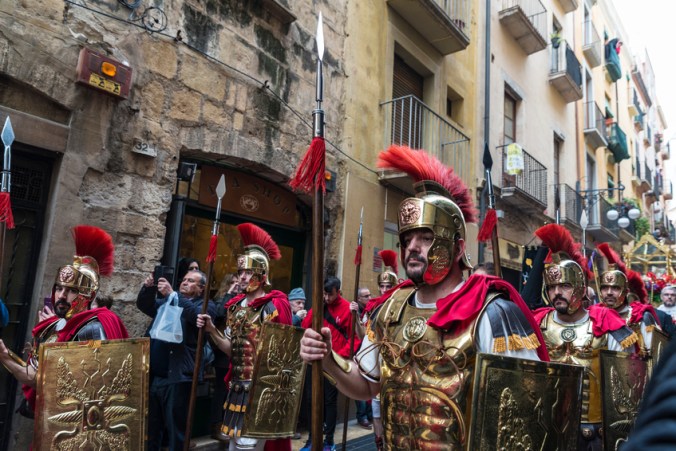
Religious celebrations of Easter Week, SpainConclusions matter.

From dessert and coffee at a restaurant, to the the climax of a story, to (this matters especially to pastors like me) how the sermon ends, the way things come to a close can make all the difference in the experience.

Lately in my study I’ve camped out a lot in Eph. 6:10-20. Paul’s treatment there of the challenging subject of spiritual warfare forms the focus of my church’s men’s retreat at the end of this month.

Think about it. He ends this exquisite letter to the the church at Ephesus on this note: we Christians are at war. We find ourselves in a never-ending conflict with formidable forces. Much opposition confronts anyone serious about walking in a manner worthy of the gospel.

Among those things, and the first place he starts in Eph. 4:3, is doing our best to maintain the unity of the Spirit in the bond of peace.

Safeguarding the treasured gift of unity in your church means you have to go to war over it.

It’s a high-stakes, dangerous, but utterly worthwhile undertaking.

Here are four strategies (a preview of our retreat content) for waging the spiritual battle.

One, trust your God for His strength. Be strong in the Lord and the strength of His might (10). This same power raised Jesus from the dead (Eph. 1:19-20). We have everything we need in the way of strength for this ongoing struggle. We draw from the One who effectively disarmed the enemy at Calvary (Col. 2:15).

Additionally our powerful God has equipped us with impressive battle gear designed to protect us so that we may stand and not fall (11). More on that in strategy #3.

Two, know your enemy for his schemes. The objective in this fight is plain–that you may be able to stand (11). Satan and his minions deployed in the invisible realm (12) plot our undoing. We must give him/them no ground.

The enemy attacks on multiple fronts: accusation (Rev. 12:10); deception (Gen. 3:1-6); sins like anger (Eph. 4:26-27) and withholding forgiveness (2 Cor. 2:10-11); just to name a few. Luther said it well in A Mighty Fortress:

For still our ancient foe,
Doth seek to work us woe;
His craft and pow’r are great,
And, armed with cruel hate,
On earth is not his equal.

Lesson?

Don’t underestimate the foe. Arm yourself with a informed knowledge of his shrewd tactics.

Three, wear your armor for its protection. The bulk of the passage focuses on the battle gear God supplies every believer for spiritual warfare (14-17). Paul repeatedly emphasizes our responsibility to put it on–take it up–all of it. We dare not engage this battle every day without every one of the six components.

What they are and some thoughts about them, plus strategy #4, will come with my next post and the second part on this subject.

In the meantime, take heed to this exhortation from Dr. Martyn Lloyd-Jones:

Do not relax. “Maintain the field!” You are always on duty in the Christian life, you can never relax. There is no such thing as a holiday in the spiritual realm.

Peacemaking warriors! Maintain the field! Ever on duty, battle to preserve the unity of the spirit in the bond of peace in your churches.

RADIO INTERVIEW ABOUT ORLANDO TRAGEDY

My Conversation with Frank Reed of KLTY Dallas-Fort Worth Concerning the Mass Shooting

pulse

God wastes nothing.

He continues to surprise in the way He redeems my nearly three year journey through suffering and loss.

The latest evidence of that came with a text from long-time friend and radio personality, Frank Reed. He asked if he could interview me about the Pulse nightclub massacre for his morning show.

I consented hoping and praying by God’s grace to make the most of the opportunity  for the gospel.

It aired this morning.

You can listen to the audio on the Orlando Grace Church website.

MY EYE’S DELIGHT GONE HOME

The Obituary for Nancy Jean Heffelfinger

“The delight of your eyes.”

Thus I AM, God over all, referred to the prophet’s beloved when He took her from him for higher purposes (Ezek. 24:16). So it has pleased Him to do with the wife of my youth. He gives and takes away; blessed be His name (Job 1:21).

Nan and Me

As with the loss of Joshua, our firstborn son, I choose to publish her obituary on my blog with its various social media connections.

Nancy Jean Masologites Heffelfinger, age 66, of Altamonte Springs, Florida, went peacefully to her treasured Lord Jesus at home on Tuesday, May 31, 2016. She was born on October 17, 1949, in Bryn Mawr, Pennsylvania. She grew up in Broomall, PA, where she attended Marple Newton High School. In addition to her academic excellence, Nancy loved sports. She captained her tennis team and played a fierce game of field hockey. She earned a bachelor’s degree in home economics and child development from the University of Delaware.

Much of her work life outside the home involved utilizing considerable administrative assistant and people-relating skills. But she came into her own upon discovering a passion and gift for natural health and nutrition. Countless people over the years  benefited immensely from her testing, counsel, and care. She never met a vitamin/mineral supplement she didn’t like.

Nancy met her husband-to-be Curt on January 5, 1974. That day she professed faith in Jesus Christ as her Savior and Lord. Six months later she and Curt got engaged; they married on December 21, 1974. After six years of residing in Southern California, she and her family moved to Central Florida. Most of the rest of her life involved making a home in metro Orlando–except for a two year stint in Idaho.

Nancy ran her spiritual race right to the finish line, serving diligently as a partner in the gospel with her pastor/husband at five different churches over the course of their married lives. She possessed an uncommonly positive, even-keeled disposition, rarely complaining about anything–even during her eighteen-month battle with cancer. Whatever it took to solve a problem or overcome an obstacle with the Lord’s help, that she consistently did. She was a “no-problem” gem of a woman.

She is survived by Curt Heffelfinger, her devoted husband, Joel Heffelfinger, her remaining son (Joshua, her firstborn, predeceased her in January of 2014), five grandchildren, Jean, her mother, three younger siblings, and numerous other extended family members.

Please visit the DeGusipe Funeral Home website to post a tribute, if you so desire. A memorial service for Nancy is scheduled at Orlando Grace Church, 872 Maitland Avenue, Altamonte Springs, Florida, at 10:00 AM on Saturday, June 4, 2016. Refreshments will be served in the fellowship hall after the service. Tax deductible gifts in her memory toward the church’s building fund/capital campaign can be made to Orlando Grace Church where she has served as a covenant member and faithful pastor’s wife these past eleven years. For more information contact the church office at 407.660.1984.

Our deepest, sincere, and heartfelt thanks for the outpouring of support in the way of tears, cards, gifts, meals, calls, texts, emails, posts, and especially prayers. As before, I feel rich beyond my imagination in terms of that which, humanly speaking, matters most–the love and care of others.

With gratitude to the only One I have ever loved more than my Nancy, I am sorrowful, yet always rejoicing (2 Cor. 6:10).

Grief is great; grace is greater.