GUARDIANS OF UNITY SET A GUARD WHERE IT COUNTS MOST

Five Guidelines for Controlling the Tongue to Safeguard Church Unity

Few things stand to jeopardize our churches’ treasured oneness than our own runaway tongues. Thus the poet of sacred text prays, Set a guard, O LORD, over my mouth; keep watch over the door of my lips (Psalm 141:3)!

words

They most certainly do. Anyone aspiring to a do-your-best standard of peacemaking in his church will embrace these five principles from Scripture which can effectively set a guard over our tongues and govern our words:

One, respect them accordingly. Since Prov. 18:21 is true–Death and life are in the power of the tongue, treat your words with enormous respect. They can do great good. They can do enormous harm. At our Idaho place, I keep a variety of weapons–largely for hunting purposes. For obvious reasons, they command my complete respect every time I handle them. Treat your words with the same reverence.

Two, suspect them ruthlessly. James 3:8 warns, No human being can tame the tongue. It is a restless evil, full of deadly poison. Read the rest of the chapter for more plain talk about the Mission Impossible that is controlling our words. That reality should sober us. Assume the worst about your speech right out of the gate. It will help check your words constructively before you let them fly.

Three, limit them considerably. The wisdom writer helps us again. When words are many, transgression is not lacking, but whoever restrains his lips is prudent (Prov. 10:19). Remember this rule of thumb–or should I say tongue?: the greater the number of words we speak, the greater the potential for sins we commit. James gets this too. Know this, my beloved brothers: let every person be quick to hear, slow to speak, slow to anger (James 1:19). Perhaps overused but nonetheless true: God gave us two ears and just one mouth for a reason.

Four, choose them strategically. This can mean a lot of things. At the very least consider these guidelines. Always speak the truth, but do it in love (Eph. 4:15). Ask yourself before you speak, Will this build up and give grace or corrupt and tear down (Eph. 4:29). While never lacking graciousness in your word choices, recognize that love at times dictates sanctified sternness. We see this all over Paul’s letters. While reading one of them recently, I was struck by his counsel to a pastor on Crete to rebuke them sharply (Titus 1:13). Their nasty habits required tough love for their own salvation good.

Five, keep them confidentially. Among the seven things God hates (Prov. 6:16-19), Solomon lists last, one who sows discord among brothers. Alexander Strauch does not overstate the case when he writes:

Gossip, or talebearing, is one of the common sins of discord. . . . Like a dreadful, contagious disease, it poisons people’s minds and creates chaos and misinformation. it is an ugly vice that drives people apart and destroys peace (If You Bite & Devour One Another, 71).

Keep confidences religiously!

The Psalmist sets us the example. Pray often for the Lord to act as guardian of your tongue and watchman over your words. Pray the same for the rest of the people in your congregation. Set a guard where it matters most, my dear fellow guardian of your church’s  peace.

Question: What other texts have helped you in your attempts to tame your tongue? You can leave your comment here.

WHY NOT A UNITY CHARTER?

A Proposed Document for Churches Serious about Preserving Peace

Ephesians 4:3 remains the anchor verse for my blog site–eager to maintain the unity of the Spirit in the bond of peace. Nothing short of our very best efforts in safeguarding unity in our congregations will suffice, if we seriously embrace the thrust behind that word eager. I plan on devoting an entire chapter to the idea in my book, The Peacemaking Church.

woman is filling document on glass table, shallow depth of field
The thought occurred to me recently, Why not fashion a church charter to foster unity’s preservation? Plenty of organizations use charters of one kind or another to shape a desired culture. Surely the church can do the same on something this crucial to her well being.

I crafted mine by making an acronym out of the word unity. Imagine posting something like this around your facility, incorporating its content in your bylaws, and/or teaching through it as part of the membership class.

OUR CHURCH’S UNITY CHARTER

We Use Means Big and Small to Maintain Unity–from potentially hosting a RW360 weekend conference to simply stocking our resource center with copies of Resolving Everyday Conflict, we put into play multiple options designed to help us keep our congregation’s culture of peace strong.

We Need Love First and Last to Maintain Unity–of all the virtues generated by the gospel’s power in our lives, we acknowledge none matters more than what Paul calls in 1 Cor. 13 the greatest–love. We measure every value, word, and action in terms of its conformity or lack thereof to the question: Is it loving?

We Imitate Models Divine and Human to Maintain Unity–as Paul appealed to the selfless example of Jesus in Phil. 2:5-11 for a mindset that looks out not only for our own interests, but also for the interest of others, we meditate often on our Lord’s incarnation for motivation in safeguarding unity. We resist objecting to such a standard as impossibly high realizing that Phil. 2:19-30 present two other “normal” individuals–Timothy and Epaphroditus–who excelled at meeting the challenge.

We Train Servants Clergy and Lay to Maintain Unity–so as to equip the saints for peacemaking excellence, we arrange for offering regular teaching on the subject using the various models provided by Peacemakers Ministries. Every pastor undergoes conflict coaching and mediation training to provide the necessary tools for handling disturbances which threaten unity in the church.

We Yield Preferences Left and Right to Maintain Unity–whether pertaining to styles of worship music or matters of conscience over which only Jesus should judge (Rom. 14:1-12) and everything in between, we rely on the gospel’s power to defer to others wherever and whenever  we possibly can. It is our joy to lay down rights with the Spirit’s help in the name of safeguarding our treasured unity.

Now I ask you: what difference might it make if your church and mine adopted such a charter for preserving unity? Your church might word things differently. Who cares?

As long as our commitments come from the Scriptures and ultimately serve the endgame–eagerly preserving the unity of the Spirit in the bond of peace–spelling out our high value of unity and the ends to which we will go to protect it can only enhance our prospects for heading off conflict before it ever happens.

Question: How might you tweak a charter of unity for your church, if you had opportunity to participate in such a stewardship? You can leave a comment here.

IN PRAISE OF BELOVED PHYSICIANS

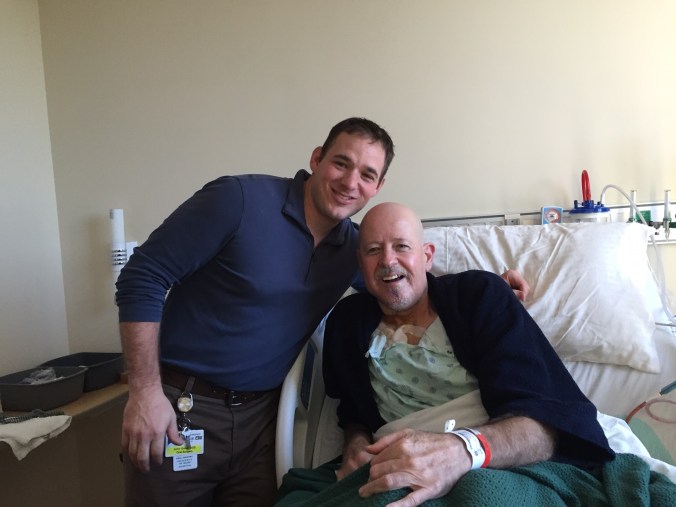
On discharge day after a week in the hospital for “Operation Robojaw,” one of my doctors made a point to  visit me that Sunday morning. The moment I met the man two months earlier my heart attached fast to him. Turns out he studies theology on the side in his spare time–at Southern Seminary online no less! A doctor and a brother. Sweet.

Docgreen

We prayed together that morning–me for him and him for me. As soon as we finished, I immediately felt prompted to say this: I imagine you’re a lot like Dr. Luke must have been. Marshall deflected the praise, as I suspected he would. However, since then I’ve given a fair amount of thought to what makes for a beloved physician.

Mostly, Bible lovers think of Luke as a meticulous historian and second most prolific New Testament author–he wrote the gospel which bears his name and Acts–after the apostle Paul. Without Col. 4:14 we’d never suspect his medical credential–Luke the beloved physician greets you. That’s it. Not a whole lot to go on.

Still we can take away more than immediately meets the eye, if only we will ponder this verse and a few others which also reference Luke. As for Col. 4:14 it helps to know a little of the original language and its syntax. Literally the verse reads: Greets you Luke the physician the beloved. Awkward. I get it. But informative. Paul puts the beloved last in the sentence for emphasis. Greek often does that. Word order matters. The word means dearly loved, prized, valued.

Paul considered Luke a prince. He treasured the man. Luke ranked high in his beloved category. Here’s my take on why:

One, Luke cared deeply and personally for others. All that oozes out of the word greet at the beginning of Col. 4:14. It conveyed a great deal more sentiment than saying “hey” or “hello.” When someone used this greeting-from-a-distance formula common in the New Testament, he intended to say, If I were there I would greet you with one huge holy kiss (Rom. 16:16). I’ll wager Luke aced bedside manner class.

Two, Luke acted courageously and remained loyal to others. On death row in a Roman prison, Paul makes this astonishing statement in 2 Tim. 4:11–Luke alone is with me. Deserted by all others, Paul found comfort in his you-can’t-shake me-I’m-not-going-anywhere doctor, no matter what the costs.

Three, Luke concerned himself diligently and humbly not just for the bodies but also for the souls of others. Consider how he introduced his gospel in Luke 1:1-4:

Inasmuch as many have undertaken to compile a narrative of the things that have been accomplished among us, just as those who from the beginning were eyewitnesses and ministers of the word have delivered them to us, it seemed good to me also, having followed all things closely for some time past, to write an orderly account for you, most excellent Theophilus, that you may have certainty concerning the things you have been taught.

Don’t you think Theophilus thanked his lucky stars for Luke’s historical writing of the good news of Jesus? Luke saw himself just as much an evangelist as a doctor (see also Acts 16:10). Luke is part of the “we” and “us” of that text.

docteam

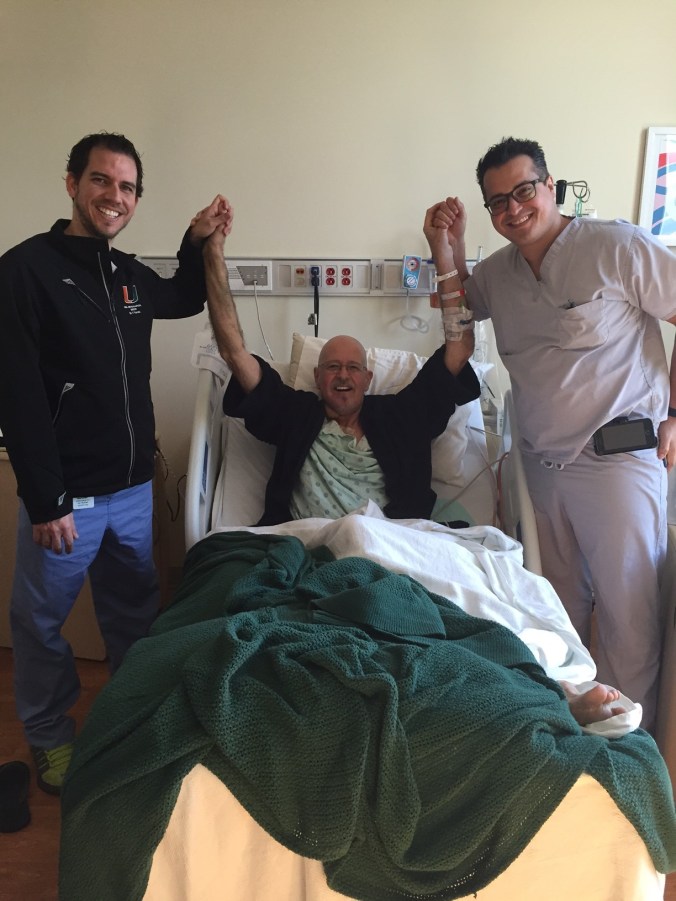
Four, Luke valued and got along famously with a team of others in his ministry. Philemon 24 makes this clear: and so do Mark, Aristarchus, Demas, and Luke, my fellow workers. Above I’ve included an image of two more rock-star docs who cared for me in Miami. I forced them to strike this victory pose on discharge day. Unfortunately I wasn’t with it enough to get pics of still others who performed in such a stellar way for me.

Gentlemen, this patient salutes you. You are beloved in my book. Don’t let anybody tell you otherwise. They will have to answer to this pastor with a brand new titanium jaw.

Question: What qualities have you enjoyed in a doctor or doctors which have made them beloved to you? You can leave your comment here.

IS YOUR CHURCH LOVING?

How To Help Your Church Abound in Love

I certainly hope so. It should be. Jesus declared love the distinguishing mark by which all others would know that we are His disciples (John 13:35).

love one another 2

But here’s the deal. Paul prays in Phil. 1:9 that their church’s love may abound more and more. He exhorted another church very much the same way:

Now concerning brotherly love you have no need for anyone to write to you, for you yourselves have been taught by God to love one another, 10 for that indeed is what you are doing to all the brothers throughout Macedonia. But we urge you, brothers, to do this more and more (1 Thess. 4:9-10, emphasis added).

It seems we can’t afford to rest on our laurels when it comes to the degree of love operational in our congregations.

Here are seven ways you can potentially affect the abounding of love in your church so as to ensure its peace and unity:

  1. Admit to the Lord any failures on this front, believe the gospel again, and determine to obey in His strength in the future.
  2. Embrace the commandment to excel in love as just that–marching orders from Jesus. We can’t treat this virtue as optional. Also, regard it as the A-priority responsibility it is. Why else would Peter write: Above all, keep loving one another earnestly (1 Pet. 4:8, emphasis added).
  3. Never assume you have arrived on this front. The Bible doesn’t make room for complacency in our love performance. Ask the Lord to help you push the edge of envelope in ways you haven’t done so before.
  4. Make it a habit to do loving things. Build your love muscles by practicing kindness. Alexander Strauch calls kindness love with work clothes on. Write notes. Give gifts (even little ones). Make a phone call. Buy someone lunch. Drop by for a visit (ask first).
  5. Practice hospitality. Texts teaching about love often include the exhortation to open our home to others. For example, Paul exhorts, Let love be genuine in Rom. 12:9. Then in v. 13 he adds, Contribute to the needs of the saints and seek to show hospitality.
    We find another example of this combo in Heb. 13:1-2. One commands, Let brotherly love continue. Then v. 2 quickly follows with, Do not neglect to show hospitality. Few things say love more persuasively than sharing a meal with others around your table.
  6. Pray for one another in your church to grow in love for one another. Last Sunday we studied that text in Philippians (1:9) where Paul prays for their love to abound. So this week I am praying through our member/attender list for each household for the same thing. Your church has such a list, doesn’t it?
  7. Finally, and most importantly, meditate often on the love of God for you in Christ Jesus. I think Paul prays in Eph. 3:18-19 the way he does for this very reason. He knows if we can even remotely comprehend the breadth, length, height, and depth of Jesus’ love for us, it cannot help but overflow through us to refresh others.

Churches that love well in Jesus advertise well for Jesus. And members who abound in love are the kind of members who excel in helping preserve the unity of the Spirit in the bond of peace in their churches. Go for it!

Question: What’s one thing you want to do this week to push your love for others towards an abounding level? You can leave a comment here.

PHILIPPIANS: A PEACEMAKER’S MUST

Mastering the Letter As We Study the Book

Last Sunday we embarked on a pulpit study of Paul’s epistle to the Philippians. This choice by our elders during my medical leave of absence thrills me. Why? The theme of peacemaking runs throughout it.

Phil

We don’t get any further than 1:27 before Paul begs, so that I may hear of you standing firm in one spirit , with one mind striving side by side for the faith of the gospel. Then in 2:2 the apostle goes so far as to plead, complete my joy by being of the same mind, having the same love, being in full accord and of one mind.

Come 2:14 he lays this on them: Do all things without grumbling or disputing. And before the book ends, he calls out two women by name charging them to agree in the Lord (Phil. 4:2). He even invokes the aid of a mediator to assist them to that end. This church certainly endured its share of unity challenges!

We could hardly dig into a more strategic book to strengthen our peacemaking core value than the book of Philippians.

Here are seven ways to get the most out of a study of Paul’s letter to the Philippians:

  1. Listen to Pastor Mike’s comprehensive overview of the book AGAIN. My, what a job he did! For extra credit check out ISBE’s article for its introduction of the letter.
  2. Read through the entire book at least once per week, perhaps on Saturday nights in preparation for the Lord’s Day.
  3. Read the sermon passage of the week DAILY. Ask the Lord to give you insight. Make some observation, interpretation, application notes along the way in a notebook, journal, or your mobile device. Tomorrow’s text is Phil. 1:1-11.
  4. Pick a key verse (mine is Phil. 2:1-11–I know that’s a section), memorize it, and meditate upon it throughout the series. How might God work in our church this year if everyone did this? Take a smaller portion if eleven verses overwhelm you. I get it. For some reason memorization comes rather easily to me. Not everyone enjoys the same experience.
  5. Bookmark the Preceptaustin page in your computer for more commentary resources you can possibly consult along the way. After you do your own study through the week, check your conclusions against the scholarly work you’ll find at that site.
  6. Use your Sunday’s well. Remember Pastor Shane’s message a few weeks back? He stressed this. Discuss the sermon at lunch with others. Review the points from your notes later in the day. Decide on one thing you will do to apply the message that week. Ask someone to hold you accountable to it.
  7. Pray for the speaker each week (Dennis Mudge serves tomorrow) and for us as a congregation. Pray for anointing on the preacher. Pray for soft hearts among us as hearers (James 1:21).

Imagine the fruit to come from these messages, if our covenant members adopt this kind of strategy for mining the rich ore laden in the shafts of this peacemaking treasure of God’s word.

Lord willing, see you tomorrow back in my appointed seat. I might even let loose with an “Amen!” or “Preach it, brother!” here and there.

Question: What excites you about our study in this book of the Bible? You can leave your comment here.

A VIEW FROM THE HOSPITAL (2)

Five Life-Changing Lessons from Major Surgery

My docs teased me last night with the possibility of discharging me today. No such luck. Just as well. I don’t want out of Camp Jackson South until we can stay on top of pain at home. So, another day in the hospital. And, as promised, part two of yesterday’s post.

vastly improvedThe Lord has graciously given me five lessons so far from “Operation Robojaw.”  With them come wisdom responses so as to make the most of the opportunity and not waste the sorrow. Two down; three to go.

Lesson Three: How Proud & Self-Reliant I Still Am

Hospitals humble a person. Big time. You have so little control. And you can need so much help. You lose all dignity–though I’ve fought hard to minimize my number of “Dancing Henrys.” Think Jack Nicholson in Something’s Gotta Give.

But some personal matters just go flat-out public in ICU. Thank God my nurse was male! More than that, I rediscovered once again my self-reliance idol. Pure pride drives me to think I can do whatever all by my lonesome. Trauma surgeries get you in touch with that arrogance fast.

Response? Remember the example of the Lord Jesus. Facing His darkest trauma outside Gethsemane He took three of His band of brothers to watch and pray with Him (Matt. 26:36-46). He needed their community in the furnace of the cup.

I know only one way to escape the gravitational pull of pride or any other sin issue. I must drench myself continually in the gospel river of the One who humbled Himself (Phil. 2:8).

Lesson Four: How Meaningful & Refreshing a Visit Can Be

Please understand. I’m in Miami–Kendall–to be exact. I can see Cuba from here. That’s over 250 miles from my home in Orlando. And yet every day but one on this delightful little healing assignment visitors from my church have fought the traffic and spent precious time, not to say gas money, to come see me–even in ICU where I could barely talk.

Just today two other brothers camped out for a few hours–even did my laps with me around the floor. I get what Paul felt when he wrote: But God, who comforts the downcast, comforted us by the coming of Titus (2 Cor. 7:6).

Response?
Never underestimate the significance of hanging out with someone in distress. You too can be an Onesiphorus (2 Tim. 1:16).

visit

Lesson Five: How Powerful & Necessary the Prayers of Others Are

Now I know that. Pastors preach that. But this week again I came to treasure it all over again. Paul boasted this confidence from prison in Phil. 1:19–for I know that through your prayers and the help of the Spirit of Jesus Christ this will turn out for my deliverance.

Not for a moment would I try to minimize the degree of difficulty associated with this week. But the prayers of God’s people from all over the country and even other nations–thank you Hungary!–have played a huge role in my light speed recovery.

Response? Build a community of relationships, especially in your church. Pray for one another, particularly in trauma. God hears and answers. To Him be all the glory.

Question: What help has served you well in surviving some trauma. You can leave your comment here.

A VIEW FROM THE HOSPITAL

Five Life-Changing Lessons from Major Surgery

Perhaps “major” doesn’t quite capture it. What a war on Monday! Eight hours on the table. Resection of my right mandible plus extraction of three teeth. Insertion of a titanium plate affixed with screws. Twelve inch arterial-vein transplant from my left thigh to my neck creating a “free flap” blood supply both inside my mouth and out. This ordeal made my cancer surgery feel like a day at the ballpark in comparison.

icuYou know you’re feeling better when your thoughts turn to blogging. Much improvement has occurred. The docs say things look fantastic. If I remain on track, they may ship me home on Sunday. Sweet. How come Stryker doesn’t manufacture hospital beds for guys over 6 foot?

Traumatic experiences like prolonged hospitalizations make marvelous tutors. Not that I would volunteer of my own will, anymore than I did for my cancer disaster. But God uses these things in strikingly effective ways to instruct us along the way of shaping us more and more into the character of His beloved Son, our older Brother, Jesus (James 1:2-4).

Today the Lord crystallized five lessons so far from this jawful ordeal for me.  With them come wisdom responses so as to make the most of the opportunity and not waste the sorrow.

Lesson One: How Fearfully & Wonderfully Made We Are

While one of the residents cleaned the question mark-like looking incision on my thigh this morning, I asked him this: Doc, I’m a theist. I believe God put parts in every place for specific reasons. What happens down there with those twelve inches now doing duty neck-side? He answered this way: Redundant systems. The body has ways of compensating. Peripherals (I think that’s what he called them}. take over for them. No wonder David spoke of the human body the way he did (Psalm 139:14).

Response? Worship and wonder at the goodness of God in your creation. Give thanks for your working parts and God’s healing power built into the body.

Lesson Two: How Frail & Mist-Like Our Lives Are

I gave serious thought to the prospect of not waking up from that surgery–at least not here. Nancy received a letter from me to guard her shalom should I have gone home. Obviously His purposes proved otherwise for now. But walking these halls–they had me up the next day–seeing some of the other patients on life support, well, it sobers you to say the least. James said it well:  What is your life? For you are a mist that appears for a little time and then vanishes (4:19).

Response? Take no day for granted. Give thanks for the new breaths you draw first thing every morning. And, like James, acknowledge that your plans will only materialize according to His gracious will, so be sure to say your share of “If the Lord wills” (James 4:15).

I’ve hit the wall. This patient needs some rest. Lessons three through five will have to wait for tomorrow, Lord willing. No big deal. Plenty of time to kill at this place on a Saturday.

Question: When have you gotten some significant insight from a traumatic experience? You can leave a comment here.

GUARDING YOUR HOME’S PEACE AFTER YOU’RE GONE

Living-Will

Forgive me if this seems maudlin. Nobody enjoys thinking about his death, let alone documenting every wish.

Just the same, moments ago I finished doing that very thing in a letter to my wife. I plan on giving it to her on Monday morning just before they wheel me away for “Operation Robojaw.”

Let’s face it. Nobody’s next second, let alone day is guaranteed. Pushing 64 years of age with an eight hour procedure ahead of me means I’d better go here.

My main motivation? Loving my bride well. Perish the thought, but she will have her hands full with grief. Why further jeopardize her shalom by failing to take responsibility for this myself?

Here are five things you can do in advance of your earthly demise to guard the shalom of the household you leave behind:

  • Prepare a living will. What in the world are you waiting for? This one is a no brainer.
  • Specify what you want done with your remains: burial, cremation, cryogenic freezing. Whatever. For a decent treatment of the burial vs. cremation question check out Cremation Confusion.
  • Write your spouse a letter to be opened only on the occasion of your passing. Warning. Should you do this and I hope you will sooner rather than later, keep the tissues nearby. Tears will come.
  • Tell your beloved the best of your heart’s affection. Then get after the business of detailing what you want done with your most important stuff. My list turned out pretty short. You know what they say: you can’t take it with you.
  • Write out a draft order of worship for your memorial service. My document runs from prelude to postlude. It contains the songs I want sung, the people I want to speak, the music I want played and the players to play it. I am a demanding so-and-so. I have even given Nancy instructions for a memorial fund in lieu of flowers.
  • Get the thing witnessed and notarized. Don’t leave any doubt as to the legitimacy of the document.

Now don’t get me wrong. I don’t have a death wish. But I do resonate with Paul when he writes, “I am hard pressed between the two–depart to be with Christ or remain in the flesh (Phil. 1:21-24). I get it. When it’s my time–precious in God’s sight as it is (Psalm 116:15)–I’m the only one to gain.

I fully expect to survive. Lord willing, “Operation Robojaw” will be a smashing success. If not, I’ve got peace that I’ve done my part to help guard the peace of the one for whom I care the most.

Will you?

Question: What have I missed? Can you think of any other helpful items to add to my list? You can leave a comment by clicking here.

THE ABCs OF ROBOJAW SURGERY PRAYING

Three days and counting.

Sunday after church Nan and I will drive to Miami where we’ll stage for my surgery on Monday morning. What a terrific encouragement to have so many folks praying for me and the ordeal next week holds!

Some have asked in specific just how they can pray, so I shot the following video to share my ABCs of prayer for “Operation Robojaw:”


Question: What strategies have you used to get through major surgery, if you’ve ever had to hit the table for any length of time? You can leave a comment by clicking here.

THE POWER OF QUESTIONS IN PEACEMAKING

20_questions_1954

This morning I shared with Nancy, my wife, my struggle over choosing a killer title for a prospective post.  After a brief pause, she said to me, “Babe, do you think it’s safe to go there?”

I’ve learned the hard way to listen up when my bride ventures her opinion. That writing idea went home to be with Jesus in a hurry.

However, our exchange got me thinking. My wife’s approach reminded me of one of the most effective strategies do-your-best peacemakers can employ for preserving unity at home, work, church, or anywhere for that matter.

I’m talking about the power of asking questions. King Solomon wrote, The purpose in a man’s heart is like deep water, but a man of understanding will draw it out (Prov. 20:5).

In all my years of doing peacemaking, I’ve never known any tool more effective for drawing out someone’s heart than that of asking skillful questions. When I wade into a conflict, inevitably I ask a ton of them.

Here are five categories of peacemaking power questions to make you a better guardian of oneness in all your relationships:

Category #1 EXAMINATION QUESTIONS

Many thanks to David Powlison at CCEF for his effective word picture for examining ourselves. In any peacemaking encounter you must start first with assessing your own motives. He lists a number of these in X-Ray Questions: Discerning Functional Gods.

My favorite? What do you want, desire, crave, lust, and wish for? Effective peacemakers remove any logs from their own eye before they ever attempt surgery on specks elsewhere (Matt. 7:3-5).

Category #2 COMMUNICATION QUESTIONS

We could cover a bunch of these. Let me give you my favorite. What did I miss? Around Orlando Grace Church our members hear me say this rather often: Never underestimate the capacity for communication to break down.

Humility dresses itself in the assumption that I may have somehow failed to get the right message (1 Pet. 5:5). Give that benefit of the doubt up front and watch peacemaking barriers fall.

Category #3 SUGGESTION QUESTIONS

These can take any number of forms depending upon the issue. The point is simple: instead of declaring a judgment, ask a question. My wife has mastered this art over the years. This morning she could have hammered me with, That’s a terrible idea!

But she would have accomplished only one thing—the opposite response she desired. Nancy ventured a question to engage me rather than put me on the defensive. Man, does it pay to marry a Matt. 10:16 woman!

Category #4 PERSUASION QUESTIONS

This may count as the money question for the peacemaking toolkit. I use it all the time. Help me understand your greatest concern about _____ ?

Just the other day it came in handy with my mom. We had locked horns over an issue for a while. After broaching the subject another time, I asked this very question with all the 5th commandment respect I could muster. I drilled down to the interest driving her position. She admitted it to me and we were off and running to a solution.

I have blogged about this essential aspect of peacemaking elsewhere. I cannot overstate the importance of its efficacy in reaching agreement with others when positions clash. Scuba dive beneath someone’s stance to discern their major interests.

Category #5 MEDIATION QUESTIONS

As with the other categories, questions helpful in assisted peacemaking take on many forms. One of my favorites resembles my persuasion question. In mediation I tweak it like this: What’s the worst thing that could happen if this deal doesn’t turn out in your favor?

James targets passions at war within us as the source of conflicts and quarrels (James 4:1). Wise mediators labor to dig deep into opponents to root out the heart idols stoking their passions.

Do you desire to excel as a preserver of peace in your relationships? Master the art of asking questions and watch your skills rise to a whole new level.

Question: What other questions have you discovered make you a better peacemaker? You can leave a comment by clicking here.