The Power of Kindness

kindness-620

I finished my day today with a visit to my atheist friend’s house in our neighborhood. Regretfully his wife is dying. Cancer has overrun her body, particularly her brain. Stupid disease. The extended family has camped out for the duration. Hospice has coached all concerned about what to expect. Her body is shutting down. It’s only a matter of time. Once again the the specter of death haunts my 2014, though not at my own doorstep in this particular situation. Sigh.

My wife found me a card this morning to express our sentiments. A small potted plant seemed an inadequate but at least well-meant token to present at the door. For thirty minutes I sat with my buddy with whom I have had numerous conversations about the gospel, at least to this point to no avail, along with his son, and just sought to be kind in loving my neighbor as myself and feeling the weight of their grief. At this point, having said just about all I think I can say in numerous lunches, I am banking on the power of kindness to carry the day in my relationship with this man, whether he ever believes in Jesus or not.

The apostle Paul extols the virtues of love in his well-known treatise on the subject in 1 Corinthians 13. As he begins to describe its qualities, he leads off in v. 4 this way: “Love is patient and kind.” While it seems some in my profession can occasionally forget it, and Lord knows I admit my share of failures in this regard, kindness as a virtue simply must characterize any pastor’s way of relating with others at every turn. Consider 2 Tim. 2:24 – “And the Lord’s servant must not be quarrelsome but kind to everyone.” My sincere apologies to every one of you whom I have failed over the years in this respect.

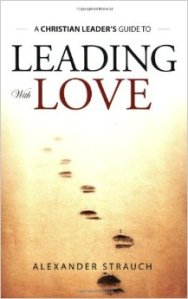
As I was reading this evening a section of Alexander Strauch’s book, Leading with Love, I came across this illustration of the power of kindness. It comes from the life of St. Augustine who, in his book Confessions, testifies to the impact, even in his unconverted days, of the kindness shown him by the renowned preacher and bishop, Ambrose:

300px-Augustine_of_HippoThat “man of God” received me like a father and expressed pleasure at my coming with a kindness most fitting in a bishop. I began to like him, at first indeed not as a teacher of the truth, for I had absolutely no confidence in your Church, but as a human being who was kind to me (Strauch, 2006, 45).

My dear friend has little to no confidence in my church, that is to say, our beliefs. I pray his confidence in my feeble attempts at kindness may one day lead to an Augustine-like transformation in his life.

Someone has said “kindness is love in work clothes.” Let’s get to work.


Leading With Love

leading with love

The Lord has me camped out of late in Alexander Strauch’s exposition of 1 Corinthians 13 as it applies to the realm of leadership in the local church. All I can say is very convicting. I have a long way to go in living out the law of love in the stewardship that is pastoral ministry. For a PDF version of the book click here.

This gem at the end of chapter one will give an idea of how close things hit to home:

A Modern Paraphrase

Picturing himself as the most extraordinary teacher or leader
to ever live, Paul would say:

If I were the most gifted communicator to ever preach,
so that millions of people were moved by my oratory,
but didn’t have love, I would be an annoying, empty wind-bag
before God and people.

If I had the most charismatic personality, so that
everyone was drawn to me like a powerful magnet, but
didn’t have Christlike love, I would be a phony, a dud.

If I were the greatest visionary leader the church has ever heard,
but didn’t have love, I would be misguided and lost.

If I were the bestselling author on theology and church growth,
but didn’t have love, I would be an empty-headed failure.

If I sacrificially gave all my waking hours to discipling
future leaders, but did it without love,
I would be a false guide and model.

The scary thing is that reading something like this usually guarantees testing in the area for the purpose of growth.

Prayers are definitely appreciated.

A Shepherd’s Dilemma

02362_shepherdinromania_1280x800

Frankly, it’s hard for any pastor, I suspect, to zero in on only one. Lots of things perplex, challenge, disturb, perhaps even dismay a shepherd of God’s sheep. The one I feel the most more than not is trying to shepherd those with whom I can’t seem to make contact.

Proverbs 27:23 exhorts, “Know well the condition of your flocks and give attention to your herds.” The writer’s main application may well pertain to literal diligence on the farm, but I dare say any pastor worth his salt will make the connection that he should familiarize himself as well as he can with the sheep of his pasture for their welfare. Add Hebrews 13:17 to the equation, the sobering truth that undershepherds ultimately will give an account to the Chief Shepherd (1 Pet. 5:4) for those entrusted to their charge, then you have a pretty good idea how distressing it can be for someone who takes such a thing seriously to lose touch with the lambs in his fold, many or few.

As self-serving as it may seem, here is my plea to sheep everywhere to help ease this dilemma of shepherds everywhere when it comes to their obligation to feed, tend, know, and care.

One, become a member of your local church. Without your informed consent, your willing submission to the pastoral authority in your church, your shepherd has no ecclesiastical ground upon which to move into your life with the array of responsibilities with which he is charged, especially your discipline if necessary. This is why Hebrews 13:17 exhorts believers to submit and obey. You acknowledge that some ecclesiastical authority, somewhere, has your permission to keep watch and even intervene with discipline if you stray and that they are indeed responsible before God to do that. Remember, you cannot be put out of that to which you don’t belong (see 1 Cor. 5).

Two, don’t forsake the assembling of the saints together on the Lord’s Day (Heb. 10:24-25). It’s not the only way shepherds track sheep, but it’s a primary and significant way. We look to see who is hanging around the ordinary means of grace each Sunday that is the preached word and the Table. By the way, you can help your shepherd a lot if you will communicate with him in advance when you are going to be on vacation or away from the assembly for any other reason so that he need not be concerned about whether or not your absence means you have fallen into the ditch somewhere and that he needs to come with his crook to help yank you out of there.

Three, if you become discontent with your church and decide to go searching for a different sheep pen, do your present shepherd who cares about your welfare the favor of letting him know. Give him a heads up. I get that this is hard. You don’t want to hurt his feelings. You just want to slip quietly away. All I can tell you is that my default response when anyone extends to me the courtesy to communicate in this fashion is this: “Thank you for loving me well by cluing me in. You just made my mission-impossible job a bit easier.”

Four, don’s stay in limbo too long and as soon as you can take the church you are leaving off the hook for your care by resigning your membership and/or preferably transferring it to your next place of community. I’m not saying every church cares about this kind of record keeping, though I believe it should. But it helps your shepherd and it protects your soul if you make a clean and appropriately timely and sooner-rather-than later shift and inform the necessary parties affected.

My personal philosophy of people moving from church-to-church boils down to this: bless and release – EXCEPT if someone is running from sin or conflict. In those cases the same sin and the same conflict is waiting for you in greener pastures just in different garb. Deal with your stuff where you are and then if still lead, get a move on, little lamb.

And if you don’t know how to do that, ask your shepherd for help. If he can’t or won’t, you should probably leave that pen anyway.

A Church “Do Your Best”

do your best

This week I am doing sermon prep in Ephesians 4:1-6 for a message in September, Lord willing. In the text the apostle exhorts believers who desire to live out a worthy walk in Jesus to be “eager to maintain the unity of the Spirit in the bond of peace.” The word for “eager” is variously translated “make every effort” (2 Pet. 1:5) or “do your best” (2 Tim. 2:15). In other words, there are some things about life in gospel community that demand our all. Paul argues in Ephesians 4 for those called of Jesus to His glorious salvation and made part of His glorious church that virtuous (see v. 2) peacemaking ranks right up there at the top of responsibilities in which we will want to excel.

That commitment will work itself out in various forms, but I want to talk about just one with the help of Jonathan Edwards from his work, Charity and Its Fruits:

220px-Jonathan_EdwardsAll undue anger indisposes us for the pious exercises and the active duties of religion. It puts the soul far from that sweet and excellent frame of spirit in which we most enjoy communion with God, and which makes truth and ordinances most profitable to us. And hence it is that God commands us not to approach his altars while we are at enmity with others, but “first to be reconciled to our brother, and then come and offer our gift” (Mat. 5:24); and that by the apostle it is said, “I will, therefore, that men pray everywhere, lifting up holy hands, without wrath and doubting” (1 Tim. 2:8).

So what does this mean?

If we take seriously an eagerness to preserve the unity of the Spirit in the bond of peace such that we do our best in this regard, then peacemaking will take priority even over corporate worship. If we cannot overlook an offense, then we will make every diligent effort to meet with the necessary party to reconcile and not pretend to lift so-called hands in holy worship when we have avoided our responsibility to do so.

If applicable, you have between now and Sunday to do your best. Go for it!

A Way to Pray

A Way to Pray

When someone gifts me a book, I tend to pay close attention. Books change lives. A new title added to my library, prompted by someone’s concern that it might enrich me, makes me want to read the thing with very few exceptions.

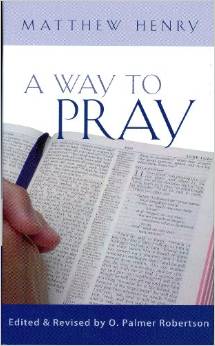
That certainly was the case with my recent sabbatical when a dear friend of mine sent me this gem of a read. Most people know the Puritan Matthew Henry for his massive commentary on the whole Bible. Rarely do I prepare a sermon that I don’t reference this classic as part of my study. What I didn’t know until receiving a copy of A Way to Pray and reading its introduction by O. Palmer Robertson, is that the man never finished the commentary without help. He considered the publication of this work a greater priority.

A Way to Pray consists almost entirely of Scriptures arranged topically and put into the language of prayer to help guide the believer’s intercessory life. Robertson revised the 300 year old work to put it into language suitable to the modern day.

Here’s what Robertson says in the introduction about the significance of this approach to prayer:

Prayer in this form is nothing more and nothing less than what the old Puritans called ‘pleading the promises’.  God has made promises to his people.  His people respond by redirecting those promises to the Lord in the form of prayer.  How could a God who is faithful to his word fail to answer prayers of this kind?  He has promised.  He will honour that promise.  If Christians would join together and form their prayers with the maturity and insight provided by Scripture itself, the impact on the world could not be measured.”

Robertson also goes on to say, and this strikes me as no insignificant testimony, that, “Next to the Bible it has been the most read and the most influential book in my life.”

As I have begun to work through the various sections – praise, confession, petition, thanksgiving, intercession, etc., I have found A Way to Pray to provide a richness to my spiritual disciplines which I regret not adding to the mix a long time ago. You can purchase a copy here. Or you can access a free online version here.

In working through the section on confession this morning, I prayed this from p. 54:

In the multitude of our words there never has been a lack of sin, for man full of talk will never be justified. While the lips of the righteous feed many, our lips have poured out foolishness and spoken perversity. Much corrupt communication has come out of our mouths. We are guilty of foolish talk and jesting, which are always out of place in your presence. We have spoken little of things useful for building up; others in the faith. We have failed to speak words that could minister grace to our hearers.

If we must give account for every idle word that we have spoken, we stand condemned. If by our words we shall be justified and by our words we shall be condemned, then woe to us. We are ruined, for we all have unclean lips and live among people with unclean lips. What would happen to us if you should turn our tongue against us?

Here’s to prayer that impacts the world beyond measure.

The Keeper and the Kept

IMG_0518

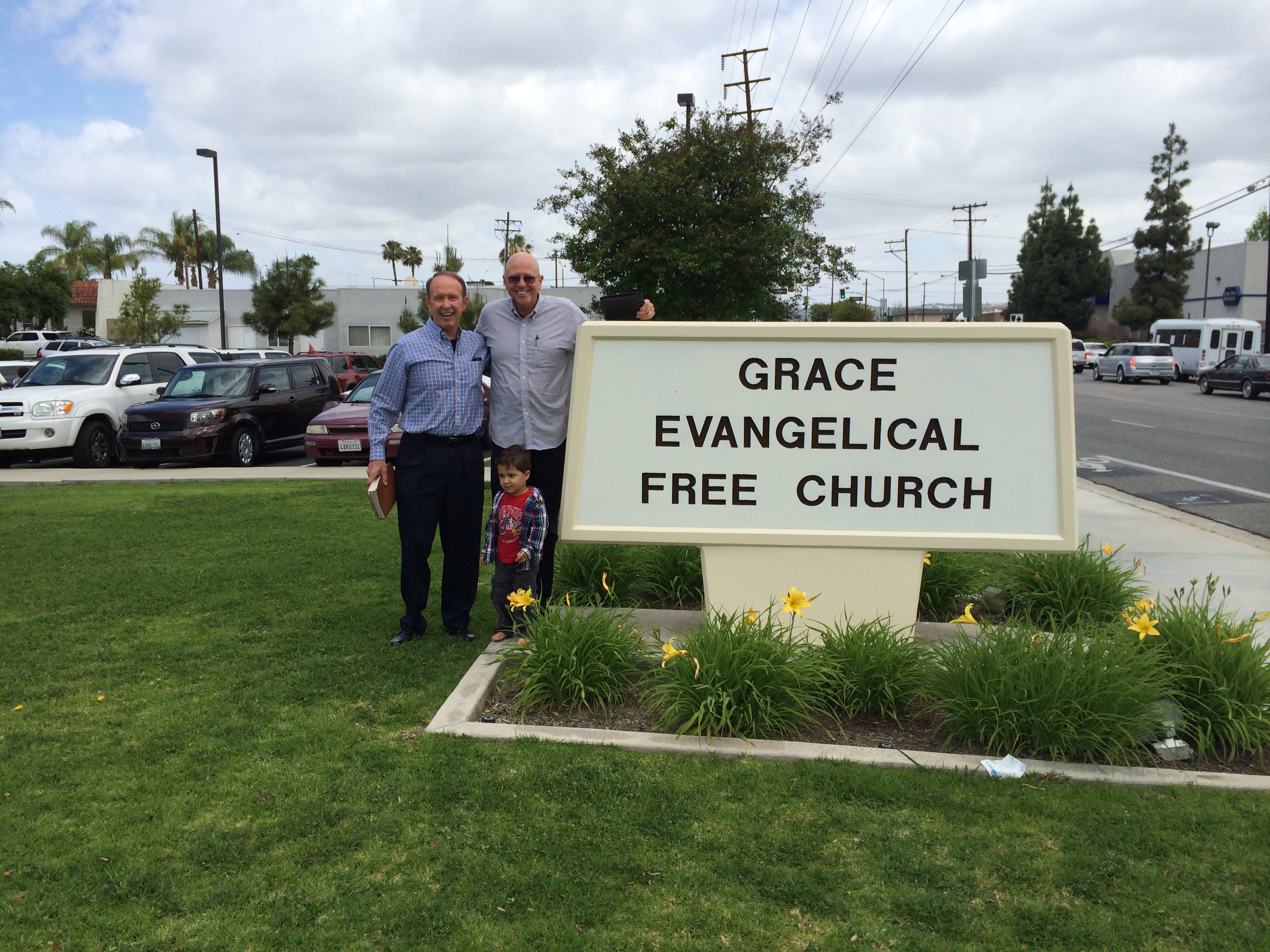
While on sabbatical my wife and I opted to visit the first church I ever served as pastor fresh out of seminary. I had only returned one time since we left in 1985. Nancy had never been back. On our road trip out west we traveled via Southern California for a spiritual blast from the past.

As one can imagine, lots of memories attended the visit. I only spent three short, illness-plagued years at Grace EV Free, but we engaged a lot of people and built some solid relationships. None of those connections proved stronger than the friendship made with Dave and Sheri. We stayed with them during our extended weekend. They showed us extraordinary kindness and hospitality. In the grace of God we simply picked up right where we left off with them. Our experience was at it always has been with them – saints in whom is all our delight (Psalm 16:3).

IMG_0506

That Sunday we accompanied them to the church. So much has changed! Three services now. A thousand people. A new facility. Nancy and I both remarked how much it reminded us of our OGC building. But none of that struck me as much as something else. As we walked toward the entrance, we met a man who served on the board during my pastorate. Jim wears his 90 years amazingly well. He shared about his current ministry – caring for his physically failing wife.

Then, after service, came Sonny and his son, Phillip. Sonny used to preach for me when chronic fatigue sidelined me in those difficult days back in the ‘80s. His son, who attends Dave and Sheri’s community group on Sunday evenings, has adopted his Dad’s love for and proficiency in the Scriptures. Others we heard about who had since gone home to their rewards.

IMG_0525

I found myself thinking about Jude 21 during the service – “Keep yourselves in God’s love.” It struck me as I reflected on our experience that these dear folks we reencountered had done that over the years, just as we have done. You can get that perspective over time when you have walked with Jesus for forty-plus years. The three disciplines contextually describing how to do this keeping in Jude 20 & 21 have been our experience. We have built ourselves up in our most holy faith. We have prayed in the Holy Spirit. We have waited and continue to wait for the mercy of our Lord Jesus Christ to bring us eternal life. Oddly enough, the lead worshipper used this Jude text for the service benediction. I have never heard anyone do that in all my years as a pastor. I have never used it. That will change in the future as I return to ministry from this sabbatical, Lord willing.

Another related reflection caused me to praise and worship God that first weekend of our extended break. Believers do keeping things like building, praying, and waiting because God’s people are a kept people. Like fixed bookends to our persevering lives in Jesus, Jude 1 and 24-25 frame the security of our lives – “To those who have been kept” and “To him who is able to keep you from falling and present you before his glorious presence without fault and with great joy, to the only God our Savior be glory, majesty, power and authority, through Jesus Christ our Lord, before all ages, now and forevermore! Amen.” Our keeping ourselves in the love of God is subordinate; God’s keeping us in Christ is ultimate. The kept enjoy the keeping of the Keeper as they keep themselves in the love of God.

My thanks to the keeping people of my first church for pointing us so plainly and thoroughly to our great Keeper at the outset of my sabbatical. May the kept of God never stop keeping themselves in the love of God.

The Flourishing Life

Puritan

It was a delight to climb back into the pulpit at OGC this morning after our sabbatical. To get to preach again, particularly on a passage in Psalm 92 that so thoroughly expresses my desires for this next season in my life and ministry, gave me great pleasure. If you care to, you can access the audio here.

I blew through the the eight takeaways at the conclusion of the message. Someone in the body asked me for them. Decided it would make for an easy blog post. Here they are:

  1. One, offer praise to God as the tenor of your life.
  2. Two, gather with God’s people on the “Sabbath” and more. Be a fixture in God’s church. No fellowshipping, no flourishing. Be a churchman and churchwoman.
  3. Three, reject the lie of our materialistic culture and its flourishing-only-for-a-brief-while ways and invest in life-long flourishing commitments that will serve you well to the end of your days.
  4. Four, beware the American retirement dream in terms of having earned endless days in front of the TV or on the golf course. Have a robust theology of leisure to be sure but believe in “rehirement” not retirement. My thanks to David Sims for that play on words.
  5. Five, treasure a church body with multiple generations not just a bunch of folks your own age.
  6. Six, if you are young, badger some old saint until they own you in a mentoring, discipling kind of way. If you are old like me, give yourself away. Invest in the next generation. Declare that he is your Rock to all who come.
  7. Seven, speak up and announce the praise of God when given the chance. Regularly testify to His faithfulness.
  8. Eight, pray this text for me and the rest of our elders as long as you are a part of OGC. I beg of you.

The Joshua Place Playground Update

The Joshua Place

Good Friday. A day of remembrance. The day death died because of the death of the Son of God. I look forward with anticipation to worship this Sunday and remembering the hope of the resurrection from the dead.

Ironic to me that this Good Friday marked the three-month anniversary of a death we continue to mourn – our beloved Joshua. It seems fitting that I would mark that occasion with an encouraging update about our progress on a playground in his memory. Thank you for your patience, family, friends and fans of Josh alike, as wheels in churches tend to turn slowly and we at OGC can be no exception.

I am so very thrilled to report that to date we have received into the fund a whopping $18,192 dollars! God is so good. The budget for the project, even with us doing the “sweat equity,” is $25,000. Yes, safe, durable playgrounds are that pricey!

Last Monday night, our elders agreed on the following in terms of how to proceed from here:

  1. Opportunity for anyone to contribute to the fund will remain open until June 1.
  2. Our deacons will continue to do the prep work involved in getting our ducks in a row for building the playground.
  3. Construction of the project will likely occur in November of this year, after the hot weather breaks. Adequate notice will be given as to the times and dates so anyone who would like to help with the construction will be able to do so.
  4. Construction will be followed by a dedication service as the playground opens for use.

Would you pray with me for the remaining funds to come in? If you have yet to make a gift, you can do so by writing your check to OGC and indicating on the memo line your designation for the playground. My thanks to you in advance.

One reason for the delay in building the playground, other than the funds, is that starting April 20, after the Easter service, Nancy and I will be on sabbatical for two months. There simply wasn’t enough time to try and pull this thing off in the cool of the Spring. So we pushed things back. Again, I thank you for your patience.

If anyone has any questions, feel free to contact me when I return in June or check in with the church office.

The 10:45 AM Sunday Challenge

Clocks

Let me own up front that I am a punctuality freak. I hate to be late for anything.

So I am trying to check my idolatry/control issues up front in raising this question: could more of us church folk strive to be seated for worship at the very latest by the appointed starting time?

I get how hard this is. In our case, fifteen minutes is too little time between hours. Fellowship goes on in the lobby. Community takes place. There are no easy solutions.

But I want to suggest that the values gained by making the transition into the service in a punctual fashion outweigh those lost by doing so.

First, the missional value. Most new people will go right to a seat rather than linger in the lobby. Scanning the room for unfamiliar faces and greeting them has a powerful impact for the gospel.

Second, the community value. I know it’s tempting to think so, but announcements aren’t throw away time in a worship service. Important details about how we engage as members and do mission in our city get covered then.

Third, the worship value. Getting the heart in the right place before corporate worship takes at least a little focus time. Once the service is over, we can go hard after people. Before the service, going hard after God in preparation is a must. One reason why we do a call to worship song at 10:45 is to help with this challenge. Next time you hear that cue, please consider it a nudge to shift gears toward the welfare of the whole not just the individual. Better yet, be mindful of the time and take a seat before that cue.

We pastors everywhere thank you church goers for giving this some prayerful thought.

Two Different Good Friday Observances

Good Friday

Holy Week fast approaches.

Good Friday brings with it two options for observing the day, both unique in their own respects.

First, at 10 AM at the All Women’s Health Center (abortion clinic), there will be an hour of praise and prayer commemorating Jesus’ Preaching at All Women'sdeath on the cross and the advocacy for life at this modern killing field. The service will involve a blend of the regular sidewalk counseling that goes on, singing, Scripture reading, and praying. Furthermore, I have been asked to preach as I did last December for an Advent service. Any and everyone are invited to attend. You do not have to participate in the actual counseling, but your prayer and praise can make a powerful impact on this front-line spiritual battle zone.

Second, at 6 PM at OGC, we will host an agape love feast for our church-wide agape feastobservance of the day. In this we will break our 24 hour fast for conversions, baptisms, and discipleship here in Central Florida. Each household is asked to bring some bread, cheese, and fruit to share. We will have time for community around the tables, sharing, singing, and, of course, the Lord’s Table. I will share a brief homily from Matt. 27:51-54. All are welcome.

May these unusual approaches bring enhanced appreciation for all Jesus has done for us in His substitutionary sacrifice on the cross!