Adoption – Not a Fairy Tale

John Owen, the Puritan divine, called the biblical doctrine of adoption “our fountain privilege.” J. I. Packer calls it the highest privilege the gospel affords to those who believe.

The London Baptist 1689 Confession of Faith defines adoption this way:

FOR the sake of His only Son, Jesus Christ, God has been pleased to make all justified persons sharers in the grace of adoption, by means of which they are numbered with, and enjoy the liberties and privileges of children of God. Furthermore, God’s name is put upon them, they receive the spirit of adoption, and they are enabled to come boldly to the throne of grace and to cry ‘Abba, Father’. They are pitied, protected, provided for, and chastened by God as by a Father.He never casts them off, but, as they remain sealed to the day of redemption, they inherit the promises as heirs of everlasting salvation (Chap. 12).

Knowing GodIn Packer’s book Knowing God, he writes of what he calls deep insights from the Epistles of the New Testament that adoption gives us. First on the list is that our adoption shows us the greatness of God’s love. Indeed, the apostle John declares in 1 John 3:1, See what kind of love the Father has given to us, that we should be called children of God; and so we are.

The implications of this are staggering. More from Packer:

God receives us as sons, and loves us with the same steadfast affection with which he eternally loves his beloved only-begotten. There are no distinctions of affection in the divine family. We are all loved just as fully as Jesus is loved. It is like a fairy story–the reigning monarch adopts waifs and strays to make princes of them. But, praise God, it is not a fairy story: it is hard and solid fact, founded on the bedrock of free and sovereign grace. This, and nothing less than this, is what adoption means. No wonder John cries, “Behold what manner of love!” When once you understand adoption, your heart will cry the same (IVP, 1993, p. 216).

Men, do you want to understand adoption better? This Saturday at 7 AM at the church office Oxford Club meets. Bring your own breakfast and join in the discussion of chapter nineteen, Sons of God, in J. I. Packer’s Knowing God. May we all understand this precious doctrine better and actually believe that this is true: We are all loved just as fully as Jesus is loved!

What's a Reformed Church Like Ours Doing Washing Cars this Saturday?

Good question. Let me explain.

Some folks at lunch today asked me how I was doing. As usual, my response included my assessment of the state of affairs in my church. I told them how excited I was about the rewording of our mission/vision/values verbiage to make things more memorable and catalytic to our fellowship. So I laid the BRIDE acrostic on them and quickly rattled off what each of those letters stands for in the way we want to accomplish our mission.

Lately we’ve been making a big deal out of the “B” for “Bridge Building.”  That’s our metaphor for crossing over into the community with acts of mercy and kindness a la the Good Samaritan in Luke 10:25-37. The intent is to let our light shine via good works in such a way that the unbelieving world will see our good works and so glorify our Father in heaven (Matt. 5:16).

Ray Lau in our church came up with the brilliant idea of hosting a free car wash at our office this Saturday, Nov. 21, from 10 AM to 1 PM. Last Saturday a bunch of us canvased homes around our property giving out fliers advertising the event and inviting people to come. We are praying that the Lord will work to bring a number of our neighbors to our door step so we might serve them in love and build bridges into their lives for the gospel.

KindnessSome years ago,  Cincinnati pastor Steve Sjogren wrote a book called Conspiracy of Kindness, (Servant Publications, 1993, 236 pages). In it he tells a boatload of stories about how his church penetrated their geographical area with all sorts of creative servant evangelism projects. Inevitably that led to sharing the gospel with people time and time again.

He writes:

In a society where other forms of sharing the gospel often meet with a great deal of resistance–one which feels it’s heard too much “God-talk” and not seen enough “God-activity”–servant evangelism seems to be a fruitful way for Christians to share God’s love with their community. Our experience in Cincinnati has shown us that evangelism must contain the right words, but that those words must follow the demonstration of the love of God (p. 22).

Now I don’t think that is always true. Nor does the author. He allows for the utility of other approaches to sharing the gospel. God uses all kinds of things to reach all kinds of people.

But he does have a point. That was reinforced for me last Saturday when another little ditty from the Ticked Off section of the paper caught my eye. I have to stop reading that stuff! Someone vented their displeasure at the number of people knocking on his door at all hours of the day on Saturdays to tell him about  God.

In our day of postmodern skepticism in a post-Christian world, it seems to me that it is more important than ever to work at building relationships with nonbelievers and showing them the love of God in acts of kindness on the way to telling them the gospel of Christ that can save their souls.

That’s why our Reformed church is venturing out this Saturday to wash cars, for free. We want to build bridges into our community to be a blessing. We want to be the gospel so we can share the gospel.

So far about ten folks have volunteered to participate in all aspects of the outreach. We need about twenty.

What are you doing from 10 to 1 this Saturday? If you can help, let Ray know ASAP. And by all means, pray. Pray that God allows us to build bridges for the gospel by washing cars for His glory and their joy.

How Shall We Give Thanks This Sunday?

This coming Sunday brings us to our annual Thanksgiving service. I will not preach. Rather we will give the sermon time to congregational sharing. We will give thanks for God’s goodness and kindness to us in manifold ways.

The Psalmist expressed his determination to do that very thing in the temple in places like Psalm 111:1. Praise the LORD! I will give thanks to the LORD with my whole heart, in the company of the upright, in the congregation.

The question remains. Give thanks for what? Some things come quickly to mind. Health, provision, relationships, family, etc. These are all gifts of God and worthy of His praise.

But when we examine the disciplines of thanksgiving modeled by the apostle Paul we find other reasons for thanks on his agenda.

Consider Romans 1:8. I thank my God through Jesus Christ for all of you, because your faith is proclaimed in all the world.

Or how about 1 Cor. 1:4-7? I give thanks to my God always for you because of the grace of God that was given in Christ Jesus . . . so that you are not lacking in any spiritual gift.

Then there is 2 Cor. 1:3-4. Blessed be the God and Father of our Lord Jesus Christ, the Father of mercies and God of all comfort, who comforts us in all our affliction, so that we may be able to comfort those who are in any affliction, with the comfort with which we ourselves are comforted by God.

Hmmm. No thanksgiving at the beginning of Galatians. He was too hopping mad over their defection from the gospel into legalism.

Oh, good, back on track in Eph. 1:3. Blessed be the God and Father of our Lord Jesus Christ, who has blessed us in Christ with every spiritual blessing in the heavenly places (see vv. 4-14).

He gives yet more thanks in Phil. 1:3-5. I thank my God in all my remembrance of you, always in every prayer of mine for you all making my prayer with joy, because of your partnership in the gospel from the first day until now.

Pouring it on in Col. 1:3-5. We always thank God, the Father of our Lord Jesus Christ, when we pray for you, since we heard of your faith in Christ Jesus and of the love that you have for all the saints, because of the hope laid up for you in heaven.

Overflowing in 1 Thess. 1:2-3. We give thanks to God always for all of you, constantly mentioning you in our prayers, remembering before our God and Father your work of faith and labor of love and steadfastness of hope in our Lord Jesus Christ.

Seeing a pattern developing with 2 Thess. 1:3-4. We ought always to give thanks to God for you, brothers, as is right, because your faith is growing abundantly, and the love of every one of you for one another is increasing. Therefore we ourselves boast about you in the churches of God for your steadfastness and faith in all your persecutions and in the afflictions that you are enduring.

For a specific individual, Timothy, in 1 Tim. 1:3-5. I thank God whom I serve, as did my ancestors, with a clear conscience, as I remember you constantly in my prayers night and day. As I remember your tears, I long to see you, that I may be filled with joy. I am reminded of your sincere faith, a faith that dwelt first in your grandmother Lois and your mother Eunice and now, I am sure, dwells in you as well.

Finally, another particular person in view, Philemon, in Philemon 4. I thank my God always when I remember you in my prayers, because I hear of your love and of the faith that you have toward the Lord Jesus and all the saints.

My, the sheer volume of thanks coming from Paul’s lips in the New Testament takes the breath away! Surely he would echo the resolve of the Psalmist to let his praise and thanksgiving be heard amidst the congregation of the upright.

Along with the normal things we thank God for, let’s take our cue from the apostle and reflect more broadly in scope for causes of thanksgiving – Christian faith around the globe, spiritual gifts working in the church, comfort in affliction from Christ and toward others, unspeakable mercies in every spiritual blessing from above, partners in the gospel, faith in Christ, love among the saints, hope of eternal life, steadfastness in suffering, tears of joyful remembering, and faith transmitted by godly parents.

In light of this survey, prayerfully consider what God might have you share with a whole heart in the company of the upright this Sunday morning. And may our praise redound to His glory and add to the overflow of our joy!

In Praise of Constructive Peacemakers

OGC made the local paper not long ago.

Someone sent this little ditty into the Ticked Off section a few weeks back.

A sign that says “The Future Home of the Orlando Grace Church” has been posted on Maitland Avenue in Altamonte Springs across from St. Mary Magdalene Church for at least 38 years now. How much longer do we have to wait?

I have to admit. At first I wondered if someone from OGC put that in the paper! Just kidding, sort of.

No matter who submitted it, I sincerely hope no one will have to wait much longer for us to get into a facility, certainly not another 38 years (don’t you just love sarcasm?). But this post doesn’t concern building programs and God’s providence for when a project of that magnitude gets off the ground and when it doesn’t. This post is about peacemaking, constructive peacemaking, in particular.

I HATE this section of our paper. Nothing about anonymous griping and grousing over anybody or anything promotes constructive peacemaking when someone gets ticked off. That’s peacebreaking, even peacefaking at its worst.

Peacemaking, the biblical kind, governed by the principles and constraints of scripture, is constructive in every way and commended by God (Matt. 5:9).

I decided to write about this for a couple of other reasons beyond the snipe in the paper.

First, someone recently confronted me about a beef they had with me. They honestly shared their feelings in a calm and constructive fashion. The first words out my mouth were, “Thank you for telling me. This gives us an assignment from God to do biblical peacemaking to the glory of God.” And we did. We prayed. We talked. God was honored. The relationship was restored. Confessions were made (by me too). I emailed the party after the fact and thanked them again for loving me well as a constructive peacemaker. May their tribe increase!

Second, I just finished teaching on peacemaking in our new member’s class. I am not sure why, but I think it might be my favorite session. Probably because of the practical value of the content and its enormous importance to the peace and purity of our church.

SandeIn the class I cover the 4 G’s of biblical peacemaking as outlined by Ken Sande in his book, The Peacemaker. Do you have them memorized? I pray you do. They have saved my pastoral keister in more than one conflict. Here is a quick refresher.


  1. Glorify God – determine to conduct yourself in the conflict in a way that honors God from first to last (1 Cor. 10:31).
  2. Get the Log Out of Your Own Eye – examine your own contribution to the conflict and admit any sins/faults you contributed along the way (Matt. 7:3-5).
  3. Gently Restore – engage the conflict with a view toward another’s restoration all the while moving through the various steps with a spirit of gentleness (Gal. 6:1-2; Matt. 18:15-17).
  4. Go and Be Reconciled – pursue the complete restoration of the relationship through the practice of biblical forgiveness (Eph. 4:31-32).

So the next time you get ticked off (and we all do), what will you do? Determine to be a constructive biblical peacemaker. I for one will rise up and call you blessed.

Powerful Incentive to Pray

CarsonJesus taught His followers to open their prayers this way: “Our Father in heaven” (Matt. 6:9). Paul wrote in Eph. 3:14, “For this reason I bow my knees before the  Father.” Before both the Lord and the apostle revealed the content of their praying, they prescribed and modeled a certain manner of address toward God in praying. Call Him “Father.”

This is no small thing, particularly in the ancient eastern culture. The ancients revered their fathers as those who led the family unit and cared for its well being, doing it good and bestowing upon it favors. So by using the term “Father” as a means of addressing the Lord, we should see a ground of our praying that can powerfully motivate our praying. God is no mere transcendent Other to which we bring our petitions; He is the ultimate Father.

Once again, D. A. Carson, in his terribly helpful book on prayer, A Call to Spiritual Reformation (Baker, 1992, 230 pages), helps to motivate and equip in the all important means of grace that is intercessory prayer.

So as Paul approaches God with his petitions, he reminds himself that the God he addresses is his heavenly Father, the archetypal Father, the Father of all who are truly his people in heaven and on earth. He is a good God; he knows how to give good gifts. Paul dares to approach this God with these requests because he knows God to be good God, a heavenly Father. Thus the nature and character of God become for Paul the fundamental ground for intercessory prayer (p. 201).

Now here is where Carson takes the truth and brings it home to our prayer lives.

The more we reflect on the kind of God who is there, the kind of God who has disclosed himself in Scripture and supremely in Jesus Christ, the kind of God who has revealed his plans and purposes for his own “household,” the kind of God who hears and answers prayer–the more we shall be encouraged to pray. Prayerlessness is often an index to our ignorance of God. Real and vital knowledge of God not only teaches us what to pray, but gives us powerful incentive to prayer (p. 201, emphasis mine).

How is your prayer life? Do you need some incentive? Contemplate the nature of your God in Jesus Christ as Father. And then, when you pray, bow your knees and begin with, “Our Father in heaven.”

Soldiers, Athletes, Farmers, Web Designers & Other Workers for the Kingdom

Following Christ is decidedly not easy. It involves a lot of hard work.

That much seems clear from the variety of word pictures Paul uses in 2 Tim. 2:1-15 to motivate his pastoral charge, Timothy. Every one of them – soldiers, athletes, farmers, workers of all kinds – engages in strenuous activity to accomplish his objectives.

Terry Johnson, in this month’s edition of Tabletalk Magazine, observes:

Success in these endeavours requires aggressive, focused, energetic involvement. Each may, and should, pray to God for help, for wisdom, and for strength. God’s strength is necessary for these activities. But the soldier finally must pick up his sword and fight; the athlete must step into the arena and compete; the farmer must work the soil, plant, water, weed, and harvest; and the workman must lay each brick. Dependence upon God never means passivity; reliance upon God never means inactivity. Fail to grasp the human contribution to Christian service and personal sanctification and one is doomed to experience continual frustration and defeat.

If the apostle Paul had lived in the computer age, when so much of kingdom work takes place on the Internet, I suspect he may have included web designers in his list of metaphors from which to motivate us.

I say this because I have watched Greg, John, and Ray put in long hours and work extremely hard to create our recently launched, though still-under-construction, new web site for OGC.

No one knows for sure just how significant the rebirth of our website will be. While the previous version has served us well for years, and many thanks to servants like Mark and Dan for their hard work during that season, time had come for a redo. Most new people now indicate that they come to OGC because of searching the web. That fact alone means we must pay attention to our first impressions in that realm and make our site as serviceable to the needs of those who visit is as we can possibly make it.

I am thrilled at the new look and features and I commend these brothers for their hard work in the Lord!

Why Pray for Power?

CarsonWe have biblical precedent to pray for God’s power in our lives. For example, Paul prays this way for the Ephesians in 3:16 – that according to the riches of his glory he may grant you to be strengthened with power through his Spirit in your inner being.
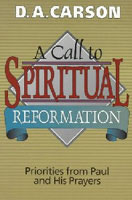
The question remains why? The answer comes in v. 17 – so that Christ may dwell in your hearts through faith.

The key to understanding what Paul means by this purpose lies within the word dwell. D. A. Carson, in his book A Call to Spiritual Reformation, observes:

The verb rendered “to dwell” is a strong one. Paul’s hope is that Christ will truly take up his residence in the hearts of believers, as they trust him (that’s what “through faith” means), so as to make their hearts his home. . . . Make no mistake: when Christ first moves into our lives, he finds us in very bad repair. It takes a great deal of power to change us; and that is why Paul prays for power. He asks that God may so strengthen us by his power in our inner being that Christ may genuinely take up residence within us, transforming us into a house that pervasively reflects his own character (Baker, 1992, pp. 186-87).

Pray for power in your own life and in the lives of others to this end – that Christ may dwell in your hearts through faith.

Why Pray for Power?

We have biblical precedent to pray for God’s power in our lives. For example, Paul prays this way for the Ephesians in 3:16 – that according to the riches of his glory he may grant you to be strengthened with power through his Spirit in your inner being.

The question remains why? The answer comes in v. 17 – so that Christ may dwell in your hearts through faith.

The key to understanding what Paul means by this purpose lies within the word dwell. D. A. Carson, in his book A Call to Spiritual Reformation, observes:

The verb rendered “to dwell” is a strong one. Paul’s hope is that Christ will truly take up his residence in the hearts of believers, as they trust him (that’s what “through faith” means), so as to make their hearts his home. . . . Make no mistake: when Christ first moves into our lives, he finds us in very bad repair. It takes a great deal of power to change us; and that is why Paul prays for power. He asks that God may so strengthen us by his power in our inner being that Christ may genuinely take up residence within us, transforming us into a house that pervasively reflects his own character (Baker, 1992, pp. 186-87).

Pray for power in your own life and in the lives of others to this end – that Christ may dwell in your hearts through faith.

What's a Church to Do with So Many Support Requests?

Most of us have had numerous “asks” in recent months with several folks from our church heading for the mission field in one direction or another. Truthfully, there are more to come. We’ve got “asks” from new candidates for the mission field as well as already deployed servants whose support has deteriorated with the economy. The demand has the potential to strain relationships in our midst in one way or another. 

Here’s what we all can do when an “ask” comes our way to keep the process redemptive as opposed to divisive: 

  1. Welcome the request as a possible opportunity to invest in the kingdom for eternal reward. Treat the occasion as a chance to revisit your stewardship of wealth and evaluate whether or not your priorities are in order.
  2. Take the matter to the Lord in prayer and see what He tells you to do.
  3. Whatever He says, as best you can determine, do the missionaries the courtesy of replying with your answer so they can know what you can or can’t do. Please don’t let the awkward nature of having to decline graciously, if that is the case, keep you from timely communication. They would rather know that you cannot participate than for things to remain unclear.
  4. Remain open to different responses to different requests depending upon changes in your circumstances and how the Lord might lead in unique circumstances. Evaluate each situation independently as God directs.

 We are a relatively small church. The requests have mounted on our limited resources. Everyone understands that, especially people within our flock trying to raise support. However, the only way they are going to know if God is raising them up for the mission field or keeping them there is if they exhaust all their available contacts. Their church family is the first line of support. I am encouraging all candidates to contact our membership in light of such thinking.

Thank you in advance for your willingness to press ahead with processing of support requests. Please pray with me that the Lord will unleash the resources of heaven for each and every servant He wants on the field for the cause of the gospel from OGC.