How Faith & Food Figure in Following Jesus (Part 6)

In the interest of driving home some of the truths of yesterday’s message, here is a portion of my preaching manuscript from John 6:41-51.

Our part is clear. Repent and believe. That’s all over John’s gospel. Jesus gets right in their face and calls them over and over again to come, to believe, to eat. But something else is clear, painfully clear, Spurgeon said obnoxiously clear. We can’t do it left to ourselves and our own devices. Look at v. 44. No one can come to me unless the Father who sent me draws him. This should sound familiar. It strikingly resembles Jesus’ words back in v. 37 – All that the Father gives me will come to me. This is the same doctrine of Christ related to salvation but said in two different ways. The first is from a positive view looking at the gifting to the Son by the Father all those He chooses out of His love and grace. The second is from a negative view looking at the total inability of absolutely everyone – no one can come – apart from that intervening love and grace of God on their behalf.

He’ll punctuate it again with this same crowd nearly the exact same way in 6:65 – This is why I told you that no one can come to me unless it is granted him by the Father. Why is this so? Sin. Sin has left every last one of us like the invalid man at the pool of Bethesda. We are morally and spiritually unable to do a thing to remedy our condition. We are as Paul put it in Eph. 2:3 – dead in our trespasses and sins. Or in Rom. 8:7 – For the mind that is set on the flesh is hostile to God, for it does not submit to God’s law, indeed it cannot. Or to use Jesus’ words to another crowd in John 8:43 – Why do you not understand what I say? It is because you cannot bear to hear my word. It’s not your nature. Sin has corrupted it through and through. Rom. 3:10-12 – None is righteous, no, not one, no one understands; no one seeks for God. All have turned aside; together they have become worthless; no one does good, not even one.

The good folks at Desiring God ministries have summarized the implications of this truth, what Reformed types call Total Depravity, as well as I have ever encountered:

It is hard to exaggerate the importance of admitting our condition to be this bad. If we think of ourselves as basically good or even less than totally at odds with God, our grasp of the work of God in redemption will be defective. But if we humble ourselves under this terrible truth of our total depravity, we will be in a position to see and appreciate the glory and wonder of the work of God. (For the entire document go here.)

What must happen then? Where then is there hope? Another great doctrine of the Reformed faith, irresistible grace, or what we might better call effectual grace! And its truth is all tied up in that massively important word in v 44 – draws. No one can come to me unless the Father who sent me draws him. Jesus uses the same word in 12:32 of the power He will exert in having gone to the cross – And I, when I am lifted up from the earth, will draw all people to myself. When this word for draw gets used in the NT, whether for a fishing net that gets dragged from the sea, or a sword that gets drawn from its sheath, it always implies a couple of things. There is resistance and that resistance is ultimately overcome.

Thanks be to God that though our sin paralyzes grace regenerates!

7 Reasons We Need Small Groups

This comes from a message by Pastor John Piper. You may access the entire talk here.

He has given pastors to the church “to equip the saints for the work of ministry, for building up the body of Christ” (Ephesians 4:11-12). I believe in what I do. And I believe that it is not enough. Here are the seven reasons I gave the small group leaders.

1.The impulse avoid painful growth by disappearing safely into the crowd in corporate worship is very strong.

2.The tendency toward passivity in listening to a sermon is part of our human weakness.

3.Listeners in a big group can more easily evade redemptive crises. If tears well up in your eyes in a small group, wise friends will gently find out why. But in a large gathering, you can just walk away from it.

4.Listeners in a large group tend to neglect efforts of personal application. The sermon may touch a nerve of conviction, but without someone to press in, it can easily be avoided.

5.Opportunity for questions leading to growth is missing. Sermons are not dialogue. Nor should they be. But asking questions is a key to understanding and growth. Small groups are great occasions for this.

6.Accountability for follow-through on good resolves is missing. But if someone knows what you intended to do, the resolve is stronger.

7.Prayer support for a specific need or conviction or resolve goes wanting. O how many blessings we do not have because we are not surrounded by a band of friends who pray for us.

So please know that when this small-group ministry of our church is lifted up, I don’t think it’s an optional add-on to basic Christian living. I think it is normal, healthy, needed, New Testament Christianity. I pray that you will be part of one of these small groups or that you will get the training and start one. This is the main strategy through which our pastors and elders shepherd the flock at Bethlehem: Elders > small group leaders > members to one another.

Sanctification & the Use of Means

Here is the quote from J. C. Ryle’s book Holiness that I read before the Lord’s Table today in our worship at OGC.

Sanctification, again, is a thing that depends greatly on a diligent use of Scriptural means. When I speak of “means”, I have in view Bible-reading, private prayer, regular attendance on public worship, regular hearing of God’s Word, and regular reception of the Lord’s Supper. I lay it down as a simple matter of fact that no one who is careless about such things must ever expect to make much progress in sanctification. I can find no record of any eminent saint who ever neglected them. They are the appointed channels through which the Holy Spirit conveys fresh supplies of grace to the soul, and strengthens the work that He has begun in the inward man. Let men call this legal doctrine if they please, but I will never shrink from declaring my belief that there are no “spiritual gains without pains”. I should as soon expect a farmer to prosper in business who contented himself with sowing his fields and never looking at them till harvest, as expect a believer to attain much holiness who was not diligent about his Bible-reading, his prayers, and the use of his Sundays. Our God is a God who works by means, and He will never bless the soul of that man who pretends to be so high and spiritual that he can get on without them.

Lay hold of the varied means of grace in your pursuit of the holiness of God in your everyday life.

More Puritan Power for the LB

This is a particularly good word from William Gurnall in The Christian in Complete Armour:

Afflictions are a spade which God uses to dig into His people’s hearts to find the gold of faith. Not that He does not seek out the other graces also, but faith is the most precious of them all. Even when God delays and seems to withdraw His hand before coming with the mercy He promises, it is so that He can explore our faith.

Do you find God using the spade of affliction to dig into your heart in this present season of your life? What is He finding in you? May we say to Him with the man in the Gospels, Lord, I believe. Help my unbelief.

The Gospel’s Highest Privilege

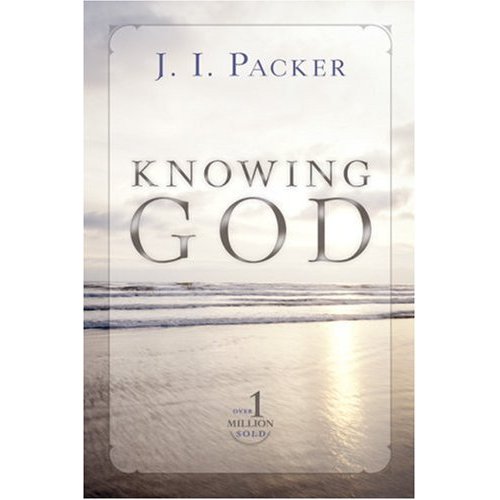
I have to admit it. Until recently reading chapter 19, God the Son, in J. I. Packer’s classic, Knowing God, I never considered the notion of ranking the manifold privileges of the gospel. Is there a highest among such heights of the spiritual blessings of our salvation in Christ–election, predestination, justification, adoption, redemption, sanctification, and glorification?

Packer thinks so. He calls adoption the highest privilege that the gospel offers: higher even than justification (p. 206). That turned my head a bit. After all, reformed types cherish justification as a gift of gifts from God ever since Martin Luther nailed his 95 theses on the Wittenberg door.

The 1689 London Baptist Confession of Faith summarizes the biblical doctrine of adoption this way in chapter twelve:

For the sake of His only Son, Jesus Christ, God has been pleased to make all justified persons sharers in the grace of adoption, by means of which they are numbered with, and enjoy the liberties and privileges of children of God. Furthermore, God’s name is put upon them, they receive the spirit of adoption, and they are enabled to come boldly to the throne of grace and to cry ‘Abba, Father’. They are pitied, protected, provided for, and chastened by God as by a Father. He never casts them off, but, as they remain sealed to the day of redemption, they inherit the promises as heirs of everlasting salvation.

No wonder John exclaims in 1 John 3:1a – See what kind of love the Father has given to us, that we should be called children of God; and so we are. The truths contained within this doctrine of sacred Scriptures take your breath away. But do they do so enough to warrant ranking them above the likes of justification?

Packer explains why he thinks so:

Adoption is higher, because of the richer relationship with God that it involves. . . . The two ideas are distinct, and adoption is the more exalted. Justification is a forensic idea, conceived in terms of law, and viewing God as judge. In justification, God declares of penitent believers that they are not, and never will be, liable to the death that their sins deserve, because Jesus Christ, their substitute and sacrifice, tasted death in their place on the cross.

The free gift of acquittal and peace, won for us at the cost of Calvary, is wonderful enough, in all conscience–but justification does not of itself imply any intimate or deep relationship with God the judge. In idea, at any rate, you could have the reality of justification without any close fellowship with God resulting. [Chew on that notion for a bit!]

But contrast this, now with adoption. Adoption is a family idea, conceived in terms of love, and viewing God as father. In adoption, God takes us into his family and fellowship–he establishes us as his children and heirs. Closeness, affection and generosity are at the heart of the relationship. To be right with God the Judge is a great thing, but to be loved and cared for by God the Father is greater (p. 207).

To borrow from Wesley and dare embellish a bit, Amazing love, how can it be, that thou my God shouldst die for me AND make me your child! And can it be? Yes, oh my, yes, it can! Thanks be to God for His indescribable gifts of justification AND adoption!

A Reflection on the Desiring God National Conference

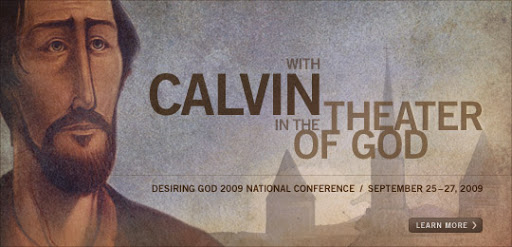
I say reflection singular, not reflections plural, for this article does not contain room to record all God brought to mind and worked in my heart this past weekend in Minneapolis. The title of the conference was With Calvin in the Theater of God. DG meant to honor the magisterial (of, pertaining to, or befitting a master; authoritative) reformer during this year marking the 500th anniversary of his birth.

My reflection comes from the final message of the conference delivered by Dr. John Piper. He entitled it Jesus Christ as Denouement in the Theater of God: Calvin and the Supremacy of Christ in All Things. Fortunately, he defined denouement for us; I did not have a clue. This comes directly from his message which you can access online here.

The dictionary says that the dénouement is “the final part of a play, movie, or narrative in which the strands of the plot are drawn together and matters are explained or resolved.” Or: “the climax of a chain of events, usually when something is decided or made clear.”

Piper sought to answer the question, What is the ultimate goal of God in the theater of God? He argued that the answer is to glorify Himself in His Son, the Lord Jesus Christ. He made his case for that with an exposition of Ephesians 1:4-6 and other related passages:

. . . even as he chose us in him before the foundation of the world, that we should be holy and blameless before him. In love 5 he predestined us for adoption as sons through Jesus Christ, according to the purpose of his will, 6 to the praise of his glorious grace, with which he has blessed us in the Beloved.

In what he called the ultimate statement in the Bible about the purpose of God in the theater of God, Piper explained from v. 6 that this is why everything exists. God is to be praised by innumerable redeemed beings. Specifically, we are not just to praise His glory but the glory of His grace. The apex of the glory of God is the grace of God. Every other attribute serves the purpose to make the grace of God more plain and precious.

He closed with a series of applications in answer to the question, So what? He called them five ways of believing this denouement.

1. The highest pleasure of the human being is the pleasure of admiration. Seeing it, savoring it, speaking it, is the end — to admire the infinite admirability which is found only in God’s grace in Christ. Make it your life-long, eternity-long vocation to see and know Him so that all else is counted loss because of the surpassing value of knowing Christ.

2. When the theater of God is renewed the dazzling creation will be as nothing as compared to Christ. Beware to become excessively excited about the new heavens and new earth. It will be as nothing in comparison. We won’t need a sun or moon any more, because the glory of God will be its sun and the Son will be its lamp. Everywhere we look we will see Christ reflected. It will be unlike anything we’ve known. So don’t get excited about eternal golf! Many in our churches will be shocked when denied entrance into heaven when the Lord says to them, All you ever really wanted was my gifts and not me. See Matt. 7:21-23.

3. Now that we understand what it means to be loved by God given the mercies of His grace we must also understand that this love is not in and of ourselves to be made much of but to be rescued from the need to be made much of.

4. To be sure, we ourselves will be glorified. We will shine like the sun in the kingdom of our Father. We will shine with the glory of Christ, not our own. It will be so stunning that we will be tempted to bow down and worship one another, said C. S. Lewis. But remember the glory will be a reflected glory, the glory of Christ.

5. When God gives us eyes to see His glory in the gospel of Christ, we are gradually being changed into the likeness of Christ (2 Cor. 3:18). This is the most important verse in the Bible on sanctification. Beholding is becoming. Seeing Christ in His glory changes us. Any other way toward change leads to legalism. The role of the pastor is to open eyes to the glory of Christ. Theirs’ is an impossible task. It begins with the pastor seeing Christ for himself and then relentlessly commending Him to others.

This is the legacy of John Calvin. This is the call of the Holy Scriptures. This is the desire of my heart as a pastor. Let us continually stand in awe, amazed at the glory of Christ as the denouement of the theater of God.

Puritan Power for the LB

This from William Gurnall:

Faith, then, becomes active when it rests on Christ crucified for pardon and life. There are many acts of the soul which must precede this, for a person can never truly exercise this faith unless he first has knowledge of Christ and relies on His authority. Only then can he say, “I know whom I have believed” (2 Timothy 1:12). Most people are reluctant to trust a complete stranger. Abraham did not know where he was going, but he knew with whom he was going! God worked with Abraham to teach him the knowledge of His own glorious self—who He was—so that His child could rely on His word, assenting to the truth of it no matter how harsh and improbable and impossible it seemed. “I am the Almighty God; walk before me, and be thou perfect” (Genesis 17:1).

Wherever your journey takes you today in the life of faith, you may not know where you are going, but as a child of God you know with whom you are going. Be strong and courageous!

One Foot Raised

Pastor Sam Storms brought a message tonight starting with this quote from the great reformer in a letter to a woman struggling with physical illness:

Afflictions should serve as medicine to purge us, to remove what is superfluous…We ought to learn from our physical afflictions, in whatever form they may come, to live every day with one foot raised, ready for our departure into the presence of God.

The list of Calvin’s afflictions read like a medical journal. Headaches. Fevers. Gout. Colic. Hemorrhoids. Arthritis. Acute chronic inflammation of the kidneys. Gall stones. Violent fits of coughing that ruptured blood vessels in his lungs.

I never realized the man suffered from so many physical ailments. He managed to view them as momentary light afflictions (2 Cor. 4:16-18) by looking upon the invisible and contemplating the incomparably great weight of eternal glory that awaited him upon his death.

May all who name the name of Jesus do the same in good health and bad.