One last thought from Dr. Carson.
So far:
Much praying is not done because we don’t plan to pray.
Adopt practical ways to impede mental drift.
At various periods in your life, develop, if possible, a prayer-partner relationship.
Choose models, but choose them well.
Develop a system for your prayer lists.
Mingle praise, confession, and intercession; but when you intercede, try to tie as many requests as possible to Scripture.
If you are in any form of spiritual leadership, work at your public prayers.
Number 8:
Pray until you pray.
This is Puritan advice. Carson writes:
What they meant is that Christians should pray long enough and honestly enough, at a single session, to get past the feeling of formalism and unreality that attends not a little praying. we are especially prone to such feelings when we pray only for a few minutes, rushing to be done with a mere duty. To enter the spirit of prayer, we must stick to it for a while. If we “pray until we pray,” eventually we come to delight in God’s presence, to rest in his love, to cherish his will. Even in dark or agonized praying, we somehow know we are doing business with God. In short, we discover a little of what Jude means when he exhorts his readers to “pray in the Holy Spirit” (Jude 20)–which presumably means it is treacherously possible to pray not in the Spirit.
He ends with this:
In the Western world we urgently need this advice, for many of us in our praying are like nasty little boys who ring front door bells and run away before anyone answers. Pray until you pray.
Lord, let us linger.

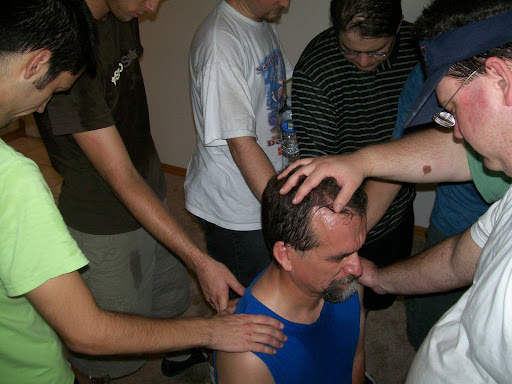
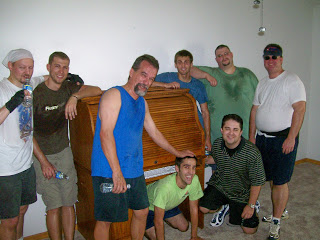 After all the heavy lifting was over, I led us in a brief dedication of the place. I read from 2 Samuel 7. David thought he would build God a house, but God said, no. Rather He declared through the prophet that He would make him a house (v. 11). We call that the Davidic covenant. What a house!
 EAGER FOR PEACE