Another Personal Update

More Health News from the House of Heff

Many of our OGC folks and others probably wonder how our busy medical Monday went this week. Here’s the latest:

HealthCare News,Newspaper with white background

First, on my front, Monday proved a total washout. Somehow the wrong test got ordered. Back to the drawing board with my PCP. In other words, still waiting on that swallow study I need.

Now, on Nancy’s front, some significant progress. She underwent an outpatient procedure to remove two liters plus of fluid from her body–ostensibly not that uncommon with ovarian cancer.

BELIEVE IT OR NOT WE FINALLY GOT THE BIOPSY RESULTS! Relatively good news. The enlarged node the surgeon took over six weeks ago tested out as the same ovarian cancer as elsewhere in her body, not some other form of the stupid disease.

Unfortunately the node didn’t meet the size specs necessary upon which to grow a culture. So we still don’t know what chemo drug would best target her cancer, should she choose that route of last resort.

Other than a bit tired and sore from lying in the same position for the procedure, she feels much relief after the siphoning off of all that fluid. A sample of the same now gets sent to the company for testing to determine the best drug for her use. We should hear in two or so weeks.

Yeah, sure.

Forgive my cynicism and thanks for those continued prayers!

T4G

Why I’m Thrilled to Travel to Louisville this Week!

T4G stands for “Together for the Gospel.” Every other year some pretty heavy hitters in the world of reformed evangelicalism pool their efforts to host this amazing event.

I’ve managed to go twice over the years. God never fails to show up. With the 500th birthday of the Protestant Reformation right around the corner, no way did I want to miss this edition. Check out the quick video clip below to see what I  mean:


https://vimeo.com/132860294


I feel so fortunate to have pastored a Reformed Baptist congregation for the past eleven years. That we get to stand on the shoulders of the likes of Luther, Calvin, and the rest to proclaim the doctrines of grace to our city, I take as an enormously serious stewardship.

Thankfully my jaw has healed enough to allow the trip. I’m asking the Lord to speak in profound ways to me and the thousands of other pastors who will attend this week. Would you pray to that end as well?

According to the T4G website, they plan to live stream the sessions in case you want to join the event at any point. Sweet!

WORTHLESS RELIGION

Why Our Tongues Matter So Much To Our Church’s Peace

It never ceases to amaze me. No matter how many times I read through the Bible it happens over and over again. I see something for the very first time. How it escaped me all those previous times I’ll never know.

Snake Tongue

Reading through James recently it hit me unlike ever before. A faith that works–the book’s theme–demonstrates its validity significantly in control of our tongues.

Track this emphasis with me in these verses:

James 1:26

“If anyone thinks he is religious and does not bridle his tongue but deceives his heart, this person’s religion is worthless.”

James 3:1-12

I won’t cite the whole passage. You can read it by clicking on the link. But think about it. The writer invests twelve whole verses about our troublesome tongues declaring, “no human being can tame the tongue. It is a restless evil, full of deadly poison” (v. 8).

How so?

“With it we bless our Lord and Father, and with it we curse people who are made in the likeness of God. From the same mouth come blessing and cursing. My brothers, these things ought not to be so. Does a spring pour forth from the same opening both fresh and salt water? Can a fig tree, my brothers, bear olives, or a grapevine produce figs? Neither can a salt pond yield fresh water” (v. 9-12).

Mike Mason sternly warns:

How cautious we need to be about leveling even the smallest criticism against the loved and elect children of God. Do we really think we can get away with grumbling against the friends of Jesus? If we stopped to realize who it is we were attacking, wouldn’t we bite our tongues (The Gospel According to Job, 241).

But James hasn’t finished this stream of exhortation just yet.

James 4:11-12

“Do not speak evil against one another, brothers. The one who speaks against a brother or judges his brother, speaks evil against the law and judges the law. But if you judge the law, you are not a doer of the law but a judge. There is only one lawgiver and judge, he who is able to save and to destroy. But who are you to judge your neighbor?”

Sorry, there’s even more. He hammers away in James 5:9.

“Do not grumble against one another, brothers, so that you may not be judged; behold the Judge is standing at the door.”

Gulp. If that doesn’t sober us nothing will. How very serious does the Lord take this matter of how we speak about our brothers and sisters! We can and must gauge the legitimacy of our claim as Christ followers by it.

Ever since this latest light went on in the book of James, I have sought to exercise all the more care over the words I speak about others inside and outside my church. The last thing I want to hear from the lips of Jesus one day is “Heff, your religion was worthless because your tongue was poison.”

How about you?

A PERSONAL UPDATE

A dear self-professed atheist friend of mine follows my blog. This both humbles and encourages me. But he did recently complain about the content. “Too much religion. Not enough about you.” Just like my buddy. This post he will like, I think.

Sick Leave

I had to shut down the blog for a couple of weeks recently due to ongoing treatment during my current medical absence. Following jaw surgery six weeks ago my surgeon ordered ten hyperbaric dives to aid in my recovery. They completely wiped me out. Productivity of any kind flew out the window from day one. Fortunately I’ve left those in the rear view mirror. I am actually starting to feel human again.

010

Before I write anything more about me, let me update on the Queen of the Manor, Miss Nancy. Honestly, we don’t have a great deal to report about her cancer battle. She continues diligent treatment with her latest alternative protocol.

She remains optimistic in every way. She has no pain or symptoms. Still no word on the results of her lymph node pathology. We may wait as many as two more weeks for those. Sigh.

Needless to say we pray a lot through this journey. Thanks to so many of you who join us in petitioning the Father in Jesus’ name for her complete healing.

robojaw

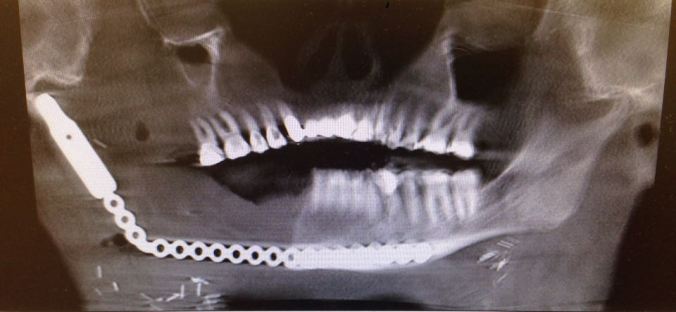
Now back to the less interesting part of this post. How do you like my new look? Yep, allow me to introduce you up close and personal to “robojaw.” This most recent scan shows my titanium implant.

Note the span. It runs from the socket by my ear all the way past the midline point of my chin. Just above the “chain” shows my remaining live bone in the mandible. Noticeable by their absence? All my teeth in that quadrant. Needless to say the left side does all the chewing work these days. I’m wondering if my dental hygienist will discount me 25% now at teeth cleaning time.

I still have some swelling. My surgeon, whom I saw recently in Miami, refers to these weeks as “the accommodation” phase of my healing. But everything looks good. I can eat anything I find tolerable. Some speech and swallowing therapy lies ahead as soon as we can arrange it, but things overall improve daily.

office

Thankfully, this week I’ve returned to the office for a good part of each day. Prime time pulpit work will have to wait a bit longer, but writing and administration–no problem. Seems I can manage the occasional appointment as well. Sure beats breathing 100% O2 at a simulated 45 feet below sea level in a claustrophobic chamber.

Our elders huddle up in a couple of weeks. At that meeting I expect we will discuss my progress and what steps might lie ahead for a more complete pastoral reentry. In the meantime, I praise God for His kindness in sustaining me through this marathon journey. Go ahead and say it “L.” “There you go again with that religious talk.”

I just can’t help myself.


GREAT CHURCH FIGHTS

Review of a Peacemaking Resource for Preserving Church Unity

Leslie B. Flynn’s book, Great Church Fights: What the Bible Says about Controversy and How to Resolve Ithas been on the bookshelf for some time now–Victor Books, 1976, 118 pages.

conflictelk

A short read, profitable for group study as well as individual reflection, its aim gets stated early on:

All conflict in ecclesiastical life is not healthy per se. Disagreements, with their accompanying misunderstanding, hurt feelings, and competitiveness do carry the potential of destructive bitterness, but if they are properly handled through peaceable wisdom from above, they can be a constructive force for uniting the body of Christ (James 3:13-18).

The chapters following will deal with significant conflicts in the New Testament, generally in the order in which they appear in the sacred record. Consideration of the principles should help our 20th-century churches. Out of friction can arise new love and strength in the family of God (11).

Each chapter which follows deals with in turn:

  • The Acts 6 growing church dilemma where the Grecian widows went unfed.
  • The Acts 15 Jerusalem council regarding salvation by grace.
  • The Acts 15 sharp disagreement between Paul and Barnabas over John Mark.
  • The Romans 14 instruction about disagreement over matters of conscience.
  • The 1 Corinthians 1 rebuke concerning the building of factions around personalities.
  • The 1 Corinthians 5 (other texts as well) teaching about church discipline.
  • The Galatians 2 clash between Paul and Peter about Jew/Gentile relationships.
  • The Matthew 5:23-24 call to be our brother’s keeper for peace even if it interrupts corporate worship.
  • The Philippians 4 mediation between two at odds women in the church.
  • The 3 John 9-10 counsel for dealing with leaders who think far too much of themselves.

The book rightly closes on a positive note to act as more than conquerors when conflict erupts. The way to win those inevitable church fights is to give in–to the Holy Spiritand watch Him restore unity and power to the Church (118).

Flynn writes in a most readable style. The book contains considerable biblical references as well some illustrative content which made me laugh and wince at the same time.

Given the brevity of the book, the chapters don’t go all that deep in their analysis of such important content. Why the author chose to ignore entirely Old Testament accounts of conflict–Abram and Lot (Gen. 13) or Abigail and David (1 Sam. 25)–I suppose will have to remain a secret.

Still, Flynn has given a gift to Jesus’s church. It’s worth adding to your church library or personal bookshelf. I got my used but in perfectly good shape copy for just $4 plus shipping off Amazon.

Question: What text of Scripture has helped you in the area of conflict resolution? You can leave your comment here

GUARDIANS OF UNITY SET A GUARD WHERE IT COUNTS MOST

Five Guidelines for Controlling the Tongue to Safeguard Church Unity

Few things stand to jeopardize our churches’ treasured oneness than our own runaway tongues. Thus the poet of sacred text prays, Set a guard, O LORD, over my mouth; keep watch over the door of my lips (Psalm 141:3)!

words

They most certainly do. Anyone aspiring to a do-your-best standard of peacemaking in his church will embrace these five principles from Scripture which can effectively set a guard over our tongues and govern our words:

One, respect them accordingly. Since Prov. 18:21 is true–Death and life are in the power of the tongue, treat your words with enormous respect. They can do great good. They can do enormous harm. At our Idaho place, I keep a variety of weapons–largely for hunting purposes. For obvious reasons, they command my complete respect every time I handle them. Treat your words with the same reverence.

Two, suspect them ruthlessly. James 3:8 warns, No human being can tame the tongue. It is a restless evil, full of deadly poison. Read the rest of the chapter for more plain talk about the Mission Impossible that is controlling our words. That reality should sober us. Assume the worst about your speech right out of the gate. It will help check your words constructively before you let them fly.

Three, limit them considerably. The wisdom writer helps us again. When words are many, transgression is not lacking, but whoever restrains his lips is prudent (Prov. 10:19). Remember this rule of thumb–or should I say tongue?: the greater the number of words we speak, the greater the potential for sins we commit. James gets this too. Know this, my beloved brothers: let every person be quick to hear, slow to speak, slow to anger (James 1:19). Perhaps overused but nonetheless true: God gave us two ears and just one mouth for a reason.

Four, choose them strategically. This can mean a lot of things. At the very least consider these guidelines. Always speak the truth, but do it in love (Eph. 4:15). Ask yourself before you speak, Will this build up and give grace or corrupt and tear down (Eph. 4:29). While never lacking graciousness in your word choices, recognize that love at times dictates sanctified sternness. We see this all over Paul’s letters. While reading one of them recently, I was struck by his counsel to a pastor on Crete to rebuke them sharply (Titus 1:13). Their nasty habits required tough love for their own salvation good.

Five, keep them confidentially. Among the seven things God hates (Prov. 6:16-19), Solomon lists last, one who sows discord among brothers. Alexander Strauch does not overstate the case when he writes:

Gossip, or talebearing, is one of the common sins of discord. . . . Like a dreadful, contagious disease, it poisons people’s minds and creates chaos and misinformation. it is an ugly vice that drives people apart and destroys peace (If You Bite & Devour One Another, 71).

Keep confidences religiously!

The Psalmist sets us the example. Pray often for the Lord to act as guardian of your tongue and watchman over your words. Pray the same for the rest of the people in your congregation. Set a guard where it matters most, my dear fellow guardian of your church’s  peace.

Question: What other texts have helped you in your attempts to tame your tongue? You can leave your comment here.

WHY NOT A UNITY CHARTER?

A Proposed Document for Churches Serious about Preserving Peace

Ephesians 4:3 remains the anchor verse for my blog site–eager to maintain the unity of the Spirit in the bond of peace. Nothing short of our very best efforts in safeguarding unity in our congregations will suffice, if we seriously embrace the thrust behind that word eager. I plan on devoting an entire chapter to the idea in my book, The Peacemaking Church.

woman is filling document on glass table, shallow depth of field
The thought occurred to me recently, Why not fashion a church charter to foster unity’s preservation? Plenty of organizations use charters of one kind or another to shape a desired culture. Surely the church can do the same on something this crucial to her well being.

I crafted mine by making an acronym out of the word unity. Imagine posting something like this around your facility, incorporating its content in your bylaws, and/or teaching through it as part of the membership class.

OUR CHURCH’S UNITY CHARTER

We Use Means Big and Small to Maintain Unity–from potentially hosting a RW360 weekend conference to simply stocking our resource center with copies of Resolving Everyday Conflict, we put into play multiple options designed to help us keep our congregation’s culture of peace strong.

We Need Love First and Last to Maintain Unity–of all the virtues generated by the gospel’s power in our lives, we acknowledge none matters more than what Paul calls in 1 Cor. 13 the greatest–love. We measure every value, word, and action in terms of its conformity or lack thereof to the question: Is it loving?

We Imitate Models Divine and Human to Maintain Unity–as Paul appealed to the selfless example of Jesus in Phil. 2:5-11 for a mindset that looks out not only for our own interests, but also for the interest of others, we meditate often on our Lord’s incarnation for motivation in safeguarding unity. We resist objecting to such a standard as impossibly high realizing that Phil. 2:19-30 present two other “normal” individuals–Timothy and Epaphroditus–who excelled at meeting the challenge.

We Train Servants Clergy and Lay to Maintain Unity–so as to equip the saints for peacemaking excellence, we arrange for offering regular teaching on the subject using the various models provided by Peacemakers Ministries. Every pastor undergoes conflict coaching and mediation training to provide the necessary tools for handling disturbances which threaten unity in the church.

We Yield Preferences Left and Right to Maintain Unity–whether pertaining to styles of worship music or matters of conscience over which only Jesus should judge (Rom. 14:1-12) and everything in between, we rely on the gospel’s power to defer to others wherever and whenever  we possibly can. It is our joy to lay down rights with the Spirit’s help in the name of safeguarding our treasured unity.

Now I ask you: what difference might it make if your church and mine adopted such a charter for preserving unity? Your church might word things differently. Who cares?

As long as our commitments come from the Scriptures and ultimately serve the endgame–eagerly preserving the unity of the Spirit in the bond of peace–spelling out our high value of unity and the ends to which we will go to protect it can only enhance our prospects for heading off conflict before it ever happens.

Question: How might you tweak a charter of unity for your church, if you had opportunity to participate in such a stewardship? You can leave a comment here.

IN PRAISE OF BELOVED PHYSICIANS

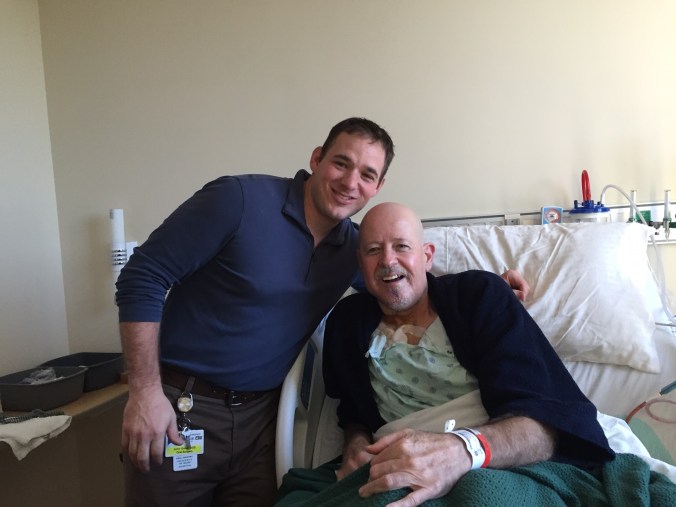
On discharge day after a week in the hospital for “Operation Robojaw,” one of my doctors made a point to  visit me that Sunday morning. The moment I met the man two months earlier my heart attached fast to him. Turns out he studies theology on the side in his spare time–at Southern Seminary online no less! A doctor and a brother. Sweet.

Docgreen

We prayed together that morning–me for him and him for me. As soon as we finished, I immediately felt prompted to say this: I imagine you’re a lot like Dr. Luke must have been. Marshall deflected the praise, as I suspected he would. However, since then I’ve given a fair amount of thought to what makes for a beloved physician.

Mostly, Bible lovers think of Luke as a meticulous historian and second most prolific New Testament author–he wrote the gospel which bears his name and Acts–after the apostle Paul. Without Col. 4:14 we’d never suspect his medical credential–Luke the beloved physician greets you. That’s it. Not a whole lot to go on.

Still we can take away more than immediately meets the eye, if only we will ponder this verse and a few others which also reference Luke. As for Col. 4:14 it helps to know a little of the original language and its syntax. Literally the verse reads: Greets you Luke the physician the beloved. Awkward. I get it. But informative. Paul puts the beloved last in the sentence for emphasis. Greek often does that. Word order matters. The word means dearly loved, prized, valued.

Paul considered Luke a prince. He treasured the man. Luke ranked high in his beloved category. Here’s my take on why:

One, Luke cared deeply and personally for others. All that oozes out of the word greet at the beginning of Col. 4:14. It conveyed a great deal more sentiment than saying “hey” or “hello.” When someone used this greeting-from-a-distance formula common in the New Testament, he intended to say, If I were there I would greet you with one huge holy kiss (Rom. 16:16). I’ll wager Luke aced bedside manner class.

Two, Luke acted courageously and remained loyal to others. On death row in a Roman prison, Paul makes this astonishing statement in 2 Tim. 4:11–Luke alone is with me. Deserted by all others, Paul found comfort in his you-can’t-shake me-I’m-not-going-anywhere doctor, no matter what the costs.

Three, Luke concerned himself diligently and humbly not just for the bodies but also for the souls of others. Consider how he introduced his gospel in Luke 1:1-4:

Inasmuch as many have undertaken to compile a narrative of the things that have been accomplished among us, just as those who from the beginning were eyewitnesses and ministers of the word have delivered them to us, it seemed good to me also, having followed all things closely for some time past, to write an orderly account for you, most excellent Theophilus, that you may have certainty concerning the things you have been taught.

Don’t you think Theophilus thanked his lucky stars for Luke’s historical writing of the good news of Jesus? Luke saw himself just as much an evangelist as a doctor (see also Acts 16:10). Luke is part of the “we” and “us” of that text.

docteam

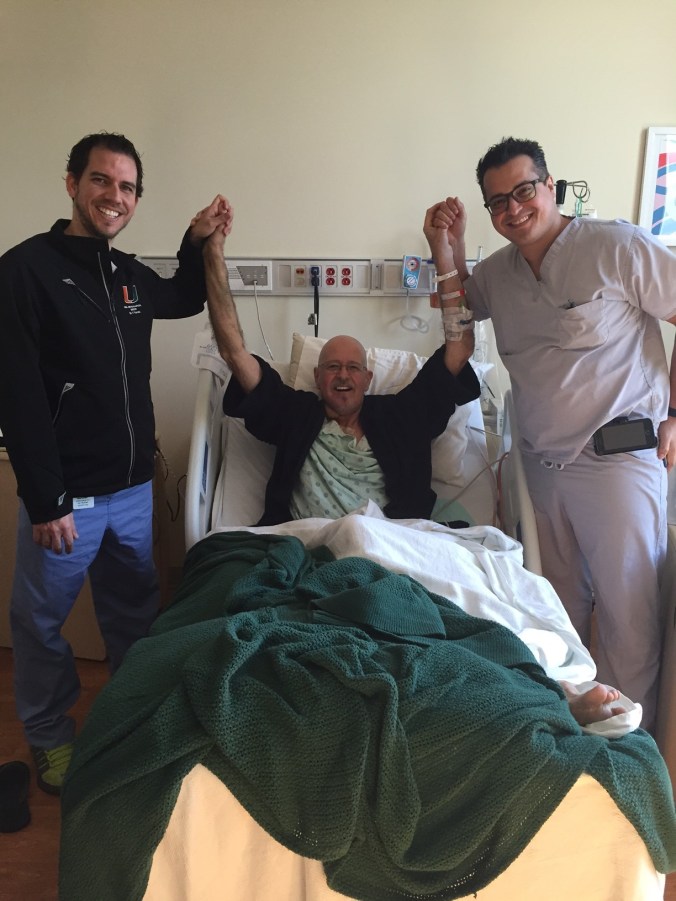
Four, Luke valued and got along famously with a team of others in his ministry. Philemon 24 makes this clear: and so do Mark, Aristarchus, Demas, and Luke, my fellow workers. Above I’ve included an image of two more rock-star docs who cared for me in Miami. I forced them to strike this victory pose on discharge day. Unfortunately I wasn’t with it enough to get pics of still others who performed in such a stellar way for me.

Gentlemen, this patient salutes you. You are beloved in my book. Don’t let anybody tell you otherwise. They will have to answer to this pastor with a brand new titanium jaw.

Question: What qualities have you enjoyed in a doctor or doctors which have made them beloved to you? You can leave your comment here.

IS YOUR CHURCH LOVING?

How To Help Your Church Abound in Love

I certainly hope so. It should be. Jesus declared love the distinguishing mark by which all others would know that we are His disciples (John 13:35).

love one another 2

But here’s the deal. Paul prays in Phil. 1:9 that their church’s love may abound more and more. He exhorted another church very much the same way:

Now concerning brotherly love you have no need for anyone to write to you, for you yourselves have been taught by God to love one another, 10 for that indeed is what you are doing to all the brothers throughout Macedonia. But we urge you, brothers, to do this more and more (1 Thess. 4:9-10, emphasis added).

It seems we can’t afford to rest on our laurels when it comes to the degree of love operational in our congregations.

Here are seven ways you can potentially affect the abounding of love in your church so as to ensure its peace and unity:

  1. Admit to the Lord any failures on this front, believe the gospel again, and determine to obey in His strength in the future.
  2. Embrace the commandment to excel in love as just that–marching orders from Jesus. We can’t treat this virtue as optional. Also, regard it as the A-priority responsibility it is. Why else would Peter write: Above all, keep loving one another earnestly (1 Pet. 4:8, emphasis added).
  3. Never assume you have arrived on this front. The Bible doesn’t make room for complacency in our love performance. Ask the Lord to help you push the edge of envelope in ways you haven’t done so before.
  4. Make it a habit to do loving things. Build your love muscles by practicing kindness. Alexander Strauch calls kindness love with work clothes on. Write notes. Give gifts (even little ones). Make a phone call. Buy someone lunch. Drop by for a visit (ask first).
  5. Practice hospitality. Texts teaching about love often include the exhortation to open our home to others. For example, Paul exhorts, Let love be genuine in Rom. 12:9. Then in v. 13 he adds, Contribute to the needs of the saints and seek to show hospitality.
    We find another example of this combo in Heb. 13:1-2. One commands, Let brotherly love continue. Then v. 2 quickly follows with, Do not neglect to show hospitality. Few things say love more persuasively than sharing a meal with others around your table.
  6. Pray for one another in your church to grow in love for one another. Last Sunday we studied that text in Philippians (1:9) where Paul prays for their love to abound. So this week I am praying through our member/attender list for each household for the same thing. Your church has such a list, doesn’t it?
  7. Finally, and most importantly, meditate often on the love of God for you in Christ Jesus. I think Paul prays in Eph. 3:18-19 the way he does for this very reason. He knows if we can even remotely comprehend the breadth, length, height, and depth of Jesus’ love for us, it cannot help but overflow through us to refresh others.

Churches that love well in Jesus advertise well for Jesus. And members who abound in love are the kind of members who excel in helping preserve the unity of the Spirit in the bond of peace in their churches. Go for it!

Question: What’s one thing you want to do this week to push your love for others towards an abounding level? You can leave a comment here.

PHILIPPIANS: A PEACEMAKER’S MUST

Mastering the Letter As We Study the Book

Last Sunday we embarked on a pulpit study of Paul’s epistle to the Philippians. This choice by our elders during my medical leave of absence thrills me. Why? The theme of peacemaking runs throughout it.

Phil

We don’t get any further than 1:27 before Paul begs, so that I may hear of you standing firm in one spirit , with one mind striving side by side for the faith of the gospel. Then in 2:2 the apostle goes so far as to plead, complete my joy by being of the same mind, having the same love, being in full accord and of one mind.

Come 2:14 he lays this on them: Do all things without grumbling or disputing. And before the book ends, he calls out two women by name charging them to agree in the Lord (Phil. 4:2). He even invokes the aid of a mediator to assist them to that end. This church certainly endured its share of unity challenges!

We could hardly dig into a more strategic book to strengthen our peacemaking core value than the book of Philippians.

Here are seven ways to get the most out of a study of Paul’s letter to the Philippians:

  1. Listen to Pastor Mike’s comprehensive overview of the book AGAIN. My, what a job he did! For extra credit check out ISBE’s article for its introduction of the letter.
  2. Read through the entire book at least once per week, perhaps on Saturday nights in preparation for the Lord’s Day.
  3. Read the sermon passage of the week DAILY. Ask the Lord to give you insight. Make some observation, interpretation, application notes along the way in a notebook, journal, or your mobile device. Tomorrow’s text is Phil. 1:1-11.
  4. Pick a key verse (mine is Phil. 2:1-11–I know that’s a section), memorize it, and meditate upon it throughout the series. How might God work in our church this year if everyone did this? Take a smaller portion if eleven verses overwhelm you. I get it. For some reason memorization comes rather easily to me. Not everyone enjoys the same experience.
  5. Bookmark the Preceptaustin page in your computer for more commentary resources you can possibly consult along the way. After you do your own study through the week, check your conclusions against the scholarly work you’ll find at that site.
  6. Use your Sunday’s well. Remember Pastor Shane’s message a few weeks back? He stressed this. Discuss the sermon at lunch with others. Review the points from your notes later in the day. Decide on one thing you will do to apply the message that week. Ask someone to hold you accountable to it.
  7. Pray for the speaker each week (Dennis Mudge serves tomorrow) and for us as a congregation. Pray for anointing on the preacher. Pray for soft hearts among us as hearers (James 1:21).

Imagine the fruit to come from these messages, if our covenant members adopt this kind of strategy for mining the rich ore laden in the shafts of this peacemaking treasure of God’s word.

Lord willing, see you tomorrow back in my appointed seat. I might even let loose with an “Amen!” or “Preach it, brother!” here and there.

Question: What excites you about our study in this book of the Bible? You can leave your comment here.