On discharge day after a week in the hospital for “Operation Robojaw,” one of my doctors made a point to visit me that Sunday morning. The moment I met the man two months earlier my heart attached fast to him. Turns out he studies theology on the side in his spare time–at Southern Seminary online no less! A doctor and a brother. Sweet.
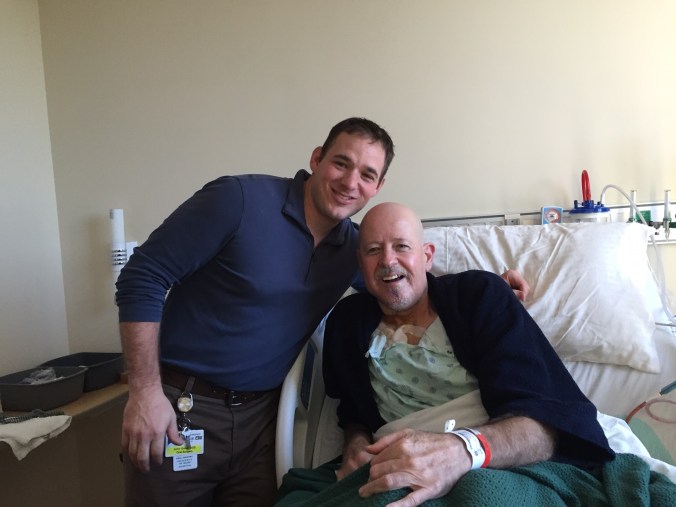
We prayed together that morning–me for him and him for me. As soon as we finished, I immediately felt prompted to say this: I imagine you’re a lot like Dr. Luke must have been. Marshall deflected the praise, as I suspected he would. However, since then I’ve given a fair amount of thought to what makes for a beloved physician.
Mostly, Bible lovers think of Luke as a meticulous historian and second most prolific New Testament author–he wrote the gospel which bears his name and Acts–after the apostle Paul. Without Col. 4:14 we’d never suspect his medical credential–Luke the beloved physician greets you. That’s it. Not a whole lot to go on.
Still we can take away more than immediately meets the eye, if only we will ponder this verse and a few others which also reference Luke. As for Col. 4:14 it helps to know a little of the original language and its syntax. Literally the verse reads: Greets you Luke the physician the beloved. Awkward. I get it. But informative. Paul puts the beloved last in the sentence for emphasis. Greek often does that. Word order matters. The word means dearly loved, prized, valued.
Paul considered Luke a prince. He treasured the man. Luke ranked high in his beloved category. Here’s my take on why:
One, Luke cared deeply and personally for others. All that oozes out of the word greet at the beginning of Col. 4:14. It conveyed a great deal more sentiment than saying “hey” or “hello.” When someone used this greeting-from-a-distance formula common in the New Testament, he intended to say, If I were there I would greet you with one huge holy kiss (Rom. 16:16). I’ll wager Luke aced bedside manner class.
Two, Luke acted courageously and remained loyal to others. On death row in a Roman prison, Paul makes this astonishing statement in 2 Tim. 4:11–Luke alone is with me. Deserted by all others, Paul found comfort in his you-can’t-shake me-I’m-not-going-anywhere doctor, no matter what the costs.
Three, Luke concerned himself diligently and humbly not just for the bodies but also for the souls of others. Consider how he introduced his gospel in Luke 1:1-4:
Inasmuch as many have undertaken to compile a narrative of the things that have been accomplished among us, 2 just as those who from the beginning were eyewitnesses and ministers of the word have delivered them to us, 3 it seemed good to me also, having followed all things closely for some time past, to write an orderly account for you, most excellent Theophilus, 4 that you may have certainty concerning the things you have been taught.
Don’t you think Theophilus thanked his lucky stars for Luke’s historical writing of the good news of Jesus? Luke saw himself just as much an evangelist as a doctor (see also Acts 16:10). Luke is part of the “we” and “us” of that text.
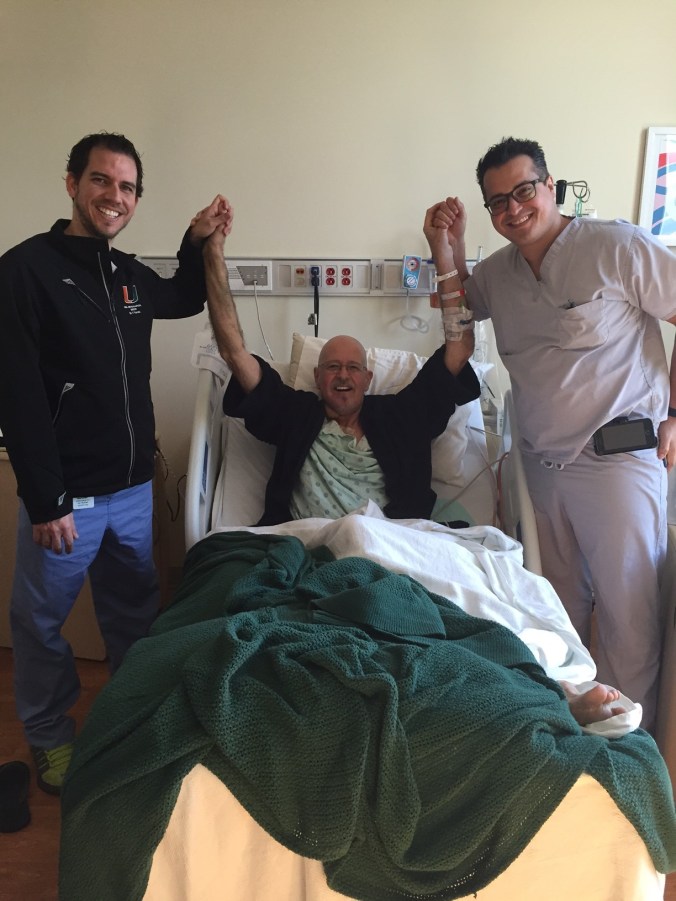
Four, Luke valued and got along famously with a team of others in his ministry. Philemon 24 makes this clear: and so do Mark, Aristarchus, Demas, and Luke, my fellow workers. Above I’ve included an image of two more rock-star docs who cared for me in Miami. I forced them to strike this victory pose on discharge day. Unfortunately I wasn’t with it enough to get pics of still others who performed in such a stellar way for me.
Gentlemen, this patient salutes you. You are beloved in my book. Don’t let anybody tell you otherwise. They will have to answer to this pastor with a brand new titanium jaw.
Question: What qualities have you enjoyed in a doctor or doctors which have made them beloved to you? You can leave your comment here.




 You know you’re feeling better when your thoughts turn to blogging. Much




 PEACEMAKING PEACEKEEPERS