Three Reasons I Wrote “The Peacemaking Church”

The wisdom writer warns: “Of making many books there is no end” (Ecc. 12:12). As it was in Solomon’s day, so it remains today.
According to one source, publishers around the globe have produced nearly 2.3 million books this year. On November 20 my book will join the collection. Why add to this endless making?
I wrote The Peacemaking Church for three primary reasons.
One, there is a story to tell. Not just mine, though I describe my share of personal examples–mostly a number of painful blunders along the way. This is an entire church’s journey.
I explain in the introduction that Orlando Grace Church suffered traumatic conflict twice in its history. The painful details bear no repeating. No need to reopen old wounds.
Our story begins with a fierce campaign to cultivate a culture of peace to prevent a third meltdown—if we could possibly help it.
Thus far, hiccups notwithstanding, we have managed to preserve the unity of the Spirit in the bond of peace (Eph. 4:1-3). That story needs telling.
Two, there is a need to meet. In his foreword to the book, Ken Sande opens with a redacted version of Matthew 18:20. “Where two or three come together in Jesus’s name . . . there will soon be conflict.”
The New Testament reflects that reality. Just observe the sheer volume of texts which address some form of conflict therein!
Anyone hanging around church for any length of time will likely confirm the same. It doesn’t matter where you go.
It was true in metro Orlando for me. I saw it on a recent trip overseas. It exists right here in my new home in rural Idaho.
And it doesn’t take much to set off a firestorm of trouble. In the introduction to my book, I cite Twenty-Five Silly Things Church Members Fight Over to make the point–like the length of the worship leader’s beard!
I wrote The Peacemaking Church to add a proactive, stay-out-of-trouble resource to the Baker suite of books currently addressing reactive strategies for dealing with conflict.
I ask this question right up front: What if the best fight your church ever has is the one it never gets into in the first place? This approach needed addressing in a book like this.

Three, there is now a tool to help. I appreciated every endorsement commending The Peacemaking Church, but Pastor Alfred Poirier, author of The Peacemaking Pastor, well distilled what I hoped would come across in the pages.
Out of the pain of church conflict comes a refreshingly biblical and practical guide for building peace, resolving conflict, and preserving unity in the body of Christ.
Biblical and practical sum up my hopes for The Peacemaking Church. I wrote it to root church leaders and followers alike in the Scriptures and to equip them with tools which will help make them heavyweight champions of peace and unity in their churches.
Copies are available for preorder here and for bulk discounts for ministries here. Thanks for helping me get the word out by sharing with others as led!



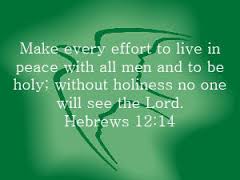 I use and choose the word diligent carefully. It’s all about those first three words, make every effort in Heb. 12:14. The ESV translates the Greek, strive. It means to run after something or follow someone.

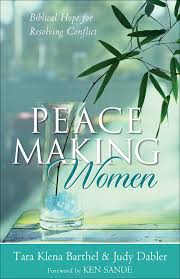 church involves the mind-set many people have that church is like a cruise ship. When we have this view of the body of Christ, we expect everything in the church to be conveniently tailored to our wants and desires. Our expectation is that we will be served, cared for, and entertained by professionals whose sole focus is our happiness. Of course, this misguided mind-set leads us to view people in the church as resources for our comfort rather than valuable members of one body who both need us and are needed by us. As a result, we neither love nor serve them well. In fact, when our expectations are disappointed, we engage in destructive gossip, criticism, and bickering. Instead of keeping careful confidences and protecting members, we often speak ill of others. Church conflict–a terrible witness to the watching world–is the frequent result (209-210).

 curtheffelfinger.com