To Partake or Not To Partake

communion

Every first Sunday of the month I wrestle with the same question – how to “fence” the Table? By that I mean what precautions do I prescribe for folks who want to take Communion? Clearly this is advisable given the Bible’s warning that to eat and drink unworthily is to invite the severest kind of judgment (1 Cor. 11:27-30).

The first is easy. Don’t partake if you’re not a devoted follower of Jesus. This means of grace applies to those who treasure Jesus as the One who gave His body to be broken and His blood to be shed for the forgiveness of their sins. It has nothing to do at all to do with mere ritual; it has everything to do with remembering the supreme sacrifice upon which our hope for justification (being found right with God) rests.

For this Baptist, that means that the second precaution is easy as well. You wouldn’t put Communion, a continuation rite for ongoing spiritual nourishment before  baptism, the initiation rite for entrance into the body of Christ (1 Cor. 12:13). Baptism happens once as a symbol of what God had done in the heart by faith – being identified with Jesus in His death, burial, and resurrection (Rom. 6:3-4). Communion occurs often throughout the course of one’s spiritual journey as a means of remembering what Jesus had done and nourishing one’s faith with the real presence of Jesus at the Table (1 Cor. 11:23-26).

The third precaution doesn’t seem as easy but probably should be. You don’t want to partake if you find yourself at odds with a brother or sister and have failed to take the necessary steps in biblical peacemaking to promote reconciliation. To this dilemma Jesus speaks quite plainly in Matt. 5:23-24 –

So if you are offering your gift at the altar and there remember that your brother has something against you, leave your gift there before the altar and go. First be reconciled to your brother, and then come and offer your gift.

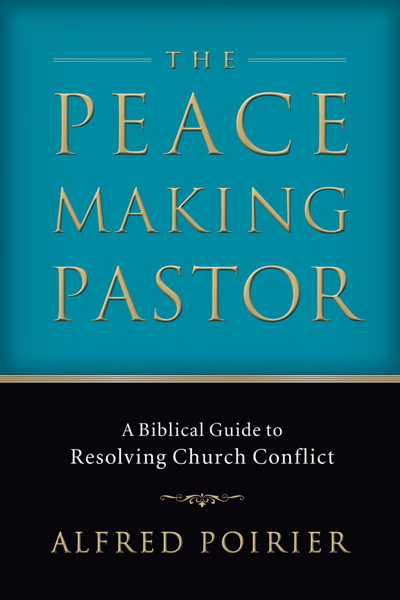
Alfred Poirier, in his book, The Peacemaking Pastor, makes the necessary connection here between worship and peacemaking:

peacemaking pastorWhat is interesting in this passage is that Jesus pictures us remembering the conflicts in our lives during worship–true worship. Worship in Spirit and truth should result in remembering those with whom we are not yet reconciled. For we cannot worship the God of peace and hate our brother and sister, nor can we eat from the Lord’s Table when our heart and mouth are full of bitterness. And true worship should encourage us that the God of peace will be with us if we need to go and get reconciled (Poirier, 2006, p. 277).
I wonder how many believers during their last Communion allowed the bread and cup to pass through mouths and enter into hearts poisoned by enmity in some relationship? May it never be. Better to leave your gift at the altar than play the hypocrite that worships while estranged from a family member in the faith.

Determine with God’s help and the grace of Jesus in His gospel of peace that such a thing will not happen again. “If possible, as far as it depends upon you, live peaceably with all” (Rom. 12:18). As you do, let there be no wondering at all about the answer to the all important question – to partake or not partake? By all means, all other fencing matters being satisfied, partake.

A Church “Do Your Best”

do your best

This week I am doing sermon prep in Ephesians 4:1-6 for a message in September, Lord willing. In the text the apostle exhorts believers who desire to live out a worthy walk in Jesus to be “eager to maintain the unity of the Spirit in the bond of peace.” The word for “eager” is variously translated “make every effort” (2 Pet. 1:5) or “do your best” (2 Tim. 2:15). In other words, there are some things about life in gospel community that demand our all. Paul argues in Ephesians 4 for those called of Jesus to His glorious salvation and made part of His glorious church that virtuous (see v. 2) peacemaking ranks right up there at the top of responsibilities in which we will want to excel.

That commitment will work itself out in various forms, but I want to talk about just one with the help of Jonathan Edwards from his work, Charity and Its Fruits:

220px-Jonathan_EdwardsAll undue anger indisposes us for the pious exercises and the active duties of religion. It puts the soul far from that sweet and excellent frame of spirit in which we most enjoy communion with God, and which makes truth and ordinances most profitable to us. And hence it is that God commands us not to approach his altars while we are at enmity with others, but “first to be reconciled to our brother, and then come and offer our gift” (Mat. 5:24); and that by the apostle it is said, “I will, therefore, that men pray everywhere, lifting up holy hands, without wrath and doubting” (1 Tim. 2:8).

So what does this mean?

If we take seriously an eagerness to preserve the unity of the Spirit in the bond of peace such that we do our best in this regard, then peacemaking will take priority even over corporate worship. If we cannot overlook an offense, then we will make every diligent effort to meet with the necessary party to reconcile and not pretend to lift so-called hands in holy worship when we have avoided our responsibility to do so.

If applicable, you have between now and Sunday to do your best. Go for it!

Why Churches Should Require Membership Covenants

Man Signing Contract

Next week, Lord willing, OGC will take in a dozen new members.

Note: for a biblical defense of the concept of church membership click here.

We praise God for the new bunch of folks He has brought into our fellowship. Each of these saints has attended our membership class. They have completed an extensive application and submitted to an interview with two of our officers. They have been approved by the elders in a formal motion at a business meeting and so noted in the minutes. And without exception, each has signed a dated covenant of membership. Copies of that covenant will be made available in the service next Sunday for every member to reaffirm the commitments that come with belonging to a covenant community of believers.

The question I wish to address in this post is why insist on members of a local body signing a membership covenant? Answer? INFORMED CONSENT. What in the world is that? Informed consent is documentary evidence of a church member’s familiarity with the teachings, policies, practices, and requirements of participation in the community and most importantly their agreement freely and willingly to abide therein. Why does that matter? Many reasons, but none more important in our litigious age than in the matter of church discipline.

The reason, among others, that there is a covenant of membership on file in our office with my name and date on it is because I don’t trust my own deceitfully wicked heart (Jer. 17:9). Should I wander off into unrepentant sin, perish the thought, I want my elders and church to come after me with the full force of Matt. 18:15-20, Gal. 6:1-2, and a bunch of other texts aimed right at that heart. Furthermore, I don’t even want to be tempted in the event of such an unfortunate set of circumstances to entertain the idea of suing my church for slander or some such nonsense. Having given my informed consent in the way of a covenant of membership assures that OGC doesn’t have to think twice about even excommunicating me if necessary for fear of an expensive and damaging lawsuit, not to say the havoc such a thing would bring upon the peace and welfare of the church.

Most people I speak with to attempt to persuade them about the importance of church membership rarely even give this aspect of the matter any thought whatsoever. Peacemaker Ministries has done a good job of articulating this and can help to explain:

Church membership is generally viewed by the courts as being a matter of contract, whereby members freely choose to associate with a particular church community and in doing so accept the benefits and duties of that association. The membership process provides an ideal means to obtain informed consent to a church’s policies and practices. Informed consent is easier to prove if you establish membership in a clear and explicit manner.

The article then proceeds to outline four steps to this end:

  1. Membership Class
  2. Membership Interview
  3. Declaration of Membership – public installation and records to that effect
  4. Written Commitment

Here’s how they unpack that all important fourth dimension:

Further evidence of express informed consent may be obtained by requiring new members to sign a written commitment to membership, which includes a specific reference to having received a copy of the Relational Commitments and to being willing to support and submit to them.

The entire article is worth your time and effort. To read it click here.

Have you thought about this as a professing Christian? It matters a lot to your spiritual welfare and that of the church to which you belong that you do think long and hard about it and that you give your informed consent for the glory of God, the welfare of the church, and the good of your soul.

Holiday Peacemaking 101

handling-holiday-conflict-arti

With the holidays each year comes increased opportunity for conflict in relationships. Unrealized expectations, margin-less schedules, extended family demands, and a host of other stress-escalating factors conspire to heighten the potential for relational strife. In the spirit of Rom. 12:18, “so far as it depends upon you be at peace,” consider these principles for making it to 2014 without suffering a conflict train wreck.

First, check your expectations at the front door of the season. Idealistic notions of the holidays with their feel-good promises often fall short of the realities of dealing with family and friends whose total depravity doesn’t automatically take a break from Thanksgiving to New Years.  Remember that everyone you engage could legitimately compete with Paul in 1 Tim. 1:15 for the title “chief of sinners.” While you’re at it, assume that you qualify for the label over and above anyone else at the party and you will go a long way toward enjoying the blessedness of a peacemaker this Christmas (Matt. 5:9).

Second, overlook offenses. A lot. Assume folks will do and say some things during what the recovery movement calls “the silly silly seasonseason” just because so much of the craziness is just that. Exercise more patience than usually required. Proverbs 19:11 counsels, “Good sense makes one slow to anger and it is his glory to overlook an offense.” Overlooking can get overlooked as among the virtues qualifying as glorious. One reason the overlook strategy makes good sense comes into perspective in another wisdom saying in Prov. 17:14. “The beginning of strife is like letting out water, so quit before the quarrel breaks out.” Count the cost doesn’t just apply to financial decisions but relational ones as well. It may not pay to start the battle in the first place, so let it go whenever in good conscience you possibly can.

Third, when you can’t overlook for the gravity of an offense, go straight to the person involved – do not talk to someone else about it – and seek to resolve the matter between you and him in private (Matt. 18:15). Treat the person the same way you would want to be treated if the shoe were on the other foot. Let texts like Gal. 6:1-2 dictate your timing, approach, and most of all objective – bearing a fellow-sinner’s burden by helping rescue them from the trespass you believe has ensnared them.

Fourth, overcome evil with good through not returning the same. Rather, determine to heap coals of love on a head when you get the chance (Rom. 12:17-21). The holidays typically bring us into close quarter contact with folks, including relatives, with whom we might otherwise prefer not to associate. Make conversation. Ask questions. Serve quietly. Don’t just look out for your own interests but even those of your obnoxious cousin (Phil. 2:3-4).

Fifth, and most importantly, take your cue from the One the Bible calls the Prince of Peace (Isa. 9:6-7), drawing strength from Him and the power of His gospel, in your determination to live at peace with others throughout the holiday season. In her article, “Walking in Peace Amid Holiday Strife,” Tara Barthel writes:

If we are to walk as people of peace during the stress of the holidays, we must first begin by remembering the greatness of God and all that he has done for us in Christ. Then we can move on to how we are to live in light of these truths. If we try to skip the first step and move to the changing of our behavior, we will probably end up frustrated both by our own failures as well as the fallenness of those around us. Our only hope is in God—he justifies us, redeems us, delivers us from our shame, and conforms us to Christ (Romans 8:29). Such a God! Such a Savior! This is the Jesus whose birth we celebrate during this Christmas holiday season.

What she said.

May the Prince of Peace fill you with the spirit of peace for the making of real peace in the face of your holiday conflict, if and when you eventually tangle with it.

Peacemaker's Pledge

This Sunday is Conciliation Anniversary Sunday at Orlando Grace. We will mark the 11th anniversary of a reconciliation service hosted by our leadership in the aftermath of the last major conflict endured by our church. As always, I will preach on biblical conflict resolution. The title of the message is What Peacemaking People Do. If you wish to preview the text for prayerful preparation, see 1 Thessalonians 5:9-15.

This time of year also makes for a fitting review of the helpful Peacemaker’s Pledge brought to us from the excellent folks at Peacemaker Ministries. I include it here for our edification. Please consider giving it another or perhaps first-time careful and prayerful reading as we head into this weekend of remembering at OGC.

As people reconciled to God by the death and resurrection of Jesus Christ, we believe that we are called to respond to conflict in a way that is remarkably different from the way the world deals with conflict. We also believe that conflict provides opportunities to glorify God, serve other people, and grow to be like Christ. Therefore, in response to God’s love and in reliance on his grace, we commit ourselves to respond to conflict according to the following principles:

Glorify God — Instead of focusing on our own desires or dwelling on what others may do, we will rejoice in the Lord and bring him praise by depending on his forgiveness, wisdom, power, and love, as we seek to faithfully obey his commands and maintain a loving, merciful, and forgiving attitude.

Get the Log out of Your Eye — Instead of blaming others for a conflict or resisting correction, we will trust in God’s mercy and take responsibility for our own contribution to conflicts—confessing our sins to those we have wronged, asking God to help us change any attitudes and habits that lead to conflict, and seeking to repair any harm we have caused.

Gently Restore — Instead of pretending that conflict doesn’t exist or talking about others behind their backs, we will overlook minor offenses or we will talk personally and graciously with those whose offenses seem too serious to overlook, seeking to restore them rather than condemn them. When a conflict with a Christian brother or sister cannot be resolved in private, we will ask others in the body of Christ to help us settle the matter in a biblical manner.

Go and be reconciled — Instead of accepting premature compromise or allowing relationships to wither, we will actively pursue genuine peace and reconciliation—forgiving others as God, for Christ’s sake, has forgiven us, and seeking just and mutually beneficial solutions to our differences.

By God’s grace, we will apply these principles as a matter of stewardship, realizing that conflict is an assignment, not an accident. We will remember that success in God’s eyes is not a matter of specific results, but of faithful, dependent obedience. And we will pray that our service as peacemakers will bring praise to our Lord and lead others to know His infinite love.

As we mark another year of relative conflict-free peace within our assembly, may we recommit ourselves to this pledge and continue to cultivate a culture of peace for the glory of God and our great joy.

Overlooking Offenses

Last Sunday I hammered away at peacemaking in the body of Christ as an application of Jesus’ prayers about our oneness in John 17. You can listen to that message here.

An essential strategy in the peacemaking process is the glory of overlooking offenses. I say glory because of a text like Proverbs 91:11.

Good sense makes one slow to anger, and it is his glory to overlook an offense.

It makes bad sense to blow your top. One way to stay on the good sense side of things is to regularly overlook offenses. But why call that disposition glory and when must we not overlook an offense?

Ken Sande explains:

Since God does not deal harshly with us when we sin, we should be willing to treat others in a similar fashion. This does not mean that we must overlook all sins, but it does require that we ask God to help us discern and overlook minor wrongs. Overlooking offenses is appropriate under two conditions. First, the offense should not have created a wall between you and the other person or caused you to feel differently toward him or her for more than a short period of time. Second, the offense should not be causing serious harm to God’s reputation, to others, or to the offender.

It is to God’s glory that He passes over our offenses because of the blood of Christ. We share in that glory and put it on display when we choose to be not easily offended and overlook the offenses of others.

“Law-Speaker” or “Grace-Speaker”?

Here is food for thought from Peacemaker Ministries to reflect upon:

Many times it is difficult to consistently weave the gospel into our conversations with others until the gospel is first woven deeply into our own hearts. Many of us are by nature “law-speakers”–we bring judgment much more easily than we bring grace. If that is you, pray that God would give you a major heart change, to make the gospel central to everything you think, say and do. Pray that God will open your eyes more fully to the glory of what Christ has done for you. Learn to delight in reading about, meditating on, and rejoicing in Jesus’ completed work on the cross. When your soul, your thoughts, and your conversation are saturated with the gospel, it will overflow into other areas of your life, bringing hope and encouragement to others.

Run, Don't Walk, in This Race

I used to be a runner. Well, not really. More like a lumberer actually. In previous decades of my adult life I did jog for exercise. Hard to believe, but I actually competed in a 5K once, many moons ago. I took second place in the Faster Pastor division there in Winter Park. Of course, I think only two of us entered. I still have a picture of me outrunning a teenage girl at the finish line. Nothing seemed more mortifying to me than to have that girl beat me to the end of that race. I nearly had a heart attack right on the spot.

Now I walk for exercise. Far more dignified for a sixty year old with aging knees and too little time for working out. I like it better. Besides, Nancy doesn’t care to race. We just talk about our day and enjoy covering our four-street neighborhood.

However, if I read my New Testament right, and I hope I do, there is one place among others in which I must always be willing to run the race. And that is in making peace within the body of Christ, my church family. Hebrews 12:14 says this: Strive for peace with everyone. The Greek reads like this: Peace strive with all. The object comes before the verb (an imperative or command) for emphasis.

So where does this all fit in with the notion of running? It has to do with the particular word the writer uses for the English strive. It’s the word “dioko” which means to pursue, seek after, or to aspire to something. A literal cognate of the verb includes the word picture of running fast towards some goal or object. The Greek translation of the Old Testament uses the word in Isaiah 5:11.

Woe to those who rise early in the morning,
that they may run after strong drink,
who tarry late into the evening
as wine inflames them!
See those words “run after.” That’s how the ESV translates the same Greek word in Heb. 12:14 translated “strive.” The imagery speaks volumes. In the body of Christ the gospel of Christ will compel the follower of Christ to make haste (every eager effort as another version puts it) to pursue the peace of Christ with the people of Christ. And please note, we cannot afford to be selective. You can’t determine that some believers warrant your vigorous pursuit of peace while others don’t. The exhortation pertains to all. Strive for peace with everyone.
Do you find yourself at odds with someone in the body of Christ? Be careful now. You might be tempted to excuse yourself on the basis of what that person has or hasn’t done in the pursuit of peace. What about you? In your honest evaluation of your efforts to close the gap and build a bridge of peace between you and that person have you run like the wind in pursuit of reconciliation with the same zeal you might run to a gourmet meal or a vacation in Idaho?
If not, it’s time to put on your peacemaking sneakers and go for a run in the race for unity and harmony by getting back into fellowship with your estranged brother or sister. The One who ran to the cross for you and me to make reconciliation between us and a holy God would want it that way.
Let us strive for peace within the body at OGC.

The Fear Diet

Nothing like the holidays to accentuate the reality of conflict in our lives.

I thought this piece from Peacemaker Ministries was helpful:

Have you ever thought about fear as an indulgence that we as Christians can’t afford?

We often think of rich desserts as indulgences, and they certainly can be. But fear is an indulgence, too–one that Christians engage in at least as much (if not far more) than Krispy Kreme donuts.

We indulge in fear each time we deny a conflict that exists with a friend–even though we know there is a cancer-like silence between us that Satan is probably filling with his lies. We can indulge in fear when we tell ourselves, “I’ve had enough. I’m done with this.” While walking away looks like some kind of primitive strength, it’s often a fear “feast” that results in us putting on weight (in the form of concern and anxious thoughts).

When fear keeps us from addressing conflict in our lives, it hinders our intimacy with Christ. We’d rather indulge in fear than delight in the love of Christ; yet, if we’d just delight in Perfect Love, scripture says that fear would flee.

Leaving fear behind is a bit like dieting. Standing at the freezer with our hand on the door and the ice cream on the other side, sometimes we just have to say aloud, “No.” Standing in a conflict feeling sorely tempted to indulge in denial and flight (both grounded in fear), we must call to mind the lavish love of Christ, drop our hands to our side, and remind ourselves that fear is one indulgence we simply cannot afford.

To subscribe to their free email articles click here.

Give Thanks… For CONFLICT???

Got this from Peacemakers last week. Meant to post it last week but things got away from me. It’s such good stuff I decided to post it this week. Not your average Thanksgiving fare.

As usual, Paul [in Philippians 4:2-9] urges us to be God-centered in our approach to conflict. Moreover, he wants us to be joyfully God-centered. Realizing we may skip over this point, Paul repeats it: “Rejoice in the Lord always. I will say it again: Rejoice!” What on earth is there to rejoice about when you are involved in a dispute? If you open your eyes and think about God’s lavish goodness to you, here is the kind of worship you could offer to him, even in the midst of the worst conflict!

O Lord, you are so amazingly good to me! You sent your only Son to die for my sins, including those I have committed in this conflict. Because of Jesus I am forgiven, and my name is written in the Book of Life! You do not treat me as I deserve, but you are patient, kind, gentle, and forgiving with me. Please help me to do the same to others.

In your great mercy, you are also kind to my opponent. Although he has wronged me repeatedly, you hold out your forgiveness to him as you do to me. Even if he and I never reconcile in this life, which I still hope we will, you have already done the work to reconcile us forever in heaven. This conflict is so insignificant compared to the wonderful hope we have in you!

This conflict is so small compared to the many other things you are watching over at this moment, yet you still want to walk beside me as I seek to resolve it. Why would you stoop down to pay such attention to me? It is too wonderful for me to understand. You are extravagant in your gifts to me. You offer me the comfort of your Spirit, the wisdom of your Word, and the support of your church. Forgive me for neglecting these powerful treasures until now, and help me to use them to please and honor you.

I rejoice that these same resources are available to my opponent. Please enable us to draw on them together so that we see our own sins, remember the gospel, find common ground in the light of your truth, come to one mind with you and each other, and restore peace and unity between us.

Finally, Lord, I rejoice that this conflict has not happened by accident. You are sovereign and good, so I know that you are working through this situation for your glory and my good. No matter what my opponent does, you are working to conform me to the likeness of your Son. Please help me cooperate with you in every possible way and give you glory for what you have done and are doing.

Taken from The Peacemaker: A Biblical Guide to Resolving Personal Conflict
by Ken Sande, Updated Edition (Grand Rapids, Baker Books, 2003) p. 84-85

To subscribe to this free publication called Peacemeal click here.